
The shocking assassination attempt on Trump administration officials at the White House Correspondents’ Dinner on Saturday left the nation shaken. Yet amid the chaos and fear, powerful examples of good masculinity emerged — men who instinctively moved toward danger to protect others.
When gunfire erupted, most attendees dove for cover. That was a natural response. But one Secret Service agent did something different: He leaped onto the stage and used his own body to shield President Trump. His swift, selfless action embodied the protector instinct at the heart of healthy masculinity.
Despite enduring more than 70 days of a partial government shutdown that began on Feb. 14 and working without regular pay, Secret Service agents and other Department of Homeland Security personnel continued to place duty above personal hardship. That kind of quiet resolve defines good men: They show up and place responsibility above personal challenges or grievances, even when it hurts.
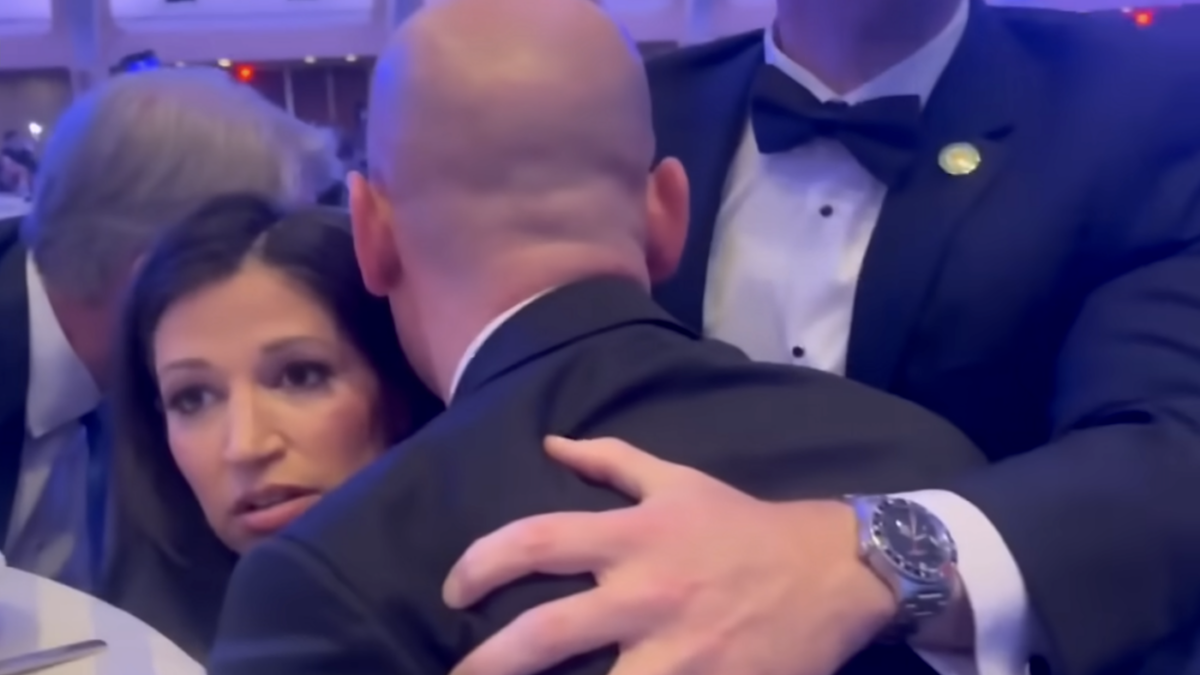
Another powerful image from that night, shared by Bethany Mandel, reinforced the same truth. White House adviser Stephen Miller protectively shielded his very pregnant wife. Secretary of War Pete Hegseth positioned himself over his wife as he scanned the room for threats. These were not performative acts; they were instinctive.
I have no doubt my own husband would respond the same way. Since our earliest days together, he has always insisted I walk on the inside of the sidewalk — his small, consistent way of placing my safety before his own. This is how good men love: through quiet, everyday protection and readiness to stand in the gap when danger comes.
We saw this same spirit in Corey Comperatore, the firefighter and Army veteran who died shielding his wife and daughters during the 2024 assassination attempt on then-candidate Trump in Butler, Pennsylvania. He gave his life for those he loved.
In moments of crisis, people naturally look for calm, confident, decisive leadership. President Trump demonstrated those qualities Saturday night, during just the latest of multiple assassination attempts on his life. In his impromptu press conference that evening, he praised the Secret Service and law enforcement without assigning blame, then lightened the heavy mood with a joke about the “most inappropriate speech” he had prepared for the dinner.
Trump also promised to reschedule the event within 30 days, vowing that the next one would be “bigger,” “better,” and “totally boring.” The Wall Street Journal lauded Trump for appearing presidential, highlighting that he shines brightest when confronting physical danger. Even The Washington Post, known for its hostility to Trump, acknowledged his poise and grace, stating, “Xi Jinping and Vladimir Putin couldn’t contemplate attending a dinner with the independent journalists who aggressively cover them because no such press corps exists in China or Russia.”
These examples showcase the positive aspects of masculinity emerging during crises. Yet, for too long, leftists have pushed the narrative that traditional masculinity is “toxic” and must be dismantled. Through media, pop culture, school curricula, and guidelines from organizations like the American Psychological Association, boys have been taught to suppress natural male traits, such as competitiveness, risk-taking, and the protector instinct, treating these traits as obstacles to males’ emotional health and equality.
Christina Hoff Sommers, a scholar at the American Enterprise Institute, exposed this in her book The War Against Boys and her many media appearances. Schools have increasingly pathologized normal boy behavior through zero-tolerance policies and overly feminized classrooms. The results are clear: Boys now lag behind girls in high school graduation rates. The disparity between men and women gets worse in college. Pew Research finds that among Americans aged 25–34, 47 percent of women hold a bachelor’s degree compared to just 37 percent of men.
Nancy Pearcey’s book The Toxic War on Masculinity further shows how this cultural war against masculinity has gone too far. While harmful expressions of masculinity should be condemned, the broad assault on masculinity itself has left many boys without positive male role models. The consequences are devastating: Young men face loneliness at record levels, low rates of dating and marriage, and suicide rates about four times higher than those of women. Men now account for almost 80 percent of all suicides.
The cultural war ultimately harms women too. A major 2025 survey by the Institute for Family Studies found that 64 percent of young men and 74 percent of young women “reported they had not dated or dated only a few times in the last year.” Another study found, “Only about 60% of 35-year-old men are ever-married today, down from 90% in 1980.” A growing number of young adults — especially men — are projected to remain unmarried.
The events of last Saturday remind us that life is fragile and unpredictable. What truly matters are love, family, and meaningful relationships. In dangerous moments, societies need good men who are willing to step forward. Healthy masculinity — protective, courageous, and responsible — does not oppress women; it safeguards them and strengthens families and communities. It’s time to end the unjust war on masculinity. Men and women thrive when we support, rather than undermine, the best qualities in one another.