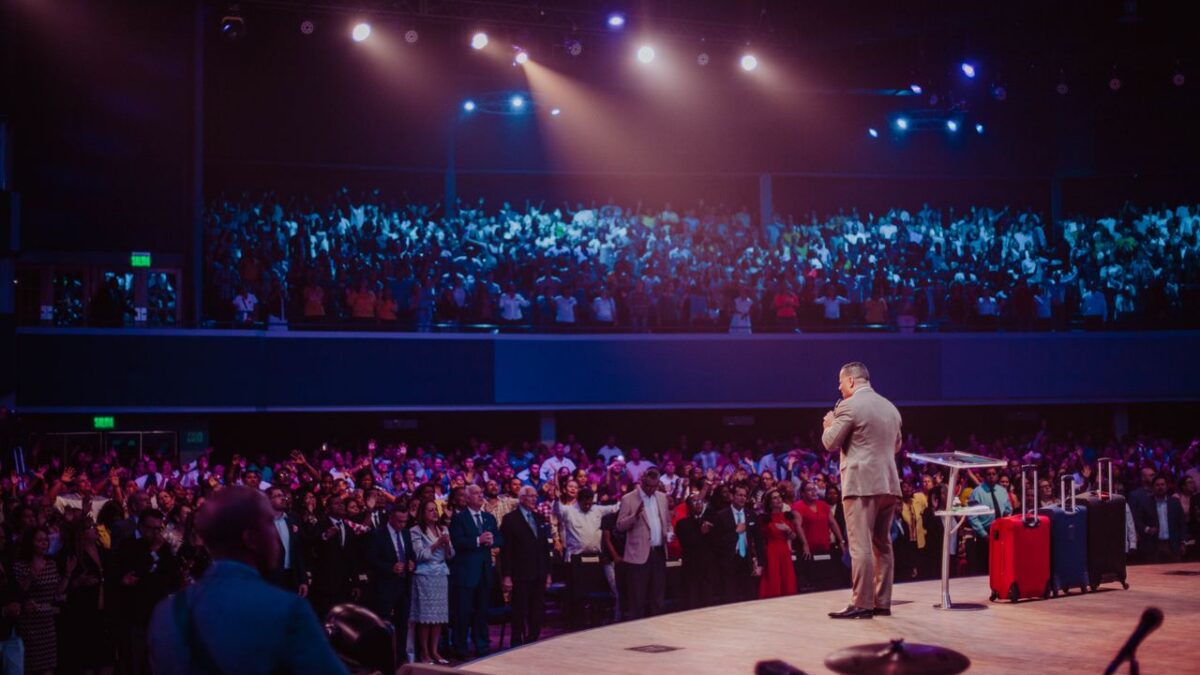


Tim Goeglein highlights an encouraging trend: young Americans are returning to church. Recent findings from Gallup polling data and Barna Group research provide further confirmation the trend is real.
After years of decline, Millennials and Gen Zers are showing renewed openness to faith. In a culture marked by digital isolation, deep-seated anxiety, and a profound sense of instability, this renewed interest is genuinely encouraging.
But there is a silent crisis we cannot afford to ignore if we want this trend to result in lasting transformation. Church attendance alone does not guarantee transformed lives or a durable faith.
Research suggests that most who identify as Christians, especially Millennials and Gen Zers, lack even a basic framework for understanding what they believe and why it matters. This is not simply a lack of exposure to Christian teaching. Many have grown up in church, attended regularly, and heard biblical messages for years. The issue is deeper; it is a failure to translate that knowledge into a coherent worldview that shapes how they think, make decisions, and respond to everyday life.
A biblical worldview, put simply, means seeing reality through the truth of Scripture and allowing it to shape how we live. Without that foundation, belief becomes fragmented. People begin to mix Christian ideas with whatever cultural messages feel right, creating a personalized faith that is often shallow, inconsistent, and at times contradictory. What results is not a rejection of Christianity, but a redefinition of it into something that reflects, rather than confronts, our present confusion.
Research from Arizona Christian University’s Cultural Research Center underscores just how widespread this problem is. While a majority of Americans still identify as Christian, only about 4 percent hold a consistent biblical worldview. That number drops to 1 percent among adults under 30. Perhaps most alarming is the state of the pulpit, with only about 37 percent of U.S. pastors possessing a biblical worldview. These findings suggest that the challenge is not limited to the margins of the church but exists within it at every level.
This gap matters more than it may seem. Many young people are coming to church looking for community, stability, or a sense of purpose. But if their beliefs are still primarily shaped by the surrounding culture rather than Scripture, their faith will not hold under pressure.
That pressure is not abstract. It is experienced in classrooms, workplaces, media, and social environments where deeply held Christian beliefs are regularly questioned or dismissed. It appears in conversations about identity, morality, suffering, and truth. Without a clear and grounded framework (a biblical worldview), many young believers are left trying to reconcile competing ideas without the tools to evaluate them.
A shallow or inconsistent belief system quickly begins to feel inadequate. When that kind of faith meets the reality of suffering, moral relativism, or intense social pressure, it is quickly revealed to be inadequate and may start to seem confusing, disconnected from real life, or difficult to defend. Over time, what was once accepted as truth can begin to feel optional. And when faith feels optional, it is often abandoned.
The consequences extend beyond individual belief. We see the consequences of this clearly in the mental health crisis currently gripping this generation. A life based on subjective foundations, where truth is relative and purpose is self-constructed, is inherently chaotic. A generation that returns to church without a clear understanding of truth will struggle to form strong families, make grounded moral decisions, or sustain a durable faith over time.
Furthermore, there is a cultural cost. When Christians lack a clear and consistent framework for truth, they are more likely to be shaped by the surrounding culture than to influence it. Rather than offering moral clarity, the church risks reflecting the same confusion it seeks to address.
If this moment is to last, encouragement alone will not be enough. Goeglein is right to call for discipleship, but that discipleship must be far more rigorous than general encouragement. It must move beyond good intentions to intentional, systematic formation. It must help people connect Scripture to the everyday domains of life: how they think about politics, work, family, and culture.
That kind of formation does not happen accidentally. Too often, it is assumed that regular church attendance or familiarity with Scripture will naturally produce a biblical worldview. However, research suggests that knowledge alone does not lead to transformation. Without a framework for applying biblical truth, faith often remains compartmentalized rather than integrated.
Churches must be intentional about teaching what is often assumed but rarely developed: how to think biblically about the world, not just what to believe. Families play an equally critical role, as worldview is largely shaped by age 13. By the time many young people reach adulthood, the foundation of how they interpret reality is already in place. Without intentional formation, that foundation is often shaped more by culture than by Scripture.
This moment of openness among young people is both rare and significant. It presents an opportunity that should not be squandered. But encouragement alone is not enough.
If the church hopes to see this resurgence lead to lasting faith, it must prioritize deeper formation through serious, sustained catechesis. Only by cultivating a strong and consistent biblical framework can this renewed interest grow into something enduring, strengthening individuals, families, and communities for the long term.