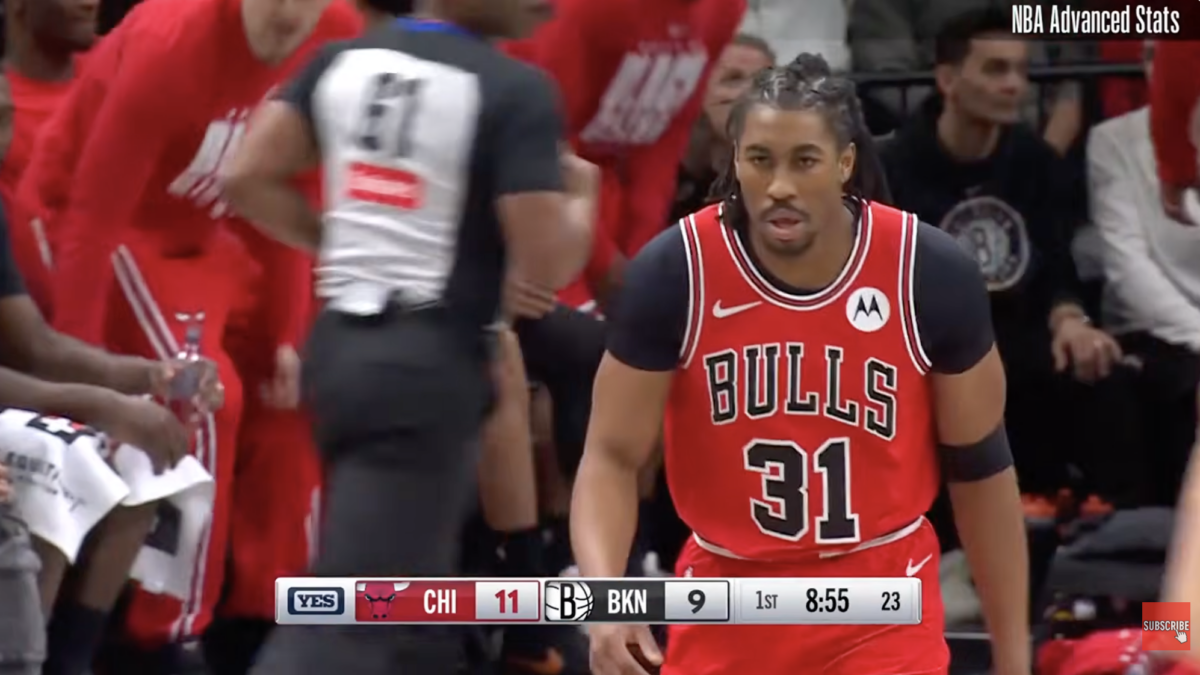


After Jaden Ivey expressed opposition to the NBA’s promotion of “Pride Month” on the basis of his Christian faith, the Chicago Bulls immediately waived him. This means that after a 48-hour period, he will become a free agent who can try out for other teams. Lest anyone misattribute this cut to Ivey’s inability to play due to injuries, the Bulls made it abundantly clear they waived Ivey due to purported “conduct detrimental to the team.”
Nevertheless, the word “conduct” is misleading here because it implies some sort of egregious activity, like committing a felony or assaulting someone. But, as we all know, the NBA is perfectly fine with giving a pass to violent felons. Where the league draws the line is speech that goes against its leftist agenda.
Ivey is certainly not the first player to be targeted for dissent. In 2021, the Brooklyn Nets benched star point guard Kyrie Irving for refusing to take the Covid shot — he was entirely justified in his objections, by the way — which ended up costing him more than $100 million. Although the team’s leadership pretended this had to do with health concerns, it seemed more like a pretext to force an outspoken player into submission. This is just one example, but the NBA had long distinguished itself as the “wokest sports league,” even as it routinely kowtowed to Chinese authoritarians.
Anyone who doubts whether leftist politics played a role in Ivey’s dismissal can review what happened with the most famous dissenter in modern sports: NFL quarterback Colin Kaepernick. In 2016, Kaepernick decided to sit on the bench during the national anthem to protest racism. As he put it, “I am not going to stand up to show pride in a flag for a country that oppresses black people and people of color.” Somehow, being a mixed-race man earning millions for playing football did not prevent him from confidently accusing his country of oppressive racism on national television.
Unlike Ivey, Kaepernick’s team didn’t punitively bench him or cut him for his speech. Quite the opposite. The NFL defended him and feted him as a civil rights hero, and he signed a lucrative contract with Netflix. Eventually, his stardom petered out as the quality of his game deteriorated. Had he been a better football player, he would have easily continued his career, but this became unnecessary when the world honored him much more for his anti-American activism.
None of this is to argue that Ivey should receive the Kaepernick treatment or that Kaepernick deserved the Ivey treatment. As Americans, they are both entitled to their opinions, even if they are also professional athletes who are supposed to represent their organizations.
Naturally, there should be a clear line of demarcation between what players express in their personal capacity versus their professional capacity, but not an ideological wall of separation between “acceptable” and “unacceptable” speech.
If allowing free speech in a personal capacity were the policy, Ivey would still be playing for the Bulls, with few people caring what he had to say since he streams it all from his own private social media account. Meanwhile, Kaepernick, speaking in a professional capacity, would have been quietly pulled to the side and told to shut his mouth and post his grievances on his Instagram if he wanted to. None of this should have anything to do with expressing the right opinions, but simply keeping fans happy.
Furthermore, the emphasis should be on athletic performance, not speech. Whatever a player says on the internet is significantly less important than what he does in a game. True, it was bad enough that the NFL defended Kaepernick’s activism, but it would have been far worse if San Fransico’s leadership had kept him on the 49ers roster despite his mediocrity on the field. By the same token, Ivey should only have been cut for falling short of performance expectations, not because he publicly stated his Christian beliefs.
One could argue that the outcomes are effectively the same, but the reasons still matter because a sports league’s entire credibility rests on its commitment to athletic merit. If players are promoted or punished because of their political or cultural viewpoints rather than their skill and effort, then the whole sport becomes entirely discredited and arbitrary. It puts into question every game. Did this team win because they were better, or because the NBA thought it would look better for them to win?
For many former basketball fans (including myself), the NBA already feels about as real as professional wrestling — and this was before last year’s gambling scandal. Certain players and franchises are clearly favored over others, and the leftist messaging is ubiquitous. One example is a recent documentary on the Greek-Nigerian basketball player Giannis Antetokounmpo. Despite Antetokounmpo’s earning millions, receiving endless publicity, and having access to world-class facilities, the documentary somehow cast his rise from obscurity to NBA superstardom as a story about anti-immigration sentiments in the West.
After a while, the sanctimony and hypocrisy become unsustainable. People stop believing and eventually stop watching, which is ultimately a shame. The NBA’s amazingly talented players will now lose potential audiences because one franchise decided (with the tacit approval of the league) to virtue signal by punishing one player for voicing disagreement with left-wing ideology because of his faith. Not only should these other players defend Ivey (as some have), but they should also demand that all franchise owners keep out of politics and let their players prove themselves on the court. This would restore some degree of credibility to a league in desperate need of it.