
It’s safe to say that conservatives did not get the outcome they hoped for in Tuesday night’s midterm election results. Republican candidates faced catastrophic losses across the electoral map, including in several supposedly “red states.”
But amid this carnage, there were a few bright spots.
Voters passed some conservative-backed statewide ballot initiatives and rejected others supported by Democrats. These measures will have a tremendous effect on how these states are governed for years to come.
While not an exhaustive list, here’s a breakdown of how the biggest measures fared on Tuesday night.
Abortion
The Good
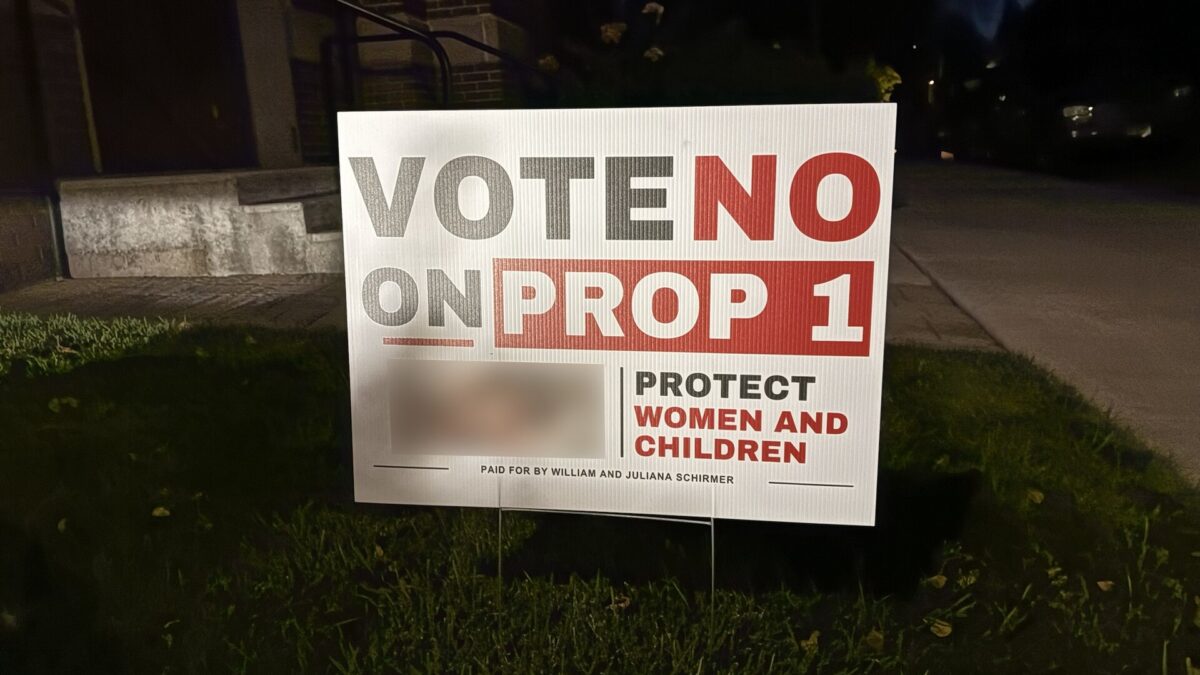
In a major win for the unborn, Idaho voters defeated Proposition 1, which sought to ax the state’s pro-life protections by creating a vague “right to reproductive freedom and privacy” for “every person.” Idaho law currently criminalizes abortion except in cases of documented rape, incest, or danger to a mother’s life.
The Bad
Unfortunately, Idaho’s defeat of Proposition 1 was the only positive development on the pro-life front.
In Missouri, voters defeated a constitutional amendment that sought to repeal a 2024 amendment that enshrined abortion in the state constitution. The 2026 repeal measure, which is projected to lose 55 to 45 percent, also aimed to ban harmful “trans” procedures from being conducted on minors.
Meanwhile, Virginia and Nevada voters passed amendments codifying unlimited abortion in their state constitutions. Despite the Virginia measure’s passage, a legal challenge to the amendment’s “deceptive” language and procedures for getting on the ballot is set to be heard in state court later this month.
Elections
The Good
Voters in Arkansas, Alaska, Kansas, South Dakota, and West Virginia all passed measures specifying that only qualified U.S. citizens may vote in their elections. Nevada, North Carolina, and Ohio voters similarly approved initiatives codifying voter ID requirements in their state constitutions.
There was even a bright spot in deep-blue Massachusetts, where voters rejected an initiative that sought to implement a top two primary system for state elections wherein all candidates run on the same ticket and the top two vote-getters — regardless of party — advance to the general election. The proposal was seemingly geared toward boxing Republican candidates out of general election contests for state races.
The Bad
Other election integrity measures did not fare as well.
Colorado and California voters rejected pro-voter ID initiatives that appeared on their states’ respective ballots.
North Dakota and South Dakota voters both rejected amendments seeking to raise the threshold for amending their state constitutions by requiring that any proposed amendment receive support from at least 60 percent of voters as opposed to a simple majority. The measures were seemingly aimed at stopping Democrats’ and leftist-led groups’ ploy of using the referendum process to advance left-wing policies in red states.
Meanwhile, Missouri voters passed a Democrat-backed amendment prohibiting the state legislature from repealing or amending a citizen-led ballot initiative “unless at least 80% of both the House and Senate vote to refer a proposed change to the ballot, and voters then approve the change,” according to Ballotpedia. The measure is seemingly aimed at boxing the GOP-run legislature out of the initiative process, which Democrat interests used to codify abortion into the state constitution in 2024.
Virginia voters also passed a Democrat-backed constitutional amendment that automatically restores convicted felons’ ability to vote upon their release. The state’s soon-to-be former practice gave the governor discretion on whether to restore such rights. Democrat Gov. Abigail Spanberger recently restored the voting rights of roughly 66,000 previously incarcerated felons, several of whom are deceased.
The Unknown
As of this article’s publication, there are two major election initiatives whose fates remain up in the air.
In Arizona, voters were asked to consider a measure that would require proof of U.S. citizenship to register to vote, mandate voter ID when casting a ballot, and ban foreign national money in elections. As of publication, the initiative is currently losing 53 to 47 percent, with 83 percent of votes tabulated.
Alaska voters, on the other hand, were asked to weigh an initiative that seeks to repeal the state’s ranked-choice voting system, which causes confusion in elections and has put Alaska in play for Democrats. As of publication, the measure is currently losing 52 to 48 percent, with 73 percent of votes tabulated.
Redistricting
The Bad
Republican-led states’ congressional redistricting efforts didn’t seem to have much effect on the midterms’ outcome. And on the ballot initiative front, things weren’t much better.
Missouri voters overwhelmingly rejected a GOP-backed referendum that would have taken the state from a six Republican-two Democrat congressional map to a seven Republican-one Democrat map. The measure appeared on the ballot following a contentious legal battle in state and federal court.
In Maryland, voters approved a Democrat-backed redistricting proposal that effectively clears the way for the state’s Democrat-run legislature to redistrict the state’s lone Republican congressman out of office.
The Unknown
The fate of a Republican-backed Colorado redistricting proposal is currently undetermined as of this article’s publication. The constitutional amendment, which was seen as a way to stave off Democrats’ redistricting efforts, would require that any mid-decade redistricting push must first be approved by Colorado’s independent redistricting commission and the Colorado Supreme Court before it can take effect.
Preliminary results show the measure losing 53 to 47 percent, with 75 percent of votes tabulated.
LGBT Madness, Public Health, and Women’s Sports
The Good
A major bright spot in this year’s midterm disaster was the success of ballot measures codifying protections for women’s sports. Voters in Arizona and Nebraska passed initiatives ensuring trans-identifying men cannot infringe on female athletics. The Arizona measure went a step further by banning schools and athletic associations from allowing a trans-identifying individual to use a restroom, locker room, or other “private space” that differs from his or her sex.
The Bad
Vermont voters passed an initiative enshrining special protections for LGBT-identifying individuals in the state constitution. Critics previously raised concerns that the measure affords “different standards of equality” to so-called “disfavored groups” and could be used as a vehicle to target Christians who hold biblical views of marriage and sex.
Virginia similarly passed an amendment repealing provisions from the state constitution recognizing that marriage is a union between a man and a woman. The initiative also added language barring the commonwealth from denying marriage licenses to same-sex couples.
In Wisconsin, voters rejected an amendment that sought to bar government officials from shuttering places of worship during a state of emergency — including during public health emergencies. The measure was geared at preventing a repeat of the abuses during the 2020 Covid outbreak, when state officials severely restricted church attendance while placing seemingly less strict rules on non-religious entities.
The Unknown
As of publication, measures protecting women’s sports from trans-identifying men remain undecided. In Colorado, preliminary results show the initiative winning 52 to 48 percent, with 76 percent of votes tabulated. In Washington, unfinalized results show the initiative winning 57 to 43 percent, with 60 percent of votes tabulated.
The fate of a Colorado measure that would ban damaging “trans”-related procedures from being conducted on minors is also undetermined as of publication. Early results show the initiative passing 52 to 48 percent, with 76 percent of votes tabulated.
Immigration, Guns, and Crime
The Good
On immigration, Arizona voters passed a measure that designates drug cartels and domestic terrorist organizations and requires the state Department of Homeland Security to do “everything in its authority to address the threats posed by” drug cartels.
On the Second Amendment front, Arkansas voters approved a constitutional amendment reaffirming citizens’ right to keep and bear arms.
Voters in Indiana and Tennessee passed a pair of pro-law-and-order amendments.
The Indiana measure amends the state constitution to deny bail to individuals charged with crimes in circumstances when “the proof is evident or the presumption strong” and when the state “proves by clear and convincing evidence” that the individual in question poses a threat to the community. Meanwhile, the Tennessee initiative removes the right to bail for certain criminal offenses — such as a capital offense —“when the proof is evident or the presumption great.”
The Bad
Unfortunately for gun owners in Massachusetts, the state’s gun control regime is here to stay. Bay State voters approved a measure upholding several gun control restrictions passed by the Democrat-run legislature in 2024, including an “assault weapons” ban and the creation of a registration system to track firearm ownership in the state.
The Unknown
The outcome of a Colorado amendment requiring the state to cooperate with federal immigration authorities on cases involving suspected noncitizens who have committed a violent crime remains undetermined as of publication. Preliminary results show the measure failing 55 to 45 percent, with 76 percent of votes tabulated.
Taxes and Labor
The Good
In Florida, voters passed a Republican-backed property tax amendment. According to Ballotpedia, the measure will “increase[] the homestead exemption, for all non-school taxes, to $150,000 in 2027 and $250,000 in 2028, and adjusts for inflation thereafter.” It also includes a mandate that the state legislature “prescribe a uniform procedure for counties and municipalities, for their respective levies, to increase the homestead exemption up to full assessed value, and allows special districts, subject to referendum approval, to do the same.”
Meanwhile, Iowa voters appear poised to pass a constitutional amendment that would require a two-thirds vote of the Iowa legislature before any increase in the state’s income or corporate tax rate.
The Bad
Vermont voters approved a Democrat-backed collective bargaining initiative. Former Vermont Republican Party Chair Rob Roper previously warned that the amendment “effectively strips, in key cases, one’s right to individually bargain on one’s own behalf.”
Education
The Good
Wisconsin voters passed a constitutional amendment that bans the government — which includes institutions of public education — from adopting race- and sex-favored preferences and policies.
The Bad
Unfortunately, the same cannot be said for Arizona. Grand Canyon State voters shot down a constitutional amendment that aimed to prohibit DEI and affirmative action policies in government institutions. This also included a ban on state-enforced DEI training for government employees.
The Unknown
The fate of a Washington pro-parental rights initiative is up in the air as of publication. The measure seeks to reenact a previously passed initiative that gives parents the right “to review materials and student records [of their children], receive certain [parental] notifications, and opt students out of certain activities” in school. Preliminary results show the measure failing 53 to 47 percent, with 59 percent of votes counted.