Following Tuesday’s midterm elections, much attention has been paid to the beating Republicans took at the federal level and what Congress will look like come next year. But unfortunately for the GOP, those losses are only the tip of the political iceberg.
In “purple” and “red” states across the country, Republicans lost significant races for statewide executive offices and control of several state legislatures. As The Federalist previously observed, these state governments are critical in determining the overall governance of a state, including its election administration, education policy, and so much more.
In Arizona, Democrats are slated to sweep the races for governor, secretary of state, attorney general, and several others. They’re also on the cusp of taking control of the state House and Senate, which would give them trifecta control of the Grand Canyon State for the first time in 60 years.
A similar outcome can be seen in other battleground states like Michigan, Nevada, Pennsylvania, and Wisconsin, where Democrats won the races for governor and assumed control of the state legislatures. Heading into Tuesday, Republicans controlled the Michigan House, the Nevada governor’s seat, the Pennsylvania Senate, and both chambers of the Wisconsin General Assembly.
New Hampshire and North Carolina followed similar trends.
While Republican Gov. Kelly Ayotte won reelection in New Hampshire, Democrats are projected to break the GOP’s trifecta by taking control of the state House and Senate. In North Carolina, Democrats flipped the state House, while Republicans appear to have salvaged a small majority in the state Senate. (North Carolina’s governor’s seat, which is occupied by Democrat Josh Stein, was not up for election this year).
[RELATED: Here’s The Good And Bad Of 2026 Midterm Ballot Initiatives]
The bleeding even continued into so-called “red states.”
In Georgia, Democrats swept in the races for governor, lieutenant governor, attorney general, secretary of state, and other statewide offices. While Republicans are projected to retain control of the state Senate, control of the state House looks less certain as of publication.
In Iowa, Democrat Rob Sand defeated Republican Zach Lahn to win the governor’s race, with Democrat Nate Willems also positioned to topple Republican Attorney General Brenna Bird. Republicans are expected to retain control of the state legislature, however.
In Kansas, Democrat Cindy Holscher is currently leading Republican Ty Masterson by less than 1 point in the governor’s race, and Democrat Chris Mann leads Republican Kris Kobach in the attorney general race by 1 point, each with more than 95 percent of ballots tabulated as of publication. Much like Iowa, Republicans are projected to hold their majorities in the legislature.
A similar situation came to fruition in Ohio, where Democrat Amy Acton defeated Republican Vivek Ramaswamy in the governor’s race. Meanwhile, Democrat John Kulewicz is leading Republican Keith Faber by less than 1 point in the attorney general contest, with more than 95 percent of votes tabulated as of publication. Republicans are expected to retain control of the state legislature.
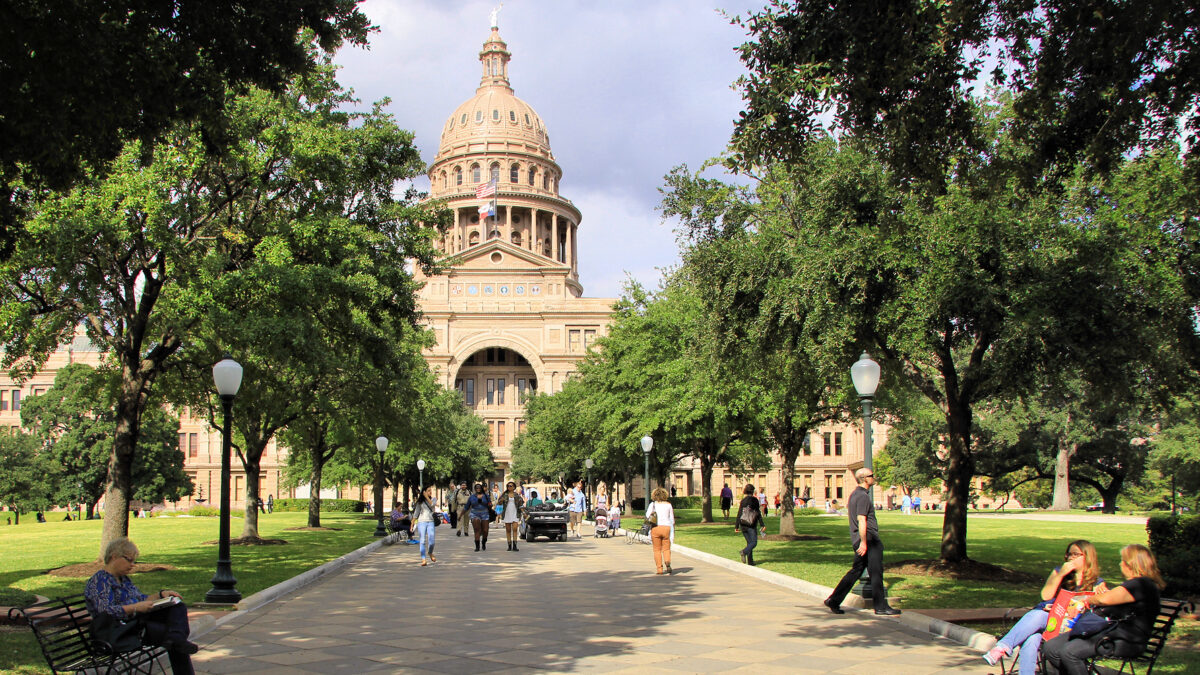
Arguably the most devastating losses occurred in Texas, where Democrats won the races for governor, lieutenant governor, attorney general, and other statewide offices. They also swept the four races for the Texas Supreme Court, taking the body’s conservative majority from 9-0 to 5-4. Control of the Texas Legislature will be split, with Democrats controlling the House and Republicans controlling the Senate.