

The U.S. Food and Drug Administration plans to finalize its long-awaited safety review of the most prolific abortion pills on the market, but it won’t do so until March 2027, according to a court document filed on Wednesday.
The expected completion date comes more than two years after U.S. Health and Human Services Secretary Robert F. Kennedy Jr. and former FDA Commissioner Marty Makary pledged to “study the safety” of abortion pills and approximately three months after the FDA anticipates a wrap on its mifepristone study. According to the five-page filing, the FDA is “using a variety of data sources contained within Sentinel, a distributed database, to conduct the study.”
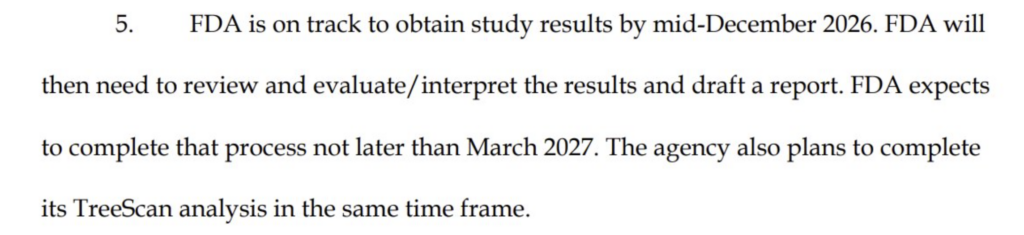
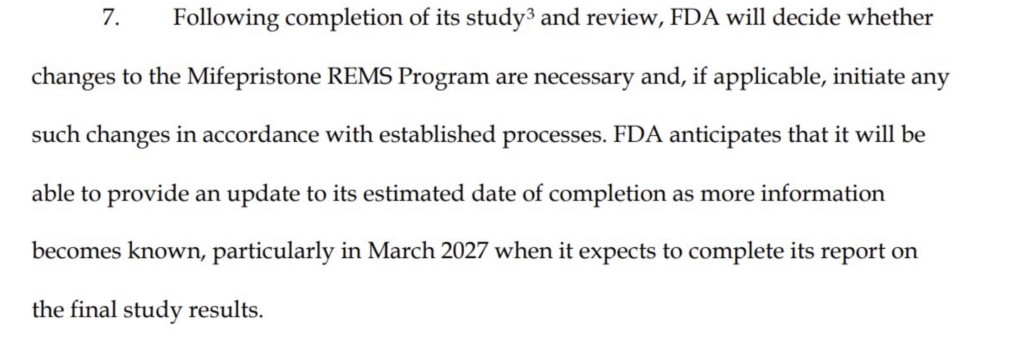
No review is required for the regulatory agency to reinstate some of the abortion pill safeguards, including an in-person doctor visit, that were stripped at President Joe Biden’s behest. The FDA confirmed, however, that it will not consider amending the Risk Evaluation and Mitigation Strategy that currently allows anyone to order mifepristone to any state regardless of its abortion laws until after the “completion of its study and review.”
This REMS evaluation, the agency claimed, will consider “arguments and information submitted to the Agency in multiple pending Citizen Petitions” and could affect the projected March 2027 “estimated date of completion.”
The long-awaited mifepristone status update was announced the same day a court-ordered deadline for the FDA to share its review plans was set to expire.
In his Apr. 7 opinion in the landmark abortion pill lawsuit Louisiana v. FDA, U.S. District Judge David Joseph of the Western District of Louisiana granted the FDA a stay that would allow its current mail-order abortion scheme to continue as long as the agency agreed to provide the court with a review status update “on or before six months from the date of this order.”
Joseph warned that “should the agency fail to complete its review and make any necessary revisions to the REMS within a reasonable timeframe, the Court’s analysis – and the weight accorded to these factors – will inevitably change.”
“FDA has an obligation to act with all deliberate speed to review its past actions and complete a thorough analysis that addresses the deficiencies it has acknowledged,” Joseph wrote. “The parties and the American public deserve nothing less.”
Until Wednesday, the FDA’s website claimed that “The next steps of the mifepristone safety study will be data exploration, evaluation of data integrity, and implementation of the analyses, validation, and peer-review.”
“In academia, studies like these, including the appropriate steps described above, often take approximately a year or more to conduct. The current agency plan is to have this study done sooner than that timeframe. Drug safety is a paramount issue with all drugs that the agency approves. We will continue to keep you posted on this project,” the FAQ entry states.
The FDA did not answer The Federalist’s questions about whether it made any measurable review progress over the last year. Nor did the agency answer who is leading the mifepristone review after Makary’s exit.
Ever since the FDA promised a review in 2025, pro-life leaders have expressed suspicion that the FDA is slow-walking its evaluation of abortion pills until after the 2026 midterm elections. Those fears amplified as the court-ordered deadline for the regulatory agency’s safety evaluation of the most popular abortion drug on the market neared.
“More than one year ago, HHS Secretary Kennedy and former FDA Commissioner Makary announced the safety review of the abortion pill, mifepristone, had officially started. Since then, we have seen no public evidence this review has actually begun, much less any substantial progress made,” CEO of Americans United for Life John Mize said in a statement on Oct. 7.
Sen. Josh Hawley told The Federalist in February that, despite previously confirming that the mifepristone review is in “data acquisition phase,” the FDA is “not even reviewing any data yet.”
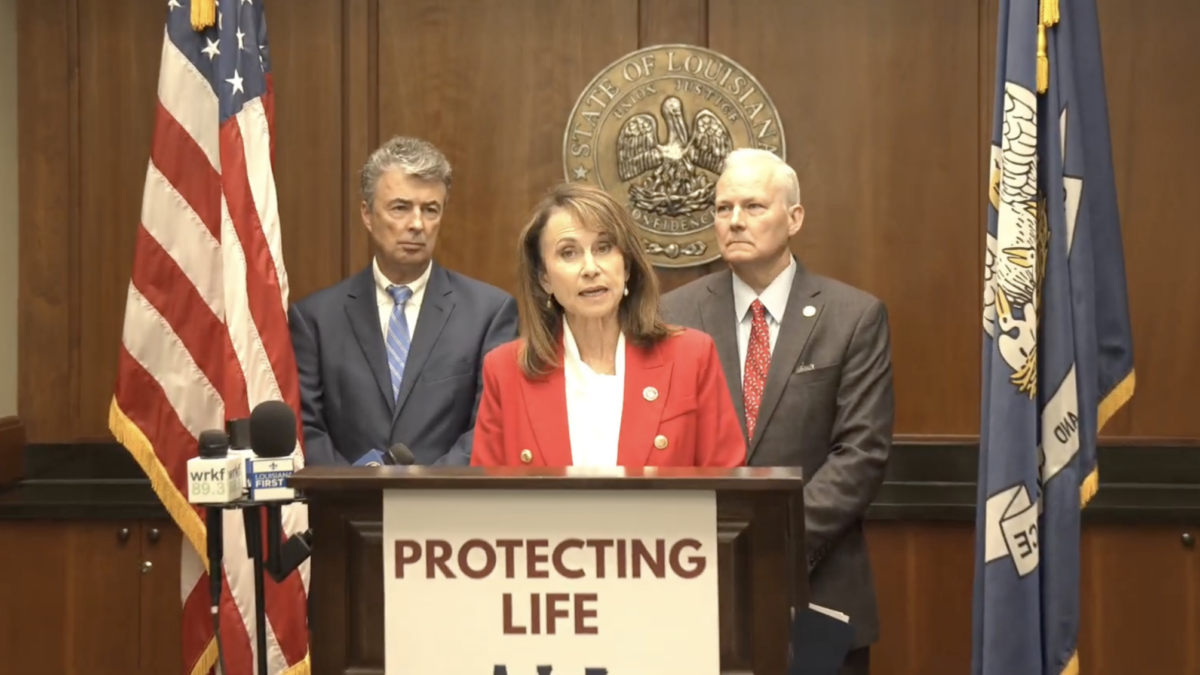
“We can’t wait forever for them to do it,” Louisiana Attorney General Liz Murrill also told The Federalist in February. “People are suffering severe consequences from this. The system is suffering too.”
Polling suggests a majority of likely voters want the FDA to protect women from the dangers of abortion pills. Pro-life leaders, Congress, plaintiffs in the Louisiana v. FDA case, and Republican attorneys general alike have also urged the administration to at least reinstate the mifepristone safeguards stripped by President Joe Biden’s FDA. The only official mifepristone movement from the FDA, however, occurred in Oct. 2026 when the agency approved a generic version of the abortion pill for sale and distribution.
The push for action intensified this week when a new critical analysis from the Charlotte Lozier Institute found that the FDA’s 2021 review of the mifepristone REMS program was “insufficient” and “may have even been biased towards pro-abortion groups.”
Data suggests the subsequent removal of the in-person dispensing requirement increased the dangers of the abortion pill. More than one in 10 women who take the prolific abortion pill suffer serious additional complications such as hemorrhage or infection. That same “largest known study of the abortion pill” determined the risk of experiencing a life-threatening event linked to mifepristone is at least 22 times higher than what the FDA and mifepristone manufacturer Danco claim.
“Given that the Biden administration relied on insufficient evidence and flawed assumptions in removing the in-person dispensing requirement, the FDA should restore that safeguard immediately. And it can do so by settling its litigation against Louisiana,” SBA Pro-Life America President Marjorie Dannenfelser said in her statement commenting on the Oct. 7 deadline.
The Alliance Defending Freedom legal counsel representing Louisiana and abortion pill poisoning survivor Rosalie Markezich in their case against the FDA told the Daily Signal prior to the FDA’s filing that a vague update could mean plaintiffs “could go back down at the district court while the 5th Circuit is pending and continue litigating there.”
“Even if the agency were to find that mifepristone safety review concludes that they needed to return safeguards, they still would have to go through an administrative process, and the earliest that we would see relief would be the end of 2027-2028 at this point, and that does nothing to alleviate or fix or cure the lawfulness of the 2023 REMS decision — that’s the thing that we’re actually litigating in court — no matter what they find in this study, that decision in 2023 by the FDA was still unlawful,” the counsel added.