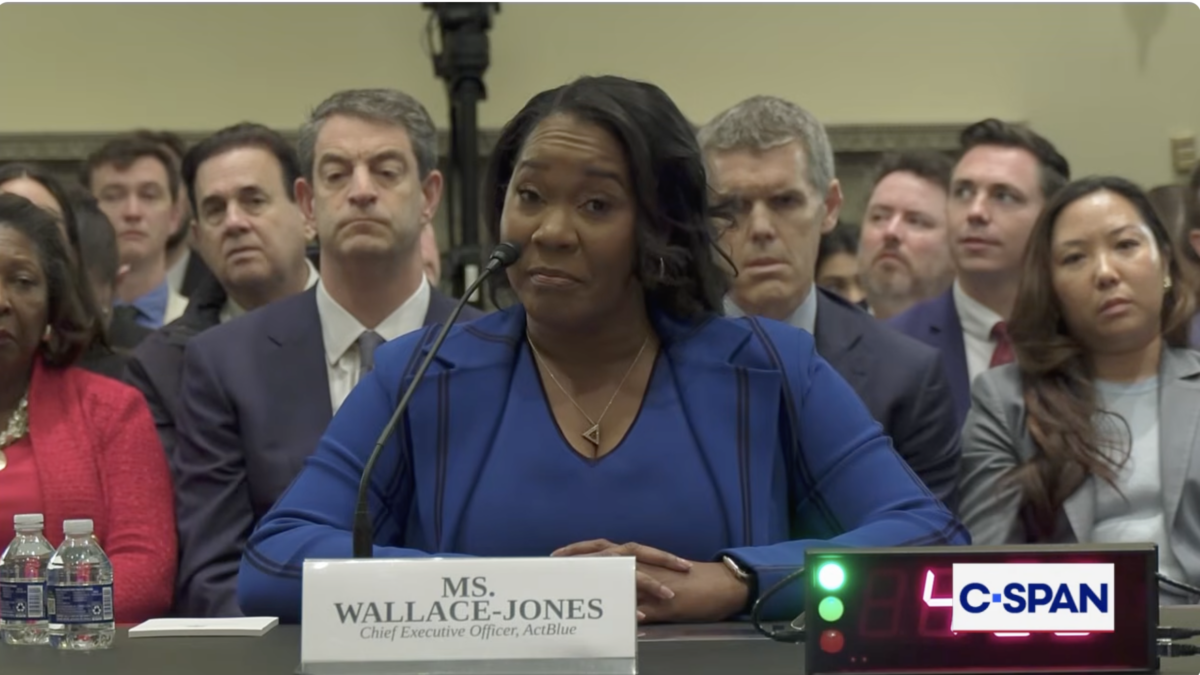

Benefit of the doubt.
That’s apparently the phrase that paid when it came to the left’s fundraising giant’s handling of potential foreign donations, according to the findings of a new congressional report into the ActBlue cash scandal.
In their third interim report, the House Administration, Judiciary and Oversight committees have released internal ActBlue documents that expose what seems to be the left-wing organization’s blasé attitude about laws prohibiting contributions from foreign actors to political campaigns.
Among the latest installment’s key findings:
— ActBlue’s policies that allegedly “prevent” illegal, fraudulent political contributions could be bypassed easily by foreign actors.
— ActBlue’s “passport verification process,” which allegedly prevents illegal foreign donations, is an ineffective security method that does not actually require a valid U.S. passport number.
— ActBlue repeatedly instructed its fraud prevention analysts to “give the donor the benefit of the doubt” and to ignore red flags about contributions with foreign indicators.
“I wish I could say that [the new records] surprise me, but in many ways this is almost what you expect,” Rep. Bryan Steil, R-Wis., chairman of the Administration Committee, said Thursday in an interview on The Federalist Radio Hour. “I have been engaged in this investigation now for three years and what we continue to realize is that ActBlue has not been taking fraud seriously.”
‘Knowing and Willful’
Since launching in 2004, the cash machine for leftist politicians, groups, and causes has raised nearly $20 billion, including nearly $1.8 billion last year.
The committees began looking into ActBlue’s fraud prevention practices following the 2024 presidential election. Steil and majority Republicans on the Administration Committee were raising concerns and asking for answers in 2023.
As The Federalist has reported, records obtained through congressional subpoenas confirmed suspicions that ActBlue had accepted unverified payments during record-smashing fundraising totals for the Democrat Party’s presidential replacement candidate, then-Vice President Kamala Harris, in the summer of 2024.
Harris raised a jaw-dropping $81 million in the 24 hours following President Joe Biden calling it quits in July 2024. “In August, the campaign said it raised $361 million, bringing the total to more than $615 million in fundraising since Harris had entered the race,” CBS News reported in October 2024. The congressional investigation has found donations poured through the platform from Saudi Arabia, Iraq, Colombia, and other countries, as The Federalist previously reported.
ActBlue has denied wrongdoing and insists that it has cooperated with the committees’ oversight requests. In an April 28 letter, the fundraising platform called claims that officials have impeded the congressional investigation “baseless.”
But following a New York Times report on ActBlue in April, the committees found the fundraising platform had failed to turn over all requested documents. The Times reported that Dana Remus, ActBlue’s outside counsel and former Biden White House counsel, drafted a memo advising that CEO Regina Wallace-Jones may have misled Congress about the contribution collector’s review processes for foreign donations and that ActBlue’s acceptance of illegal foreign contributions appeared to be “knowing and willful.”
‘Essentially Toothless’
In 2023, Wallace-Jones had told Steil’s Committee on House Administration that ActBlue’s multi-layered vetting process required passport information from donors providing an address outside of the U.S. and that “[o]nly donations with passport information are processed.”
But new internal documents reveal ActBlue’s “passport verification” system was “essentially toothless,” the committees report states.
“We use some very basic validation — number of characters — to ensure that the number entered is a valid passport number, but we do not verify the information in any other way,” an ActBlue memo notes. “We do not, for instance, check the information provided against a government database. We merely store the information and continue with the contribution flow.”
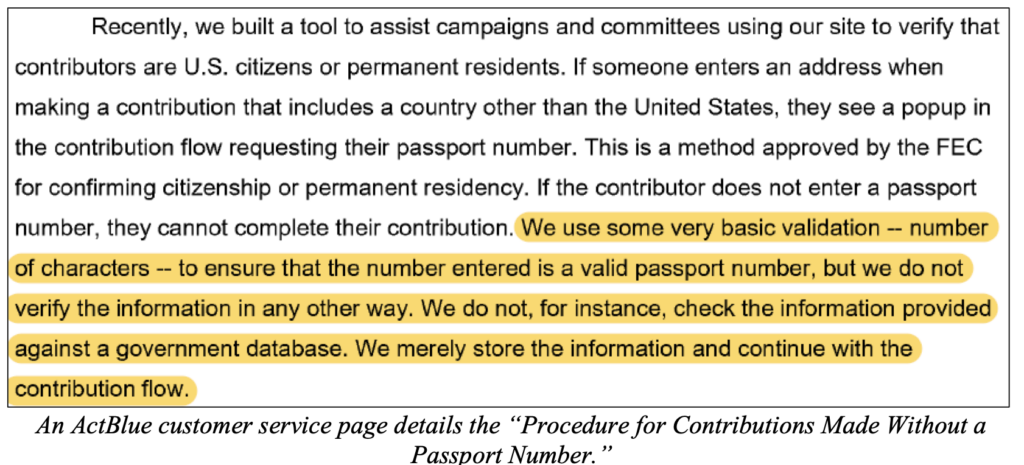
The committees’ report asserts the process could allow foreign actors to enter “any random combination of numbers and donate to political campaigns in the United States, in violation of federal law.”
Internal documents also show that ActBlue allowed employees to determine an “alternative method of verifying the [donor’s] citizenship” for donors who do not have U.S. passports. ActBlue’s legal team needed to be in on the solution, the communication suggests, but employees were encouraged to put a “a placeholder in the passport number field of [the donor’s] ActBlue account.”
The records show ActBlue accepted a contribution from a foreign donor based on copies of a Form 225-A (Card of Identity and Registration), which expired on August 27, 1974, and a birth certificate from the Detroit Health Department, but no U.S. passport.
“This seems like sufficient evidence to me!” a member of ActBlue’s legal and compliance team wrote, according to the report.
ActBlue supervisors told their teams to take donations even if red flags popped up. In one case, a supervisor disagreed with a fraud-prevention staffer’s review of a contribution. In audit notes, the supervisor acknowledges the “donor is foreign, but correctly entered their billing address, so they would be prompted for their passport number.”

‘Give the Benefit of the Doubt to the Donor’
It appears ActBlue’s philosophy was, make it work somehow.
As the committees noted in their April 2025 report, ActBlue was using Sift, an AI system that uses a scale to rate and determine the likelihood a donation is fraudulent. That report found ActBlue accepts 99.8 percent of contributions reviewed by the AI system. It manually reviews the rest. Altogether, the platform rejected “less than 0.1 [percent] of all contributions” for suspected fraud, the report stated.
Internal records show supervisors urging flexibility in processing donations. In one communication, a supervisor wrote that a staffer should “give the benefit of the doubt to the donor” despite multiple red flags. The discrepancies included “IP/billing mismatch and a concerning IP provider name, a foreign credit card, an odd email domain, and being connected to other rejected users via browser fingerprint.” Still, the supervisor couldn’t “say for sure that this is fraud.”
Records show employees were instructed to use suspect verification sources, including a donor’s social media account. Review logs show a supervisor noting that “all signs point to [a donor] being from Canada, but they used a Missouri billing address.” But the donor had an active Twitter account, so the supervisor recommended accepting the contribution. In another case, according to the report, a supervisor said there was “nothing suspicious” about a donor who used a prepaid card despite the fact that ActBlue reportedly had banned contributions from prepaid and gift cards not long before the 2024 election.

‘Clearly Not Interested in Answering’
The report notes that Wallace-Jones’ “refusal to address the apparent illegal contributions or her misstatements to Congress appears to have lead every remaining member of ActBlue’s internal legal and compliance team to leave the company, including former Interim General Counsel Aaron Ting.”
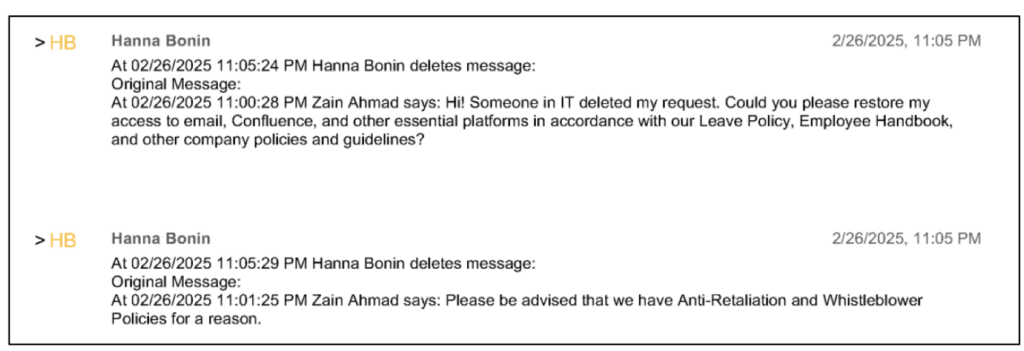
Zain Ahmad, who was reportedly the last remaining lawyer on ActBlue’s legal team, attempted to warn platform officials about “credible allegations of misconduct at the company, including significant alleged violations of federal campaign finance law and false statements to Congress,” the report states. He was locked out of his “essential accounts,” but was able to send messages through the internal Slack direct message account. There he advised that “we have Anti-Retaliation and Whistleblower Policies for a reason. The platform’s human resources director deleted several of the messages, according to the report.
When she showed up to a House Administration Committee meeting in June, Wallace-Jones refused to answer committee members’ questions. She made a big show of her plan beforehand in a Washington Post op-ed.
“When we had the CEO, Regina Wallace-Jones, before us, she pled the Fifth when asked what was the correct pronunciation of her name,” Steil told The Federalist Radio Hour. “So they are very clearly not interested in answering very basic questions about how ActBlue operates.”
The embattled CEO has painted the committees’ investigations and another by the Department of Justice as politically motivated. Earlier this week, The Washington Post reported that a law firm representing the fundraising platform met with congressional investigators last week and provided a report that ActBlue insists clears it of any wrongdoing.
“We must continue to stand against all efforts to undermine the grassroots infrastructure that powers the Democratic Party,” ActBlue CEO Regina Wallace-Jones said in a statement to The Post.
Steil said the investigation will continue.
“Everything remains on the table,” the chairman said. “I am convinced we need to make sure we are making real progress.”
Listen to the full interview with Congressman Steil here on The Federalist Radio Hour.