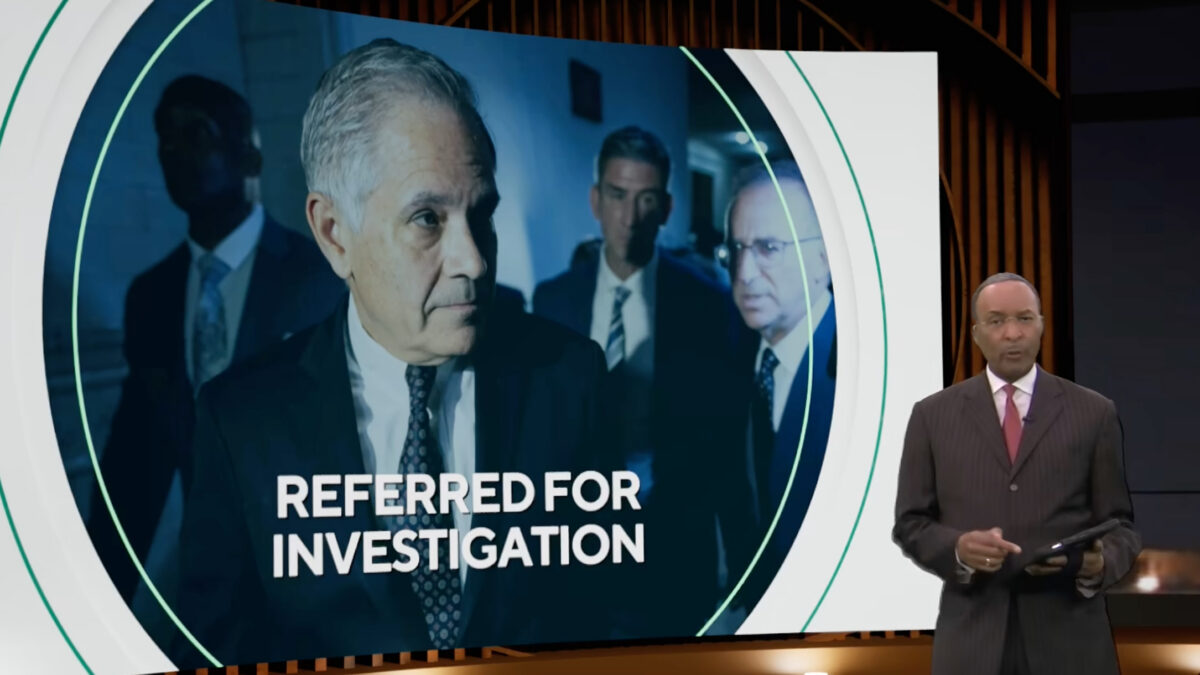

Pointing to evidence of “false statements, false declarations made under oath, perjury, obstruction of justice, and conspiracy,” a federal judge has issued a memorandum asking the Department of Justice to open a criminal investigation into Philadelphia District Attorney Larry Krasner and a top deputy in his office, Matthew Stiegler.
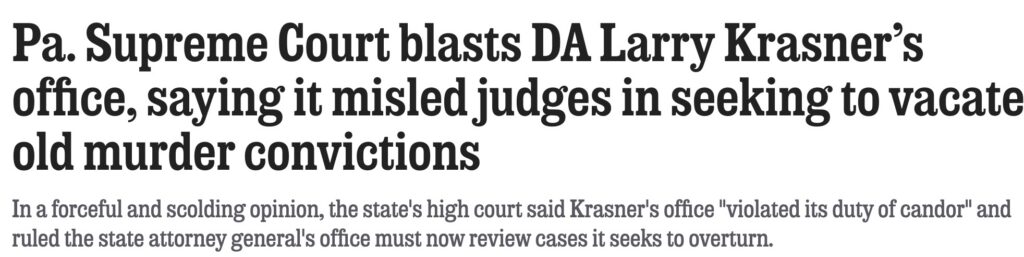
It’s familiar stuff. Krasner, a spectacularly woke prosecutor who won the office with lavish backing from George Soros, has a long history of scandal and crisis, and has been accused of misleading courts in several high-profile cases. This is an old headline from June, covering the same ground in a different matter:
The current controversy involves an effort by a convicted murderer, Dennis Johnson, to be freed from prison, turning to the federal courts with a repeated request for a writ of habeas corpus after state courts denied his several petitions for release. Turning to the agency that prosecuted Johnson’s 2009 murder case, many years before Krasner became the DA, the court asked the Philadelphia DA’s office if it opposed Johnson’s petitions. Without investigation, Krasner’s office conceded Johnson’s questionable claims about the supposedly flawed murder conviction, telling the court that prosecutors “did not oppose the granting of relief,” according to the memorandum.
Several years later, with the matter still pending before the federal district court, four prosecutors in the Philadelphia DA’s office signed a motion to withdraw the earlier concession of Johnson’s claims, saying that it contained “material misstatements.”
Going further, the office of the Pennsylvania Attorney General intervened, telling the court that Philadelphia prosecutors had made significantly misleading statements to Magistrate Judge Lynne Sitarski:
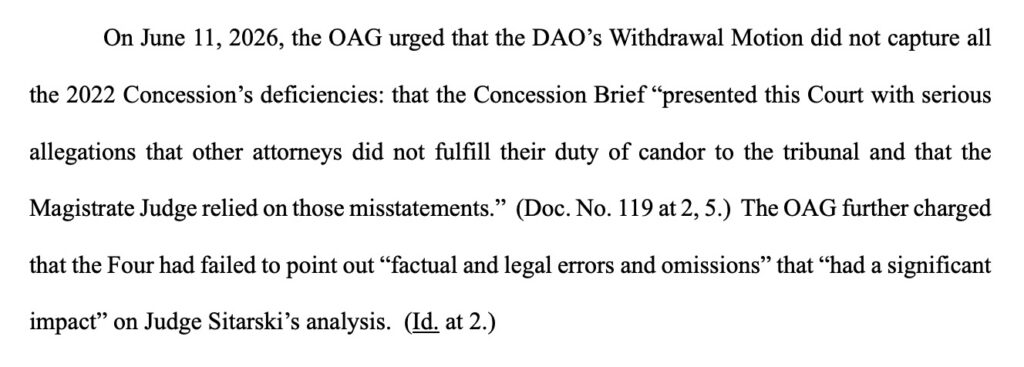
Faced with serious allegations of prosecutorial misconduct, District Court Judge Paul Diamond conducted an evidentiary hearing, taking testimony from a long list of prosecutors in Krasner’s office. The extraordinary testimony focused on Matthew Stiegler, who supervised the unit in the DA’s office that responded to habeas corpus petitions. Diamond writes that Stiegler’s testimony on the matter in his courtroom “was often contradictory, evasive, or outright dishonest.”
Stiegler has an unusual background for a prosecutor, having come to the office after working as a public defender, a defense lawyer at a nonprofit law firm, and a staff attorney at the ACLU. His profile as a lecturer at the University of Pennsylvania’s law school doesn’t mention his work in the DA’s office. Reflecting that background, Diamond writes that Stiegler immediately began working in what was effectively a partnership with Johnson’s lawyers, meeting with them several times and agreeing not to challenge their claims.
The memorandum from the court describing the background of the case paints a very particular picture of Krasner and his office. The Pennsylvania attorney general is a Republican; as Diamond considered taking the case from the DA and assigning it to the attorney general’s office, testimony showed that Krasner repeatedly complained about having his case taken over by “Nazis.”
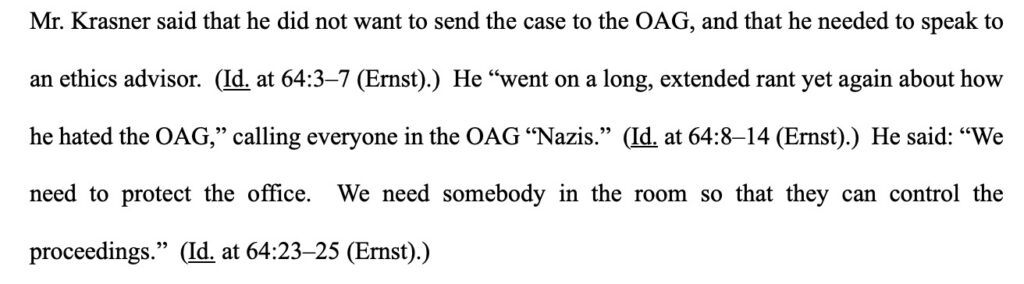
It’s Soros DA 101: Republicans are Nazis, and good prosecutors don’t argue with convicted murderers who ask to be released from prison.
Through a spokesman, Krasner offered this comment to The Federalist: “I respectfully and vigorously disagree with the court’s findings of fact and conclusions of law. I look forward to appealing to the higher court as soon as the law allows. This remains a pending matter, which limits for now my and my office’s ability to respond in the media.”
The Federalist also asked the Pennsylvania Attorney General’s Office if it would discuss the case and address Krasner’s alleged repeated depiction of everyone in that office as “Nazis,” but they didn’t respond.