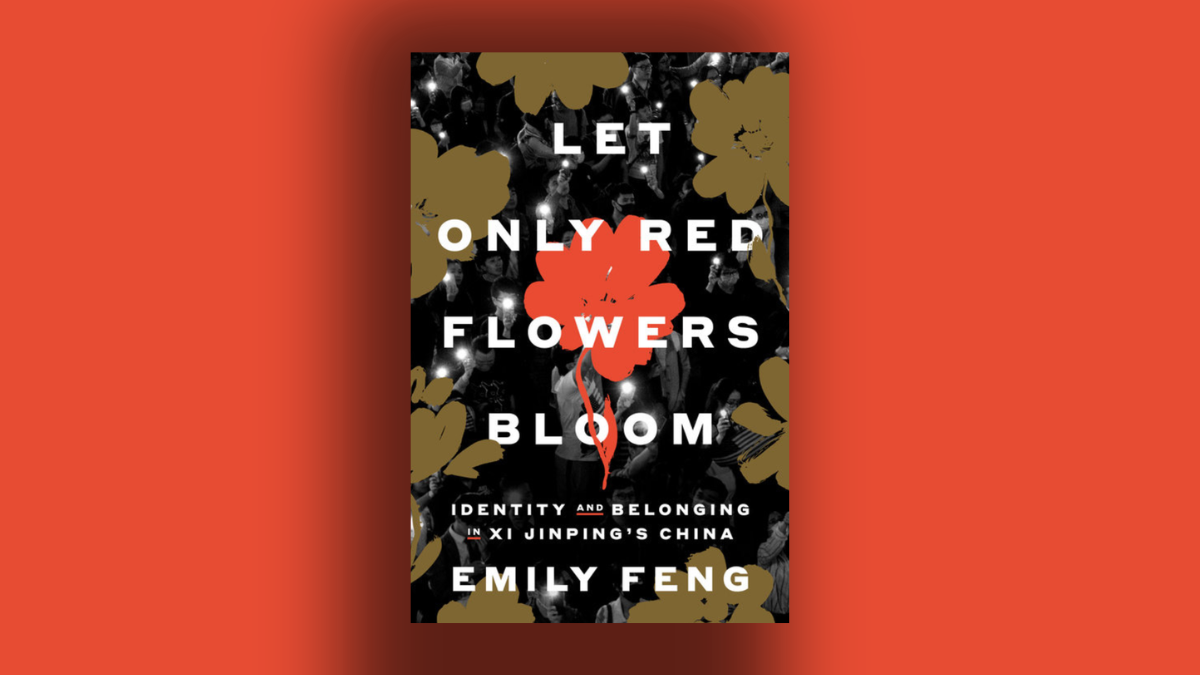

On July 15, 2026, Hong Kong national security police raided two independent bookstores and arrested five people on suspicion of displaying and selling publications with “seditious intention” under the city’s national security laws. One of the books reportedly seized was Emily Feng’s Let Only Red Flowers Bloom: Identity and Belonging in Xi Jinping’s China.
Feng is an American journalist born to Chinese parents in Connecticut. From 2019 to 2022, she served as an international correspondent for National Public Radio in Beijing, where her reporting highlighted critical issues such as the mass incarceration of Uyghur Muslims. In 2022, after a reporting trip, Chinese authorities barred her from returning.
Her case reflects a broader pattern of the regime’s tightening grip on press freedom. Spring 2020 saw China expel about nineteen reporters from major outlets like The New York Times, The Wall Street Journal, and The Washington Post, in retaliation for U.S. restrictions on Chinese state media. In the years that followed, foreign correspondents continued to face visa delays and denials, shortened press credentials, constant surveillance, online smear campaigns, physical obstruction, and threats of legal action.
Ethnic Chinese journalists with foreign passports often endure harsher treatment, because the Communist Party regards all ethnic Chinese, regardless of citizenship, as owing loyalty to the motherland. Therefore, state media labeled Feng a “race traitor” and a “banana” (yellow on the outside, white on the inside), for her reporting that shed light on the regime’s oppressive practices.
After being denied re-entry to China, Feng relocated to Taiwan. While her personal journey inspired her to write the book, she deliberately keeps herself in the background, allowing the experiences of others to take center stage. The narrative is a collection of intimate portraits of nearly two dozen individuals whose lives intersect with the state’s strict definition of being “good” Chinese, including a human rights lawyer who lost his license for representing a Hong Kong activist, an Inner Mongolian teacher punished for supporting his mother tongue, and a Uyghur family torn apart by internment camps.
This book stands out for two main reasons. First, while it references important historical events like the incarceration of Uyghurs starting in 2017, the Hong Kong protests of 2019, and Covid pandemic starting in 2020, Feng treats these as backdrops rather than the main focus. As she notes in the preface, “This is not a history book … it focuses on people living in the present day.” Second, she weaves individual stories around a central theme of identity, suggesting that understanding the Chinese state’s self-perception and its desired citizenry is crucial to grasping its policies.
Feng argues that Xi Jinping’s greatest fear is that the Chinese Communist Party could face a downfall similar to the Soviet Union. To prevent this, Xi aims to eliminate any opportunities for what he deems “incorrect” ideas and thinking. He seeks to mold the Chinese population into “good” Chinese: ethnically Han, Mandarin-speaking, without religious beliefs, and loyal to the Party. Anyone outside this narrow definition, whether in ethnicity, language, faith, or political views, must conform.
Feng points out that this restricted identity has driven oppressive policies in China. For instance, children from Mongolian, Tibetan, and Uyghur communities are subjected to Mandarin-only education and political indoctrination, while adults who promote their mother tongues face intimidation or imprisonment. In Xinjiang, millions of Uyghurs have been detained simply for their ethnicity.
This pressure of conformity extends to Han Chinese citizens as well. Dissenters, including lawyers, citizen journalists, feminists, or anyone who speaks out, risk surveillance, job loss, or worse.
One story that resonates particularly strongly is that of the “chained woman.” In late January 2022, as Beijing prepared for the Winter Olympics, a video surfaced on Douyin (Chinese version of TikTok) showing a disheveled woman, chained by the neck inside a doorless shed in rural Feng County, Jiangsu. She had given birth to eight children. Officials claimed she was legally married and restrained due to schizophrenia, but the public rejected this absurd explanation.
Public outrage led to investigations revealing that the “chained woman” was a victim of human trafficking. This case exposed the human costs of the one-child policy, which resulted in mass female infanticide and a severe gender imbalance, driving many Chinese men, especially in rural areas, to resort to trafficking girls and women for marriage.
To quell public anger, a Xuzhou court sentenced the woman’s husband to nine years in prison and five accomplices to terms ranging from eight to thirteen years for trafficking and abuse. Still, rather than addressing the broad issue of human trafficking, the Chinese government focused on covering it up, fearing it undermined the positive image Xi Jinping seeks to portray.
State media were ordered to suppress coverage, and censors quickly removed online references to her plight. Local police even detained two women who tried to visit her, underscoring the authorities’ commitment to silence. One of the citizen journalists who investigated the story on his own felt so threatened by repeated visits from the authorities that he eventually sought political asylum in the U.S. Foreign journalists such as Feng who tried to report the story were followed and harassed by public security personnel. Even today, who the “chained woman” is and what her real story is remain a mystery.
The book’s title comes from a Hui Muslim man named Yusuf. He wryly referenced Mao Zedong’s short-lived 1956 “Let a hundred flowers bloom” campaign, in which the Party briefly invited criticism only to persecute those who spoke out. Mao later called it a ploy to “entice the snakes out of their caves.” Xi, Yusuf observed, no longer bothers with the pretense. His relentless campaigns to enforce cultural and political conformity amount to a simpler decree: let only red flowers bloom.
The English edition of Feng’s book was published in March 2025 and garnered modest attention. Unlike more confrontational works such as Yang Jisheng’s Tombstone, her critique of the party and its policies is nuanced and rooted in personal stories. This year, her book’s Chinese-language edition was released in Taiwan, sparking significant interest from Beijing. The July 2026 raids on Hong Kong bookstores selling the title aimed to limit its reach, but they had the unintended consequence of driving demand, as the book quickly sold out in Taiwan, leading the publisher to order an emergency reprint of ten thousand copies.
By labeling a meticulously reported account of everyday Chinese lives as seditious, the authorities only reinforced Feng’s main argument. Many individuals now see purchasing and reading this book as a subtle yet powerful act of resistance against a regime committed to enforcing conformity and silencing dissent.
By treating a carefully reported account of ordinary Chinese lives as seditious, the authorities only confirmed Feng’s central argument. The people she profiles refuse to fit the state’s narrow definition of identity, and their stories continue to circulate despite efforts to silence them. For many ethnic Chinese everywhere, buying, reading this book, or even writing a book review, has become more than an act of curiosity. Rather, it is a quiet, deliberate defiance to an authoritarian system determined to enforce conformity.