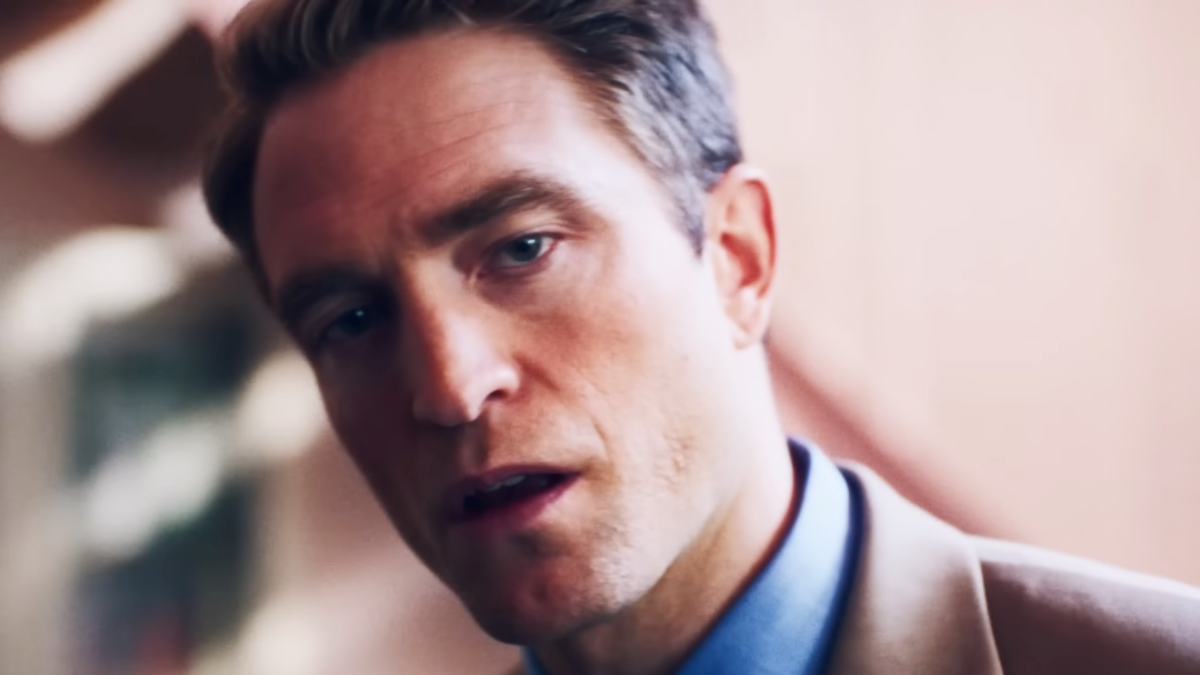

Given how far to the left Hollywood now is, a faithful adaptation of He-Man — powerful, competent, good — should be impossible. Prince Adam, you would think, would be given the same treatment Luke Skywalker and Indiana Jones and Captain Kirk and James Bond have received.
And if you saw the marketing for Masters of the Universe, you probably thought that was the path Amazon/MGM had chosen. Director Travis Knight’s assertion that Skeletor was an example of “toxic masculinity” and other asinine comments made it seem like Amazon and MGM were only interested in seeing how many humiliation rituals they could put He-Man through, same as Kevin Smith did in the horrendous Masters of the Universe: Revelation Netflix series.
This probably is part of the reason why Masters of the Universe is a box-office disaster, making only (as of this writing) $54 million worldwide on a $200 million budget (not counting marketing). People, naturally, assumed it was more of what Hollywood has been serving and passed. Fortunately, the left hand obviously did not know what the right hand was doing since the marketing assertions have no bearing on reality.
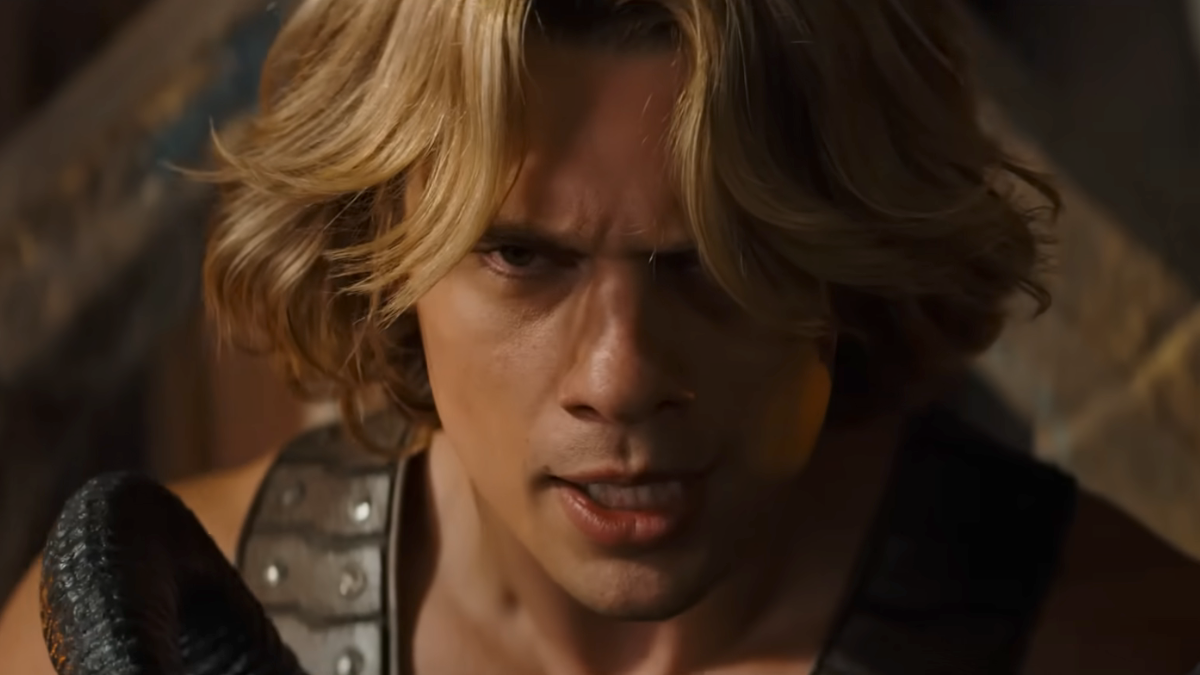
Upon returning to his home on the magical planet of Eternia after witnessing its destruction and spending 15 years in exile, Prince Adam (Nicholas Galitzine) turns to his childhood friend, Camila Mendes’ Teela, and asks, “Why would [Skeletor] do this?”
Because he’s the bad guy, she replies.
“There has to be more to it than that,” Adam protests.
“He has a skull for a face,” Teela says.
That, in a nutshell, is one of the reasons why Amazon/MGM’s Masters of the Universe is so good, one of the best films to come out of the Hollywood sludge machine in several years.
The film is a big-screen adaptation of the classic Filmation cartoon He-Man and the Masters of the Universe, a cartoon made primarily to sell Mattel’s Masters of the Universe toys. Like Transformers and G.I. Joe, He-Man started life as a glorified toy commercial. And from 1983 to 1985, He-Man sold Mattel’s toys five days a week by defending the secrets of Castle Greyskull from the “evil forces of Skeletor,” an interdimensional demon who coveted the power He-Man possessed. The show is silly, simple and not technically impressive, especially when put beside the likes of Batman: The Animated Series or Fox’s X-Men.
It is also sincere and heroic. A throwback even in the ’80s, an echo of Flash Gordon and Superman’s original incarnation, He-Man was “the most powerful man in the universe,” able to lift and toss entire mountains and cities. He was also unequivocally, incorruptibly good. He used his awesome power to help people simply because he was the hero. The power and the goodness were intertwined: He-Man could not be as good as he was without the power, and he could not be as powerful as he was without his goodness. He was, in many respects, the old ideal of chivalry dressed in barbarian skins for Gen Xers.
In fact, it is not a stretch to say that Masters of the Universe is an indictment of the woke mind parasite, particularly its intersectional feminist form. When we meet the adult Adam, 15 years into his emergency exile on Earth, he is literally in hell. He works in the HR department of a nameless corporation where he must listen to asinine complaints and take part in meaningless, feelings-affirmation meetings.
Away from work, things are no better: He rooms with a nameless, effeminate guy who only seems to watch romance movies like The Notebook. While crying. Adam’s world is literally filled with feminine energy that the people around him, like his boss, frame as the real world, the only world.
“You have to choose whether to be part of the real world,” she tells him, or be a dream-filled loser, referencing his drawings of Eternia (that there are children’s drawings and actual sketches in his room is a great touch) and his constant looking for the Sword of Power, the movie’s MacGuffin, which holds the power of the universe. A world of masculine energy does not even exist in this mindset.
Of course, Adam finds the sword and returns to Eternia, but the indictment does not end as Earth recedes in the rearview mirror. Adam, even after seeing the destruction Skeletor has wreaked on his home, even after all the time spent trying to escape, is still in HR mindset. He tries to dialogue with monsters. He tries to call seminars so that differences can be resolved. He does not think that ripping off the mechanical arm of Trap-Jaw (one of Skeletor’s minions) is something to celebrate.
Some people have argued that this is the movie’s leftist ideology bubbling up to the surface, the writers feminizing He-Man, whittling him down to an appropriate size for the 21st century. But the script is trading woke for brilliance. Adam is not being the HR guy because he’s feminized. He’s being the HR guy because that’s all he knows. If we assume it is 2026 in the movie, it means 10-year-old Adam arrived on Earth in 2011, just when woke was about to vomit itself across the culture.
Intersectional feminism is the only operating system that he has been given during some of the most formative years of his life. He may have the sword. He may have the power. But, like Skeletor says, he doesn’t know how to use it. Far from being woke, this is the movie’s biggest punch against wokeism.
The feminist operating system is replaced primarily by Adam’s mentor, Duncan (race-changed but still brilliantly played by Idris Elba), the former captain of the Royal Guard. It is Duncan, channeling G.K. Chesterton, who tells Adam that he has fighting all wrong. When evil comes, Duncan says, “it’s not the poets who step up,” but the warriors. And who are the warriors? The ones who want their children to see one more sunrise. The ones who shield those who cannot defend themselves. Muscles — power — are needed to actually beat evil down. But a good heart is needed so that those muscles are channeled in the right directions, used for the right ends.
This is where the great contrast between He-Man and Skeletor comes into play. A hero is only as good as his villain, and Jared Leto and the writers deliver. This Skeletor is not sympathetic. He is not misunderstood. He does not have a tragic backstory. As he says, he’s the villain, and it feels good to be evil.
And, like most evil people, he is paranoid. He understands that the power he has can be lost, stolen, taken away. He needs the power of Greyskull so that he can oppress and destroy and kill without fear that there will be retribution. Skeletor is tyranny, power used selfishly. He-Man is authority, power used justly.
Besides its anti-woke themes, Masters of the Universe is one of the few modern movies that seems to actually be having fun. It understands what kind of movie it is and embraces it. Costumes, characters, places all look like their animated counterparts and even the original toys. Brian May, one of the lead guitarists of Queen, is part of the soundtrack. Even the old cartoon theme is given a chance to shine.
Masters of the Universe is not perfect. Some of the action sequences come off flat. Some emotional beats are handled way too quickly. Some of the jokes do not land. But it is a fun, energetic popcorn summer movie that actually loves masculine heroism. And that is reason enough to love it.