
The nation’s 250th birthday provides an opportunity not just to celebrate but also to reflect. As part of this important anniversary, we should dig deeper into our nation’s history, ponder the principles behind the Revolution, and rededicate ourselves to those principles.
Thankfully, the National Archives is working to share the stories behind the Revolution, both to visitors to the nation’s capital and Americans in their hometowns. Hopefully, the educational effort designed to create those “teachable moments” will last well after the fireworks end this July 4.
Exhibit on the Revolution
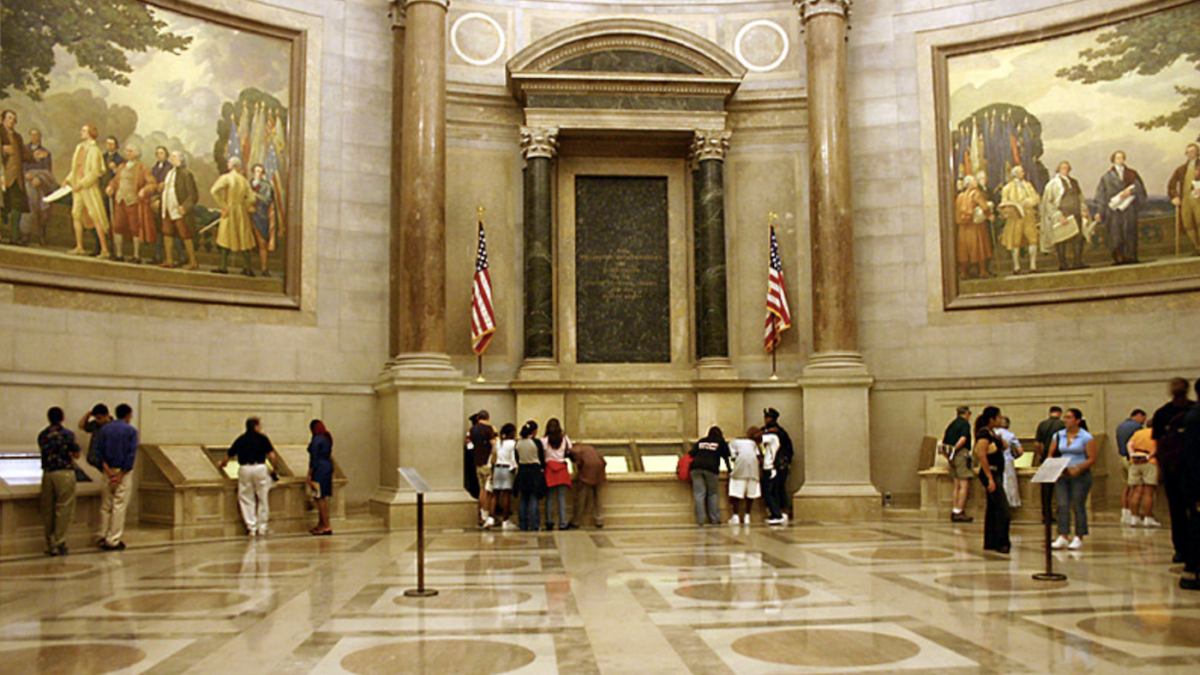
In Washington, the Archives recently debuted an exhibit, “Free and Independent: A Celebration of the Declaration,” which gives a short history of the nation’s founding document and the Revolution it sparked. The exhibit explores the principles of the Declaration, while providing context and history behind the document and the people associated with it.
To the extent that any single exhibit can, “Free and Independent” does a commendable job of explaining the Revolution in a concise display of archival art, documents, and objects. It highlights the radical nature of a Revolution rooted in the premise that people derive rights from God, not a king or emperor. It also brings the Revolution home by profiling lesser-known figures associated with the Declaration of Independence, including signers such as Button Gwinnett and Timothy Matlack, the engrosser who created the famous parchment document on display at the Archives.
The crowds of school groups and families at the Archives and around Washington in recent weeks — a dramatic change from the Covid years, when the National Mall resembled a ghost town — suggest a strong interest in travel to the nation’s capital for the 250th anniversary celebrations. That said, many Americans lack the time or means to journey to Washington. But it doesn’t mean those individuals should lack access to the nation’s founding documents or to the important constitutional principles those documents reinforce for American citizens.
Travels of Treasured Documents
A separate exhibit at the Archives documents the Freedom Train, which in two prior instances — one just after World War II and the other associated with the nation’s bicentennial in 1975-76 — transported and displayed important documents for all Americans to see. Both trains took over a year to tour all 48 of the continental United States, with the first Freedom Train stopping in more than 300 cities and the bicentennial version touring through 138.
For the nation’s 250th birthday, the Archives has revived the Freedom Train concept. Beginning in March and running through August, a select number of documents from the nation’s founding era are touring eight cities across the country. The documents include George Washington’s oath of allegiance and a copy of the Treaty of Paris that ended the Revolution, the latter of which was until recently displayed in the Archives’ new permanent exhibit, “The American Story.”
Unfortunately, the nation’s Charters of Freedom — the original copies of the Declaration of Independence, Constitution, and Bill of Rights — have remained in Washington this time around, presumably to be present on July 4. And both logistical and financial obstacles that made another Freedom Train impractical mean that this time around, the documents are being transported via plane. That nod to modern technology makes a traveling exhibit more cumbersome; when the train itself is the “museum,” it can visit more towns for a shorter period (i.e., a few days), as opposed to an exhibit that must be unpacked from a plane into a museum and then repacked for the next leg of the tour.
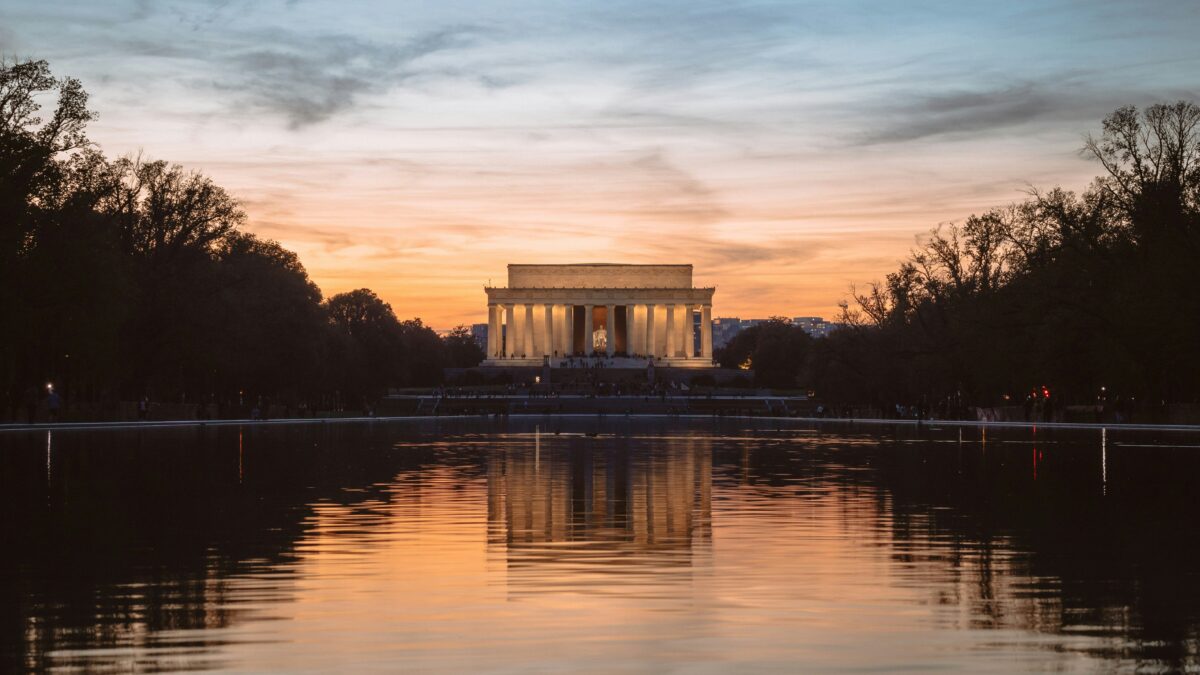
Regardless, the Archives’ exhibit helps to showcase not just these precious historical articles themselves but also the principles behind the Revolution that have transformed our nation and the globe. Hopefully, the nation’s 250th birthday will serve as but the starting point for a renewed focus on civic education and appreciation that can revive our culture, providing the “new birth of freedom” that Abraham Lincoln spoke of eight score and three years ago.
“Free and Independent: A Celebration of the Declaration” runs through July 5, 2027, at the National Archives, 701 Constitution Ave. NW., Washington, D.C. (Metro: Archives-Navy Memorial). The museum is open daily, 10 a.m. to 5:30 p.m. Admission is free.
The Freedom Plane National Tour continues in Denver (through June 14), Miami (June 20-July 5), Dearborn, Michigan (July 9-26), and concludes in Seattle (July 30-Aug. 16). More information is available at https://freedomplane.org/.