
All voices become one voice. All ideas become one idea. Every cultural expression produces the same conclusions in the same vernacular.
Opening a couple weeks behind another presidential library that isn’t a library, with the actual records of the president parked somewhere else, the privately organized Theodore Roosevelt Presidential Library hasn’t drawn nearly as much attention as the other one. From a distance, it looked extremely promising, designed to blend in with a magnificent American landscape in what appeared to be a declaration of moral modesty and ideological restraint: a promise to focus on America.
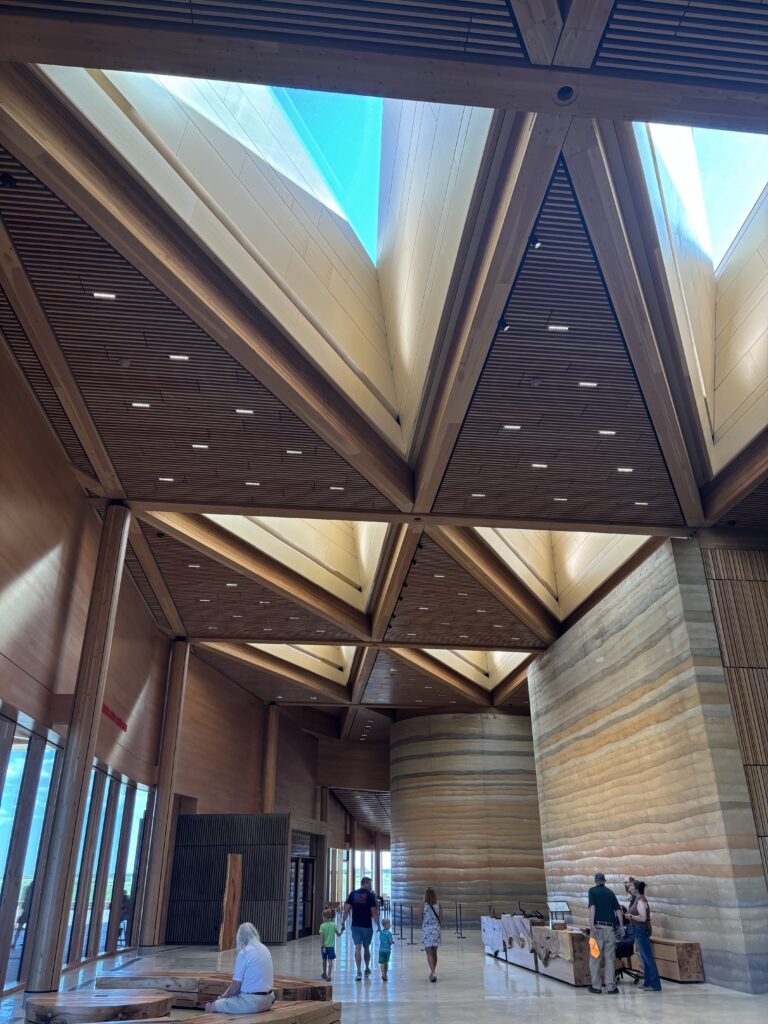
When you actually get to the thing, the building still seems to celebrate place, which means that it seems to celebrate the country. Unlike a certain remarkably ugly tower in Chicago that signals narcissism and an adolescent aesthetic sensibility, the Roosevelt library merges into the North Dakota badlands, with a roof designed to be a garden…
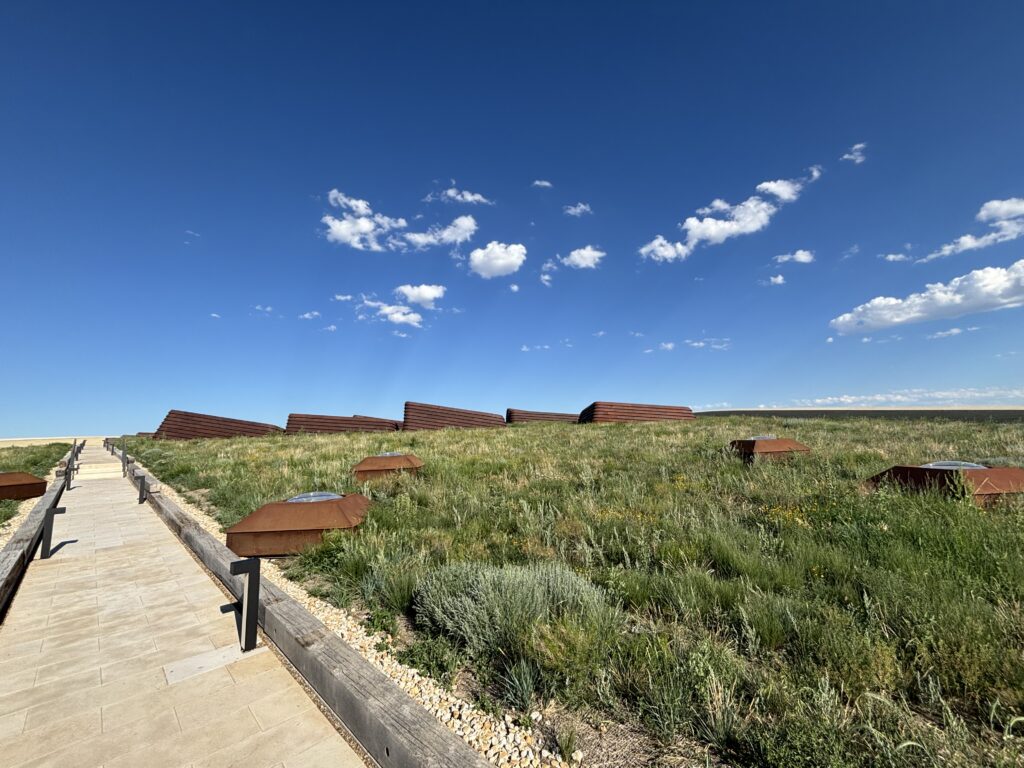
… and a path from the buildings that sends visitors out into the land, looking at this:
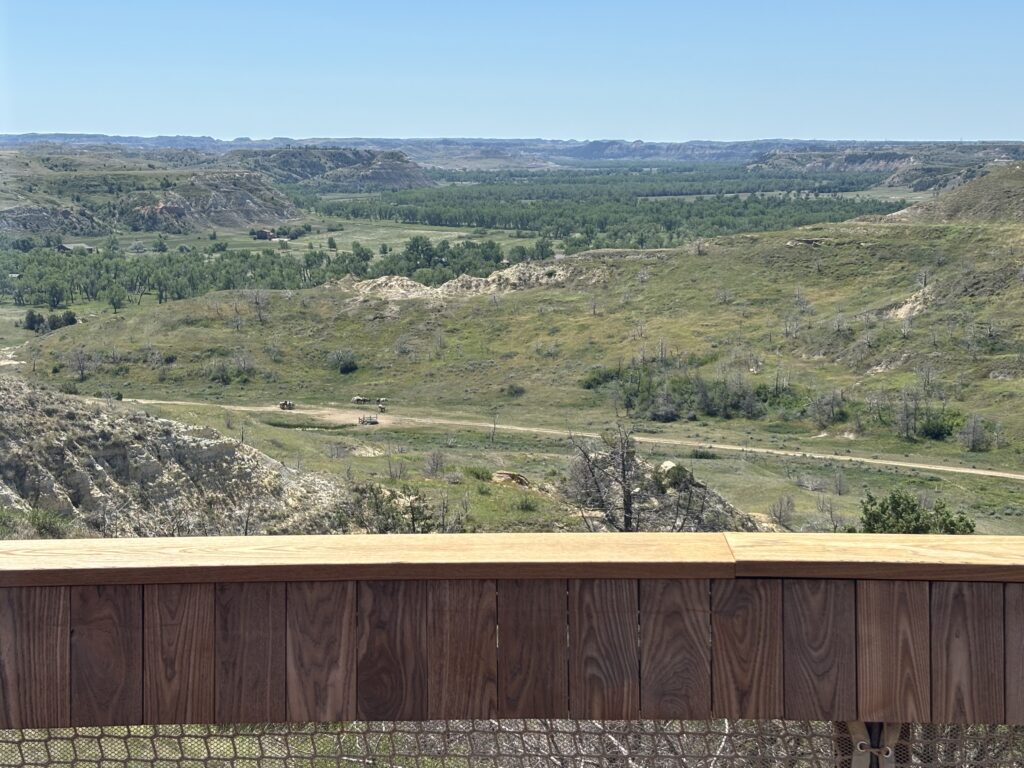
That’s AMERICA, right there. In triple-digit heat this weekend, not many people went out to admire that path and what it shows you. But they will. When you look back from the land to the building, you keep seeing the contours of the land. It’s like the place is telling you to look at America.
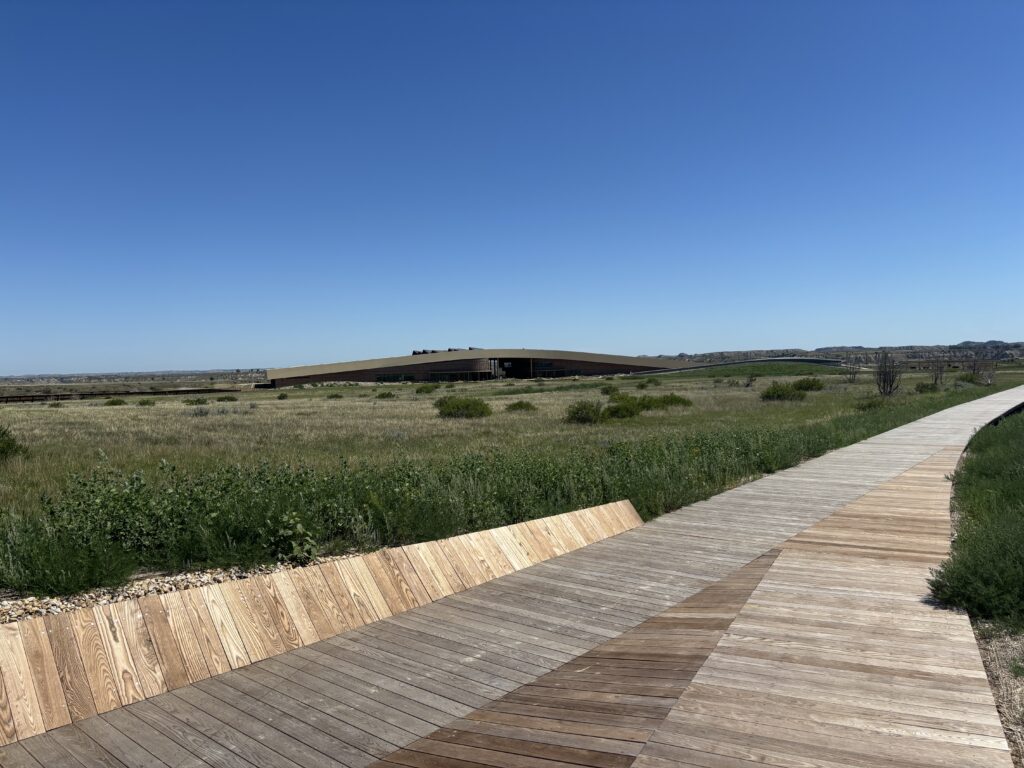
The crowd read the signals the same way I did, because they showed up ready to hear an American story centered on respect for the place and its people.
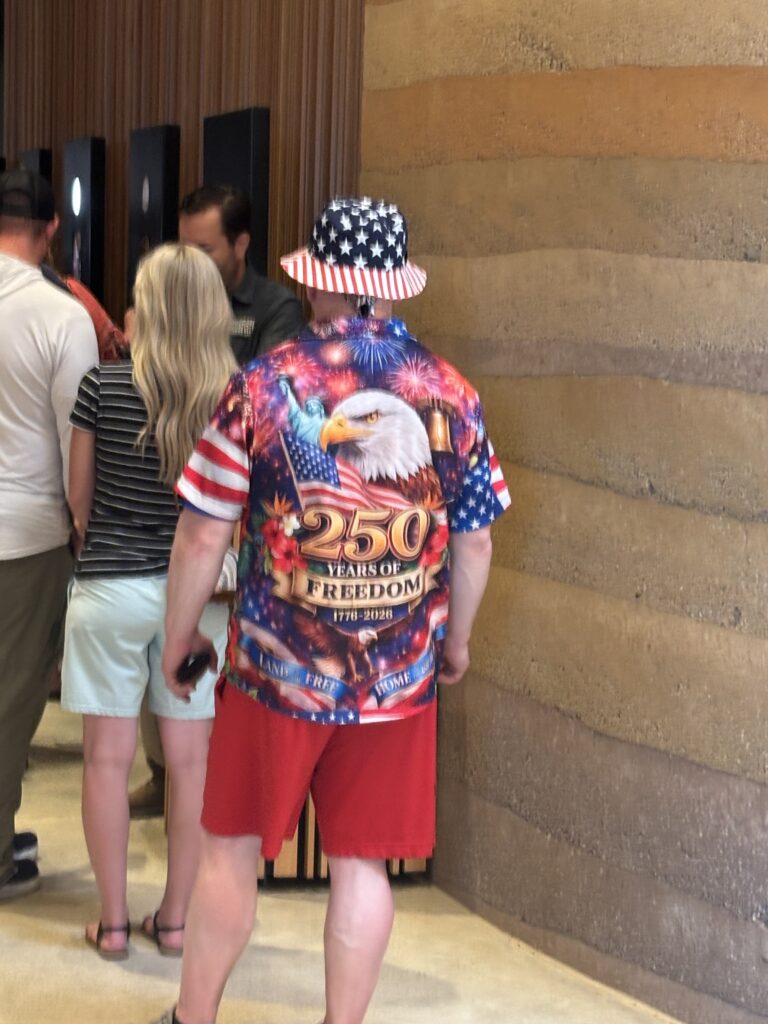
And then, unfortunately, we entered.
Here’s the story: America was very bad, and then Theodore Roosevelt rolled up his sleeves and got to work on fixing it through bold progressive reforms. He was a man of great virtue and strength, because he spent his life holding government positions. This is the highest human calling. Living in service, Roosevelt saw the great dangers of private enterprise, and he spent his life fighting the greed of the corporations. He made the federal government much bigger and more powerful, so in the end he really did achieve greatness. He was the man in the arena, and the arena is government. That’s the thing that matters, the place where good men spend their worthwhile lives.
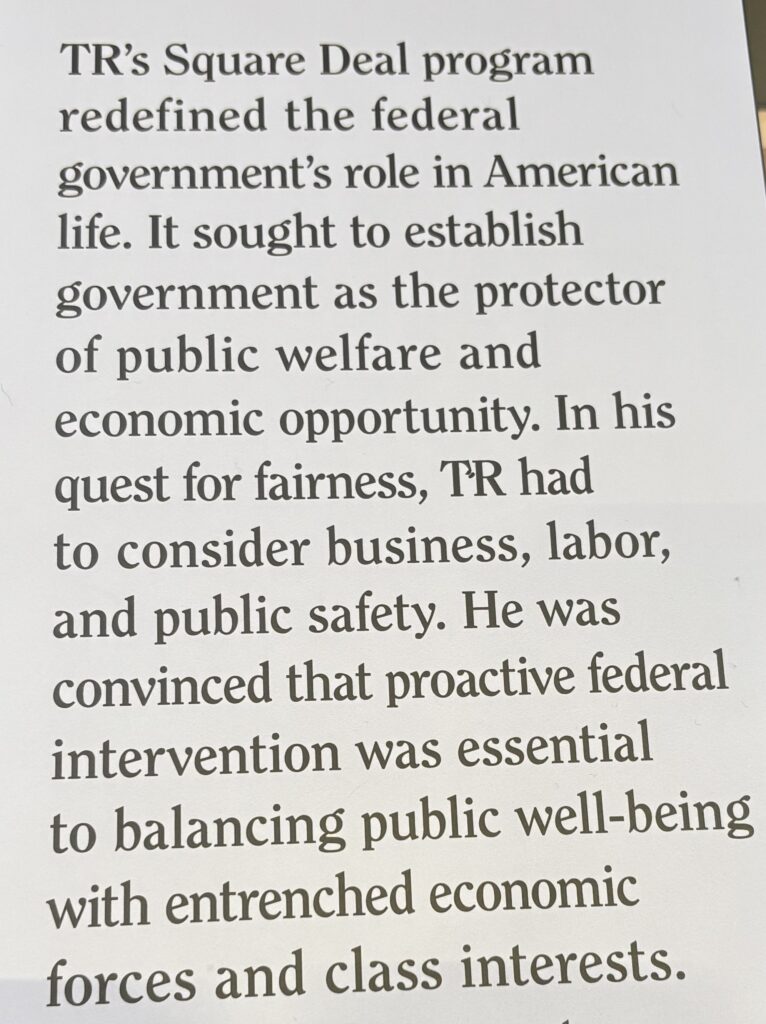
The library of a Republican president refers without an apparent second thought to the need to reconstruct society through government intervention in order to defeat “class interests.” How would Bernie Sanders put that differently?
And so the story of Teddy Roosevelt is a good one, because it’s about “stronger federal government.”
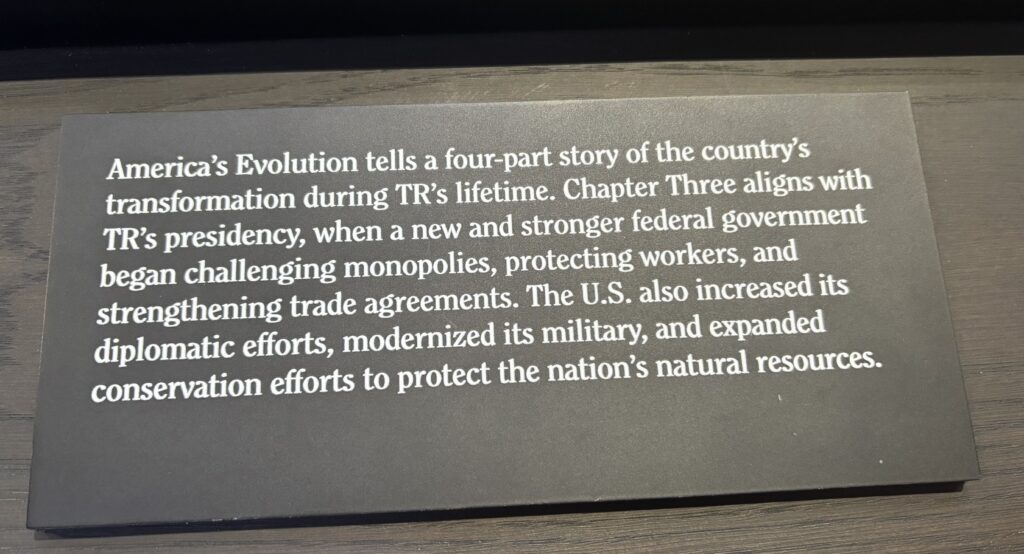
The language of 2026 is all over the place, and the effect is that you see Teddy Roosevelt over and over while you keep hearing the ghost of Elizabeth Warren in the background.
Another panel refers to Roosevelt’s zeal for “social justice initiatives,” after which you get a panel describing his passion for “distributing wealth and resources through federal and social programs.” The administrative state gets its nod, as a display panel explains that Roosevelt preferred a federal government that operated through the wisdom of “independent-minded experts.” He was a kind of early Zohran Mamdani, seeing no limits to government while he centralized power in the service of equity.
Rule by experts, higher taxes for greater fairness, social justice, aggressive federal growth, redistribution of wealth though government programs: Teddy Roosevelt was Barack Obama, except that he liked camping and guns.
In a special twist, visitors scan their faces into a database at the entrance and then wear a chip on a wristband to circulate through the museum. Wearing your identity on a chip then personalizes some of the exhibits, which electronically read the chips and project the faces of the visitors into displays featuring period costume. I have a number of thoughts about this choice that I will decline to type into words, but I didn’t participate in it.
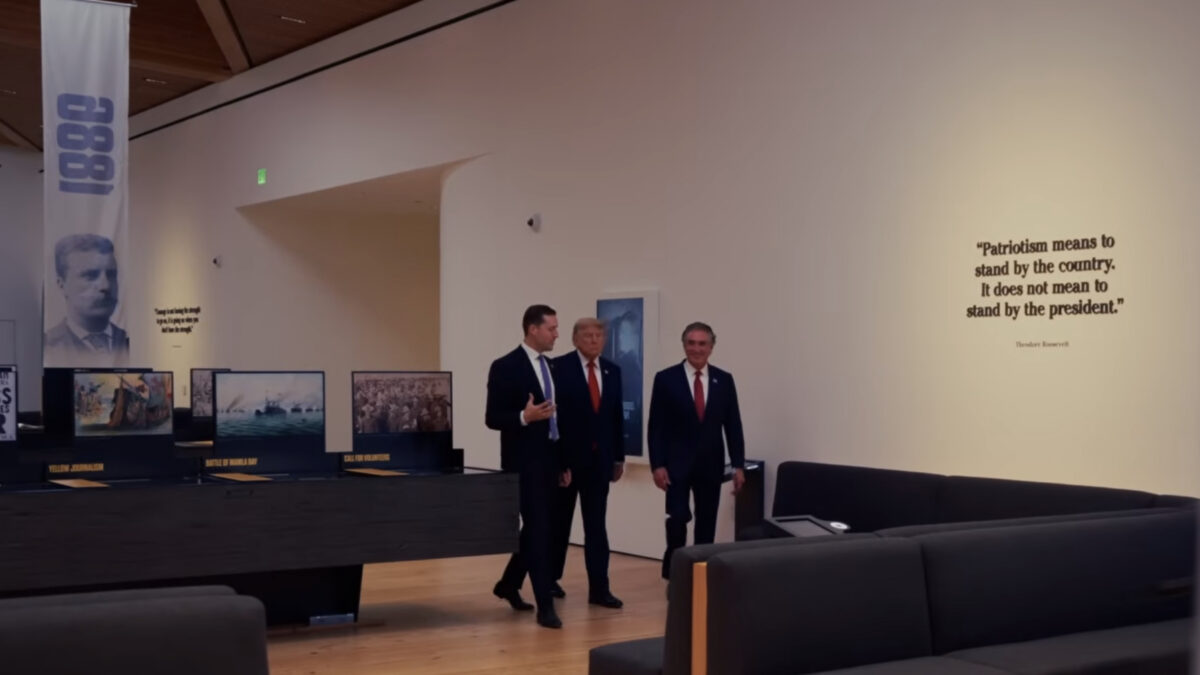
On the topic of things I don’t have words for, see what this view regarding the role of government sounds like to you:
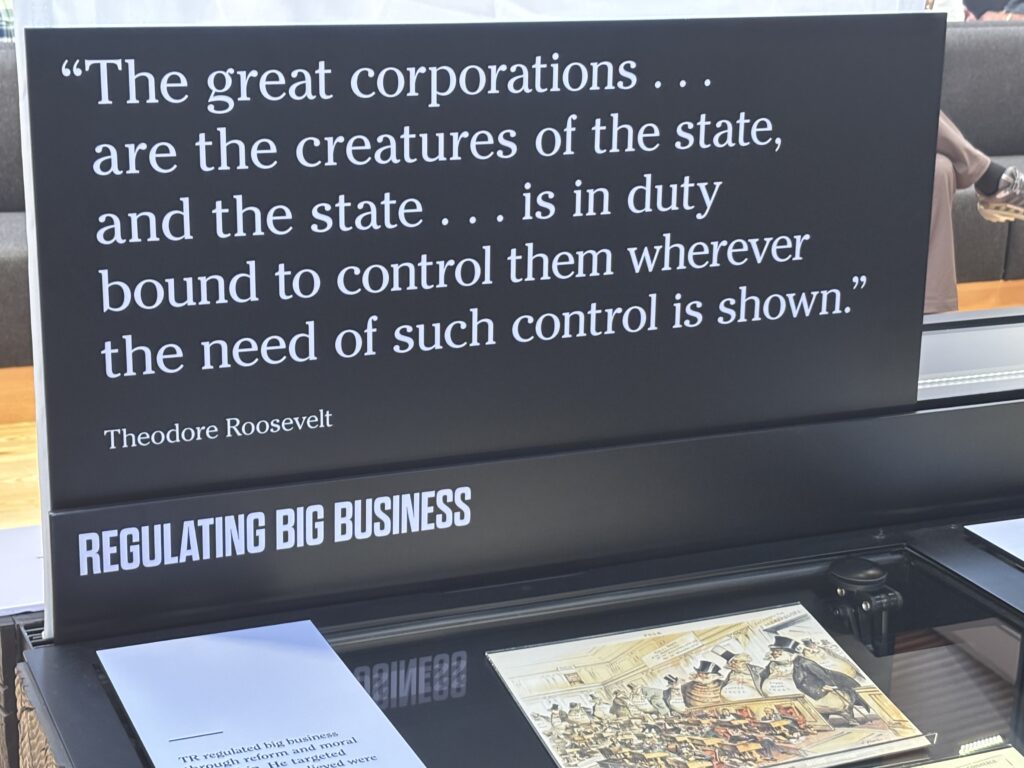
I mean, I do have a word for that, but it’s in German.
Finally, at the very end of the exhibit hall, a single exhibit discusses Roosevelt’s views of immigration and immigrants, with video from experts to explain what it all means. Famously, Roosevelt was an advocate of “100 percent Americanism,” a phrase I didn’t see in the presidential library but may have missed, and he hated “hyphenated Americans” who announced their identity as things like “Irish-American” or “Italian-American.” He wanted Americans to put former identities behind them and fully embrace their American identity.
As president, Roosevelt also signed a series of increasingly restrictive immigration laws: the Immigration Act of 1903, the Naturalization Act of 1906, the aggressive Immigration Act of 1907, and the Expatriation Act of 1907.
The Roosevelt Library deals with all of this by saying that he had some unfortunate views on immigrants that we now know to be incorrect, like the view that they should assimilate and abandon old identities, but overall Roosevelt was pro-immigrant and knew that immigrants “built American cities.”

See that image? It’s about Theodore Roosevelt.
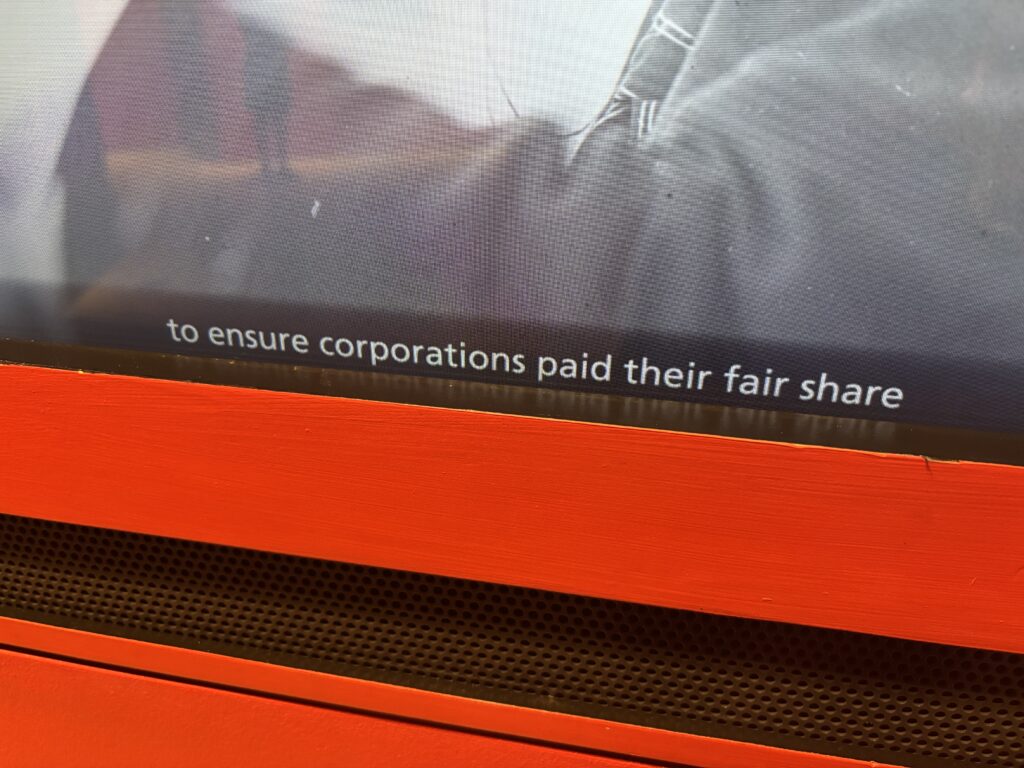
Every figure is processed through the cultural machine and turned into a 2026 progressive Democrat. If Americans built an Attila the Hun library or a new museum to Babe the pig, the exhibits would say that Attila loved social justice and Babe fought for a powerful welfare state to ensure fairness for all and make sure that corporations pay their fare share. It’s just what happens. If you leave blank exhibit cards in a politically themed museum overnight, in the morning they all say that a strong central government guarantees fairness for the people. It’s little communist elves or something, slipping out of the HVAC vents.
If you find yourself in North Dakota and feel like going inside this place, notice the beautiful lobby but skip all the things with words on them. You’ll thank me.