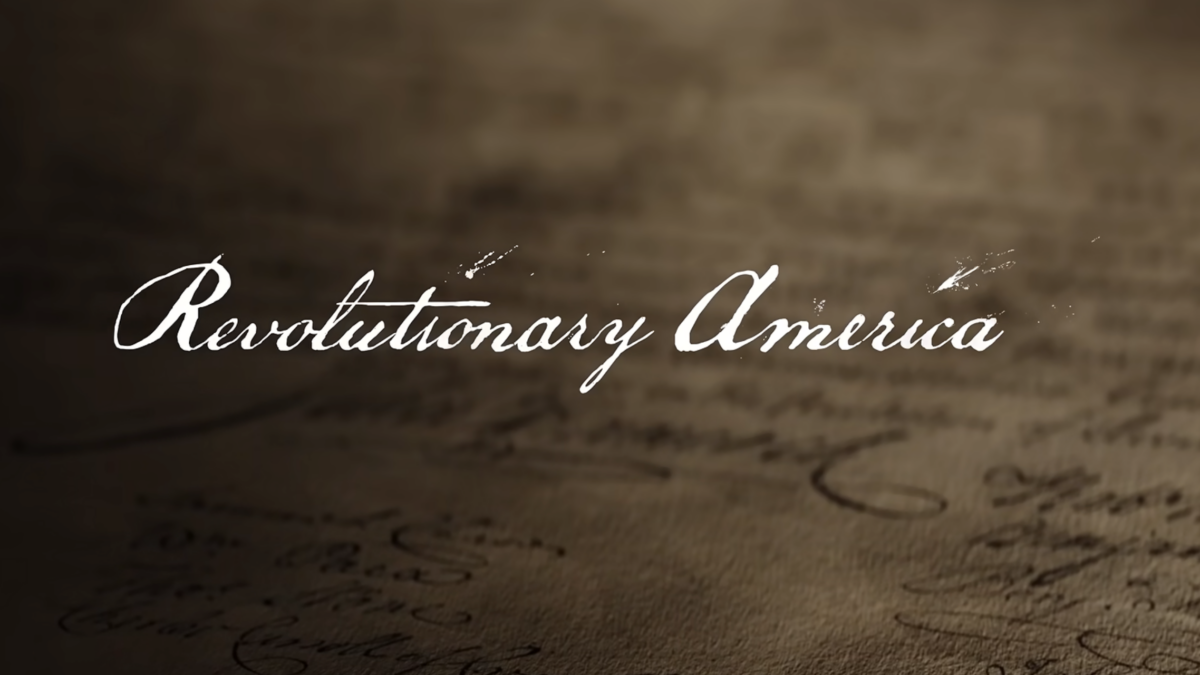

On July 3, New York City Mayor Zohran Mamdani delivered a sharply critical speech of America’s founding ideals from behind George Washington’s desk at City Hall. Flanked by recently naturalized citizens waving small American flags, his remarks exposed a shallow understanding of American exceptionalism and the principles that define it. Fortunately, Hillsdale College’s timely new documentary, Revolutionary America, offers a compelling antidote — one well worth the mayor’s (and everyone else’s) time.
Clocking in at nearly two hours, the film, produced by Hillsdale Studios, came out just in time for America 250. It had a limited theatrical run from May 31 through June 2 and is now available for free on YouTube and the Hillsdale College website.
The documentary traces America’s Revolutionary-era origins with clarity and reverence. After the French and Indian War, Britain was drowning in debt. This led Parliament to implement taxes including the Stamp Act of 1765 to raise funds and tighten its grip on the colonies. For American colonists, these taxes were not just financial burdens but direct attacks on their natural rights and time-honored traditions of self-government under Britain’s policy of “salutary neglect.”
What started as pleas and protests soon transformed into a powerful wave of organized resistance, culminating in the Declaration of Independence, a fierce War for Independence, and the founding of a new nation. While this narrative is familiar, the film excels in emphasizing three pivotal themes that resonate deeply with the ongoing quest for “life, liberty, and the pursuit of happiness.”
First, the Founders were full of courage. When they signed the Declaration of Independence, they committed their “lives, fortunes, and sacred honor,” fully aware they were effectively signing their death warrants. As British subjects, their actions committed treason—and meant certain arrest, hanging, or worse should they fail. The film powerfully illustrates these personal dangers, serving as a stark reminder that their ideals penned on parchment were not theoretical. They were life-and-death decisions made in the face of imminent peril.
Second, the Founders expressed wisdom. They anchored the Revolution and the foundation of the new nation on timeless principles: that all men are created equal, we have unalienable rights granted by God rather than government, the government’s primary role is to protect these rights, and there must be no taxation without representation.
As author Peter Schweizer replied to Mamdami on X, of the major revolutions in the past 250 years (American, French, Russian, and Chinese), only the American one produced individual rights and prosperity. The others descended into tyranny and mass death precisely because they rejected these essential principles. This stark contrast should inspire us to cherish and uphold the founding principles that set our nation apart.
Third, the Founders’ victory was never guaranteed. The colonists’ ragtag militias faced off against the world’s most formidable army and navy, and many times, it seemed their struggle would end in failure. At Valley Forge during the winter of 1777–78, soldiers endured harsh cold, debilitating disease, and relentless hunger. Many men didn’t even have proper clothing or shoes.
Yet, under the steadfast leadership of George Washington, they demonstrated remarkable resilience in the face of daunting odds. Their sacrifices paved the way for what Hillsdale College President Larry P. Arnn calls “the grandest and longest-enduring republic” in human history.
The documentary captures this pivotal era of America’s founding through gripping reenactments, insightful commentary from esteemed Hillsdale faculty such as John Grant and Wilfred McClay, and primary sources including heartfelt letters and reflections from founders. The film is further enriched by an inspiring original score crafted by composer Ryan Moore, making it a compelling tribute to the founders’ enduring legacy.
When watching it on YouTube, be sure to check the comment section. Numerous viewers appreciate Hillsdale for providing this high-quality film at no charge. In contrast to Mamdani’s criticism of America, many immigrants share heartfelt gratitude for the opportunities and freedoms they’ve found in the United States.
One immigrant wrote: “I immigrated to the US from a communist country. (Legally). We all worked super hard…we love America. It’s a land of opportunity without a shadow of a doubt. God bless America.” Another immigrant wrote, “Me and 10 other people from my family migrated to this wonderful country…all the 5 adults got full time jobs the first week… Now we are all part of this wonderful country that we call America…We are thankful to God and to this land by honoring your history…. Happy 250 anniversary!”
Since Mamdani emigrated to the United States as a child, his critique of this country stems more from the influence of Marxist academic environments than his immigrant background. Over the years, America’s education system, especially at the higher education level, has increasingly criticized the Founding Fathers, including their ties to slavery and indigenous displacement, as well as the perceived flaws of capitalism, while promoting Marxist ideology.
Top-rated universities including Harvard have played a prominent role in shaping the political views of American youth. After Harvard refused a list of demands from the Trump administration designed to tackle antisemitism, limit certain protests, and eliminate diversity, equity, and inclusion (DEI) programs, their federal research funding partially frozen.
Harvard responded with a lawsuit, arguing that such funding cuts jeopardized vital research in critical fields like cancer and public health, and constituted a threat to academic freedom. Yet, considering Harvard boasts an endowment exceeding $56 billion, many Americans ask a fair question: Why can’t Harvard operate more like Hillsdale?
Founded in 1844, Hillsdale College, a small private liberal arts institution in Michigan, stands apart through its principled independence: it accepts no federal or state taxpayer funding to safeguard academic freedom. Instead, it punches far above its weight by offering more than 50 free, not-for-credit online courses and documentaries on the U.S. Constitution, the Great Books, and America’s founding principles.
These invaluable resources have reached more than 5.3 million students globally. Notably, the late Charlie Kirk completed more than 30 of these courses, as Arnn highlighted at Kirk’s memorial.
Revolutionary America is essential viewing for anyone looking to deepen his understanding of our nation’s founding. This film powerfully highlights the courage, wisdom, and sacrifices that shaped our exceptional nation, illustrating why these foundational principles are still crucial today. Don’t miss the chance to reconnect with the essence of America’s legacy. Make it a point to watch this film, especially with your children.