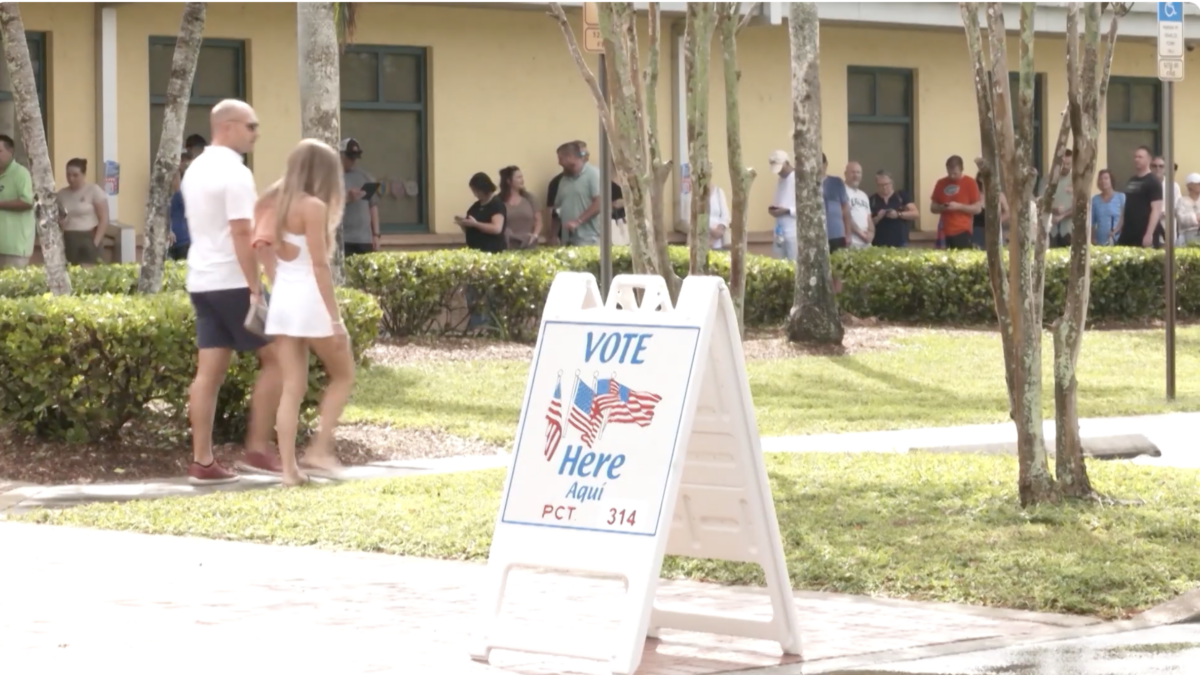
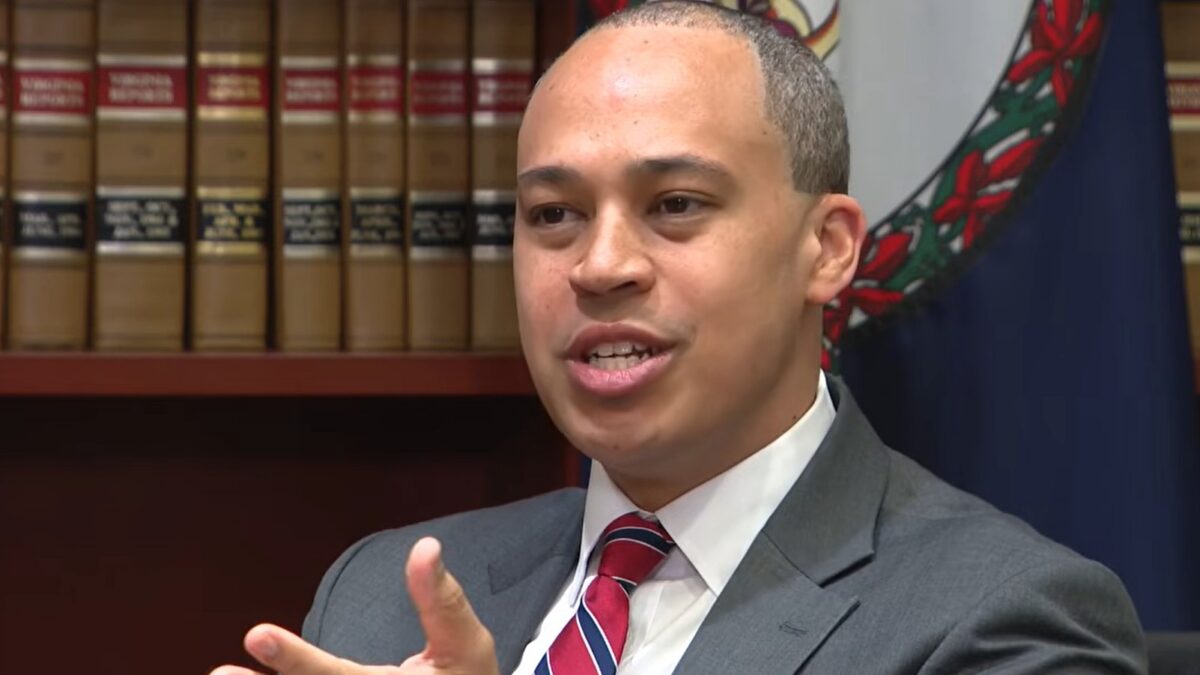

Virginia Democrats, led by Attorney General Jay Jones, have appealed a state Supreme Court decision blocking their attempt to gerrymander the state to the U.S. Supreme Court, arguing once again that “Election Day” is only one day, despite the “election” being 45 days long.
Pro-gerrymander Democrats are making the same argument to the U.S. Supreme Court that they have throughout the legal process: Voting may be 45 days long, but only a single “Election Day” counts as the “election.” That framework is how Democrats were able to shoehorn in the gerrymandering referendum in the first place, effectively disenfranchising more than 1.3 million voters who had already been voting for 42 days before the measure passed in the General Assembly.
On Friday, the Virginia Supreme Court disabused Jones and the Democrats of their flawed argument, stating that the theory would mean “early Virginia voters unknowingly forfeited their constitutionally protected opportunity to vote for or against delegates who favor or disfavor amending the Constitution by not anticipating” Dems forcing the amendment through the General Assembly in the final days of the voting. The majority also defined what an “election” actually means, and how that includes the entire period of voting, from start to finish.
The U.S. Supreme Court is expected to reject the emergency petition on the grounds that it has no jurisdiction to rule on state constitutional issues. Former Virginia Attorney General Ken Cuccinelli said the Democrats are trying to cite federal election cases in an attempt to manufacture jurisdiction for the high court, but added that those cases are “not controlling” in Virginia. “I think we need some remedial civics classes among certain Va. elected officials,” he observed.
Further, as Ed Whelan of the Ethics and Public Policy Center noted, Chief Justice John Roberts has not entered the administrative stay Virginia requested, and instead asked that the Republicans on the other side of the case respond by Thursday. Roberts oversees the 4th Judicial Circuit, which includes Virginia, and will therefore make the decision to reject or deny the petition.
Whelan also said that the Supreme Court won’t take the case, but even if it did, the lower court ruling would remain in place. “So Virginia isn’t even asking for the right relief,” Whelan said. He anticipates a unanimous court to reject Virginia by Friday.
The filing from Jones’ office makes two primary arguments trying to get the U.S. Supreme Court to overrule the Virginia high court.
Jones and the Democrats maintain that the state Supreme Court’s opinion “predicated its interpretation of the Virginia Constitution on a grave misreading of federal law, which expressly fixes a single day for the ‘election’ of Representatives and Delegates to Congress.” However, according to Whelan, the Virginia Supreme Court’s citation of a SCOTUS opinion about the definition of elections doesn’t prove that the issue is federal in nature and thus within the U.S. Supreme Court’s purview.
The second issue Jones and Democrats raised was whether the state Supreme Court went beyond ordinary judicial review. They cited Moore v. Harper, where the U.S. Supreme Court decided the legislature does not have sole authority over setting rules regarding federal elections allowing for state courts to review. Virginia Democrats argued that the state court “transgressed the ordinary bounds of judicial review such that it arrogated to itself the power vested in the state legislature to regulate federal elections.”
Whelan said that the argument is based on a “narrow exception” in Moore and that “no justice is going to find the court’s ruling manifestly bonkers.”
Virginia’s appeal process to the U.S. Supreme Court has been notable for its sloppiness, as well.
The appeal process began with a two-page “joint motion to delay issuing mandate” asking the Supreme Court of Virginia to delay enforcement of its decision so that the Democrats could appeal to the federal high court. The motion was replete with misspellings like “sentator” and “Virgnia,” but by the time the full appeal to the U.S. Supreme Court was published, Jones’ team made another proofreading blunder and filed the emergency application with the Supreme Court of Virginia instead of the U.S. Supreme Court. The blunders come after Jones’ office misspelled “attorney” as “attoney” in one of its first releases.