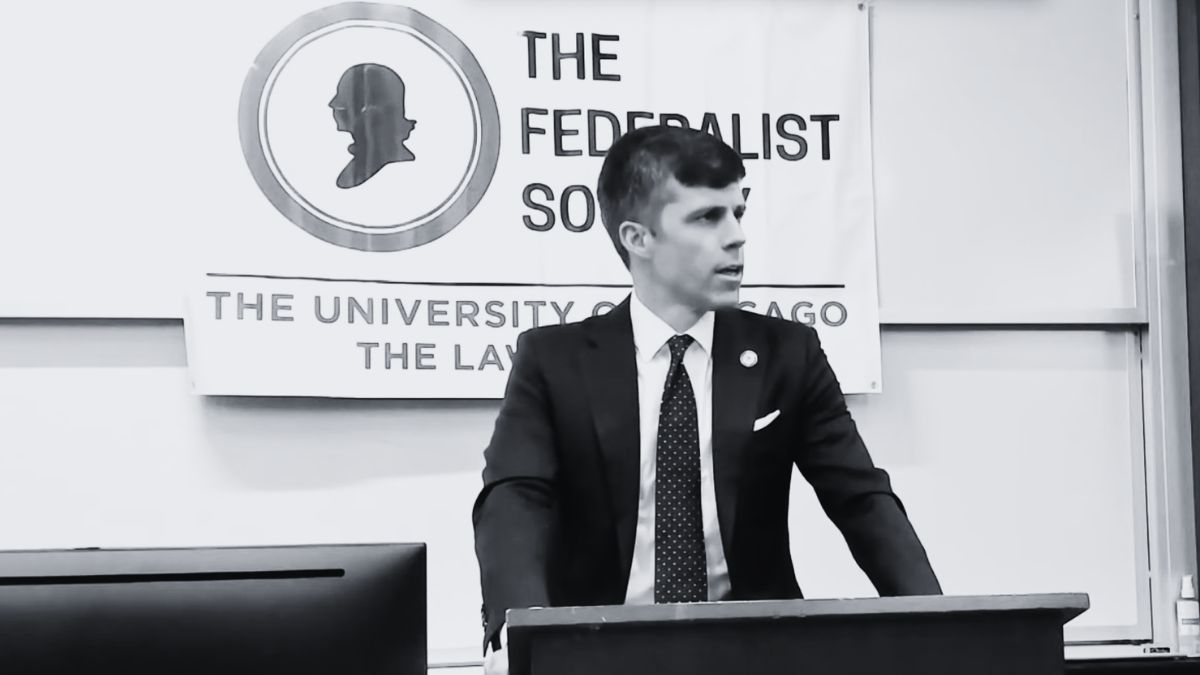
The lawyer tasked with defending Mississippi’s 15-week abortion limit in front of the U.S. Supreme Court did so in the face of “overwhelming advice” not to demand the overturn of Roe v. Wade and Planned Parenthood v. Casey, Mollie Hemingway’s new book Alito: The Justice Who Reshaped the Supreme Court and Restored the Constitution details.
A cabal of “elite Supreme Court litigators” tried to warn Mississippi State Solicitor General Scott Stewart against using Dobbs v. Jackson to target the high bench’s abortion precedent because they believed it would be a “devastating mistake.” The litigator was unconvinced.
Stewart thought merely chipping away at bits and pieces of Roe and Casey would be a “waste of time.” He decided to follow what Hemingway dubbed his “instinct” and plainly demanded the high bench right its abortion decision wrongs.
“If he were going to ask the Court to do something difficult — and overturning Roe would be very difficult — he would do something difficult as well. He would look the justices in the eye and tell them clearly what needed to be done,” Hemingway wrote.
Stewart got to work, even penning a brief calling both Roe and Casey “egregiously wrong.”
“The conclusion that abortion is a constitutional right has no basis in text, structure, history, or tradition,” Stewart wrote.
After extensive oral arguments practice, the same Washington lawyers again encouraged Stewart to give the justices an “offramp” by suggesting the Mississippi law could stand without the overturn of previous abortion rulings. Hemingway emphasized that Chief Justice John Roberts showed a similar “preference for gradually undoing Roe over a long period” during oral arguments and in his Dobbs concurrence.
Stewart ignored those pleas. Research ahead of his big moment in court revealed “[m]any justices seemed unhappy with the special rules applied to abortion law.”
“Stewart sensed that the justices disapproved of the way the subject had been approached in previous cases,” Hemingway noted.
The solicitor carefully crafted his two minutes of uninterrupted time before the justices, going through “dozens of drafts” before landing on a final product. Stewart also leveraged background briefings with members of the media to publicize the landmark argument strategy.
“It was something of a gamble, given the media bias on the topic of abortion,” Hemingway wrote. “But it proved an effective way of getting solid information out to the public.”
As history shows, Stewart’s boldness both in front of the court, pro-lifers, and the corporate media paid off. The Supreme Court ultimately determined in a decision release slow-walked by liberal justices that the Constitution does not confer a right to abortion, as so many used Roe and Casey to claim.
Stewart’s decision to shun the advice of the “elite Supreme Court litigators” who urged him to tone down Mississippi’s demand for overturn ultimately secured him the victory he not only desired, but also worked so hard to secure.