
With most of the country in a deep freeze, it’s an excellent time for binge-watching television. During this past weekend’s major snowstorm, football fans had a chance to partake in the conference championships that set the lineup for the Super Bowl on Feb. 8.
After winning their respective conference championships on Sunday, the New England Patriots and Seattle Seahawks will have had a total of 14 days’ rest before they meet in Santa Clara, California, in Super Bowl LX. But while this coming weekend sees no on-field action, it still provides a perfect binge-watching opportunity for football fans or individuals who have gone through their entire Netflix queue while being stuck at home for the past week.
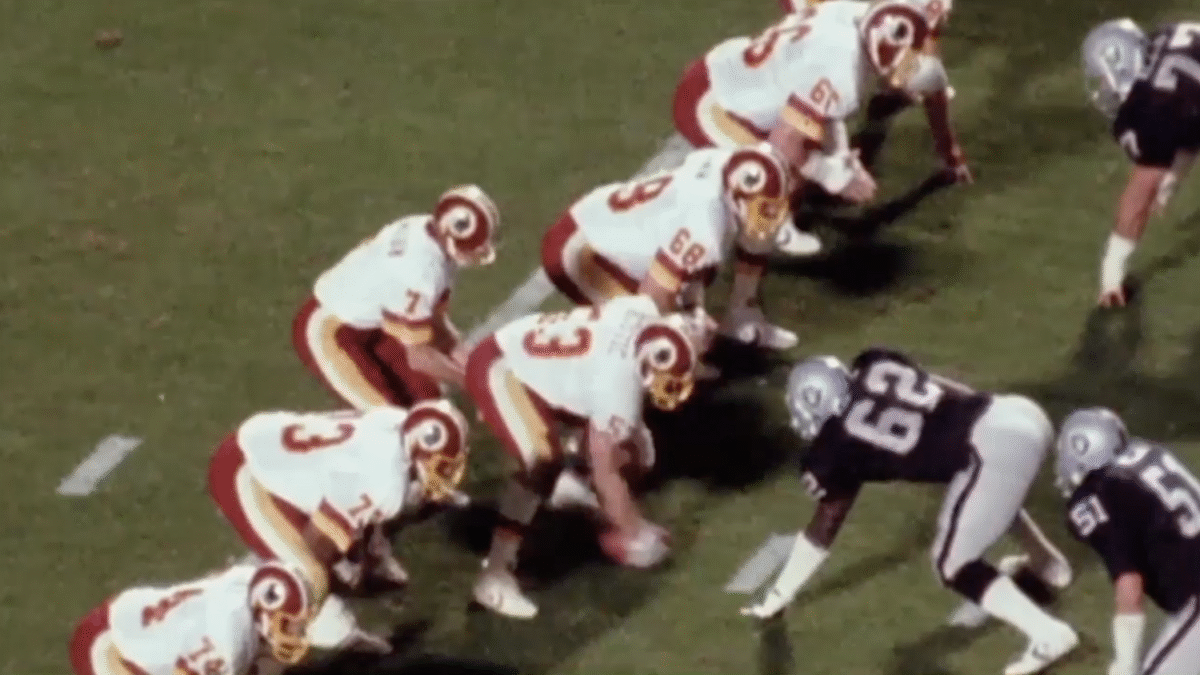
In one of the more underrated elements of the two weeks leading up to Super Bowl Sunday, the NFL Network will re-air NFL Films’ highlight shows of the previous 59 Super Bowls. These films not only demonstrate the history of professional football in 30-minute increments, but they also showcase a cinematic artistry akin to any major movie production.
Violence and Beauty
The ongoing controversy surrounding concussions in football, and what the NFL can and should do about it, reinforces one obvious fact: Football has been and remains an inherently violent game. But for decades, NFL Films has also shown the beauty and artistry that coincides with football’s brutality.
In explaining his famous “Whoa, Nellie!” exclamation, college football broadcaster Keith Jackson offered a key piece of advice: “Never be afraid to turn a phrase.” For decades, NFL Films has followed that advice, coupling crisp writing with dramatic music and slow-motion cinematography to show the intensity and passion of pro football.
Consider, for instance, the four-stanza poem, written by NFL Films’ Steve Sabol: “The Autumn Wind.” It reads like a work of art on its own — because it is. But combine that poetry with a dramatic score, slow-motion game footage, and a recitation from a man called “the Voice of God,” and you have not just the “Battle Hymn” for the Oakland (now Las Vegas) Raiders football team, but a triumph of filmmaking:
Since its founding in 1962, NFL Films, based just outside Philadelphia in suburban New Jersey, has produced highlight reels and videos that depict every aspect of professional football: the pageantry, beauty, strategy, and brutality of the game.
The professionalism and quality of its productions set a standard for other sports leagues and filmmakers to follow. NFL Films’ founder, Ed Sabol, was elected to the Pro Football Hall of Fame in 2011; his son and successor, Steve Sabol, was posthumously inducted into the Hall in 2020, in recognition of the ways that both Sabols helped popularize pro football. During his lifetime, Steve Sabol personally won 35 Emmys for writing, editing, directing, and producing — a record unmatched in all of television — some of the more than 100 Emmy Awards that NFL Films has collectively received.
NFL Films also became associated with the voice of one person: John Facenda, a noted radio and television broadcaster in the Philadelphia area and the aforementioned “Voice of God.” A chance encounter between Facenda and Ed Sabol led to the former becoming the voice of NFL Films. From the mid-1960s until his death in 1984, Facenda provided his voice-over talents to countless football videos produced by NFL Films.
In recent years, the word “gravitas” has seeped into the political lexicon so frequently as to become trite. But Facenda’s stentorian and distinctive baritone, used here in a recitation of Kipling, epitomizes the solemn tone that NFL Films tries to exhibit:
To this observer, the initial episodes of the Super Bowl highlights marathon seem the best, due in large part to the presence of that legendary Facenda voice; Super Bowl XVIII represented the last work the broadcaster did for NFL Films before his death. But all of them exhibit the artistry and pageantry of a sport, and a Super Bowl spectacle, that has become a hallmark of American culture.
The marathon of Super Bowl highlight shows begins on Saturday, Jan. 31, at 6:30 p.m. Eastern on NFL Network.