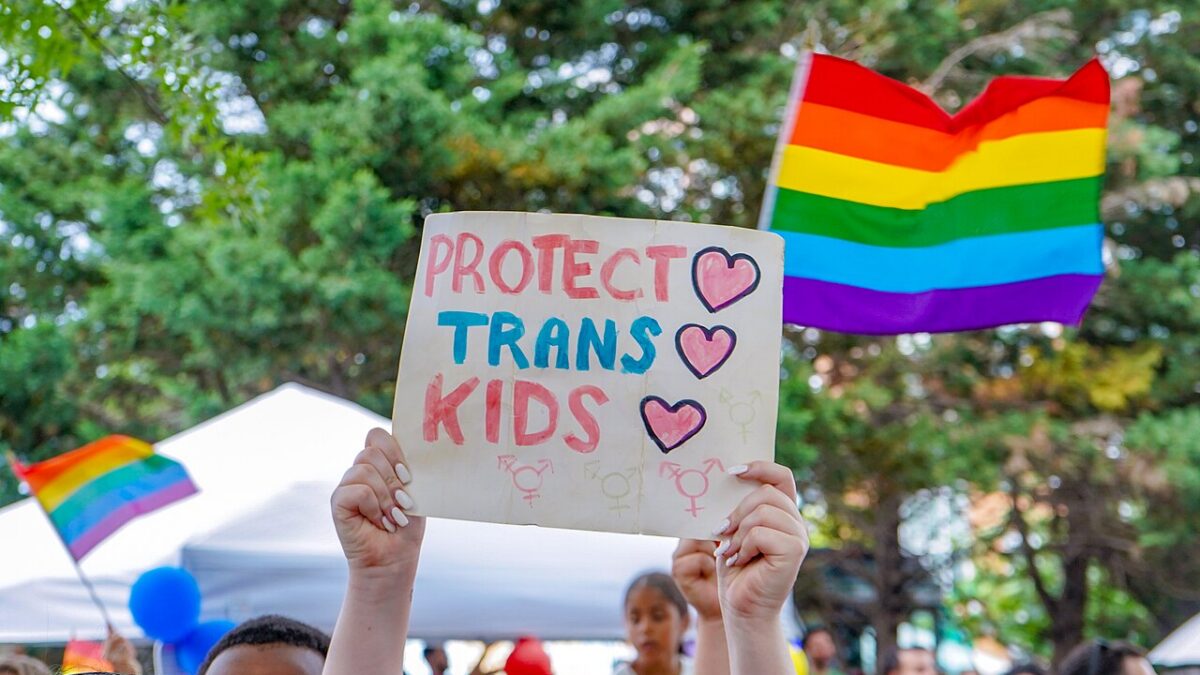

Constitutional amendments and statutes overwhelmingly favored radically unfettered rights for abortion and transgender proponents on Tuesday’s ballot, as federal efforts fight increasingly hostile legal landscapes to protect women and children.
The Trump administration has taken significant strides to curb the abuse of gender dysphoric youth within the transgender industry through declarations, attempted bans on federal funding, accountability demands, executive orders, and the defense of parental rights. The Department of Justice has successfully forced the shutdown of several gender mutilation programs across the country.
But Tuesday’s midterm elections exposed unrelenting, and entrenched, leftist efforts to enshrine transgender ideology. Though protections for female athletes passed in some states, the majority of ballot initiatives favored extreme, undefined rights for the abortion and transgender industries. The majority of those measures passed, alongside the election of multiple trans-identifying individuals to legislative seats.
Amendments, Propositions
Abortion and mutilating transgender surgeries are touted by advocates as rooted in “one fundamental principle,” and often made dual-access at provider clinics. Minors are at a particular risk for abuse and exploitation in states that have no defined age restrictions in constitutional amendments.
In Virginia, voters approved all three constitutional amendments on the ballot, ushering in unlimited abortion and effectively killing protections for minors from the abortion and transgender industries.
Virginia’s Right to Reproductive Freedom Amendment, Amendment 1, defeated major opposition efforts to inform voters regarding the referendum’s radical reach and deceptive ballot language.
The Democrat-backed amendment enshrines abortion for minors of any age, eliminates parental notification and consent requirements, allows abortionists to leave abortion survivors (babies) to die, and legalizes abortion until birth in the state’s constitution.
Already a permissive practice in Virginia per state law, abortion is now further protected under obscure and broad constitutional language. Late-term abortions now require the approval of only one abortionist, undefined professional licensing requirements protect anyone “assisting” in a woman’s “right” to an abortion, and age restrictions are absent. Parental notification and consent requirements are not included in the language. The abortion industry will also now reign over its own “clinical standards of care.”
Opponents say the lack of defined “reproductive care” could include mutilating transgender surgeries for minors with no parental notification requirement.
Voters’ approval of Amendment 2 repeals constitutional language defining marriage as between a man and a woman and requires the state to provide marriage licenses to same-sex couples.
In Nevada, a newly approved abortion amendment mimics Virginia’s lack of clear age limits on abortion, enshrining the fundamental right of “all individuals” to abortion until fetal viability, “or when needed to protect the life or health of the pregnant patient.” The amendment specifically bars state or subsidiary agencies from involvement in abortion “unless justified by a compelling state interest.” Abortion has historically found favor in the Silver State, and state law requires even private institutions to accommodate transgender identities.
In Vermont, the passage of Proposal 4 enshrines “sexual orientation, gender identity, gender expression” as specially protected persons under the state constitution, favoring undefined anti-biological rights.
Christians in the state have expressed concern that the language could target their religious beliefs. Their concerns are valid. State and federal constitutional law expert Peter Teachout’s expert witness testimony before the Senate and House Judiciary Committees warned legislators years earlier that the proposal set before voters was “flawed” and the proposal itself legally “ambiguous.” The inclusion of a closed list of protected groups implies exclusion of others, he said.
In Missouri, Amendment 3, a ballot initiative to restrict abortion and ban gender transition surgeries and procedures on minors, failed to gain a majority vote. Proponents hoped to overturn the 2024 passage of an amendment that enshrined “a person’s fundamental right to reproductive freedom” in the state’s constitution. State law prohibiting transgender surgery and treatment of minors expires in 2027. The failure of Amendment 3 leaves minors with no protections beginning next year.
Wins for Women
In Arizona, Nebraska and Washington, female athletes celebrated legal support for biological protections in their sports.
In both Arizona and Nebraska, laws limiting female sports to female athletes already exist. Ballot measures to increase the strength and breadth of those laws passed by a majority. Arizona’s Proposition 318 bars trans-identifying individuals from using restrooms, locker rooms and other private spaces not in line with his or her biological sex. Nebraska’s Measure 442 established “constitutional protections for sex-separate athletics to ensure equal access to athletic opportunities for females” in the state’s constitution.
In a traditionally blue state, Washington voters approved a Fairness for Girls initiative, banning biological males from competing in female school sports and requiring verification by a healthcare provider confirming biological sex.
And in a monumental win, Idaho voters upheld protections for women, children and the unborn by rejecting Proposition 1, a so-called Reproductive Freedom and Privacy Act.
The wins for female athletes in Arizona, Nebraska, Washington, and Idaho show that protecting biological reality in sports remains broadly popular, even among voters who otherwise lean left. And a growing number of ordinary, non-political Americans are waking up to just how far transgender ideology has been pushed on them by a small but vocal and powerful wing of the Democratic Party.
But the amendments passed in several blue and purple states are stark reminders that radical activists are still winning, often by burying their agenda in vague constitutional language that voters never fully understood. The battle to protect minors, the unborn, and biological reality itself is far from finished, and it will take sustained legal and political pressure, not a single election cycle, to win it.
Editor’s note: This article has been updated.