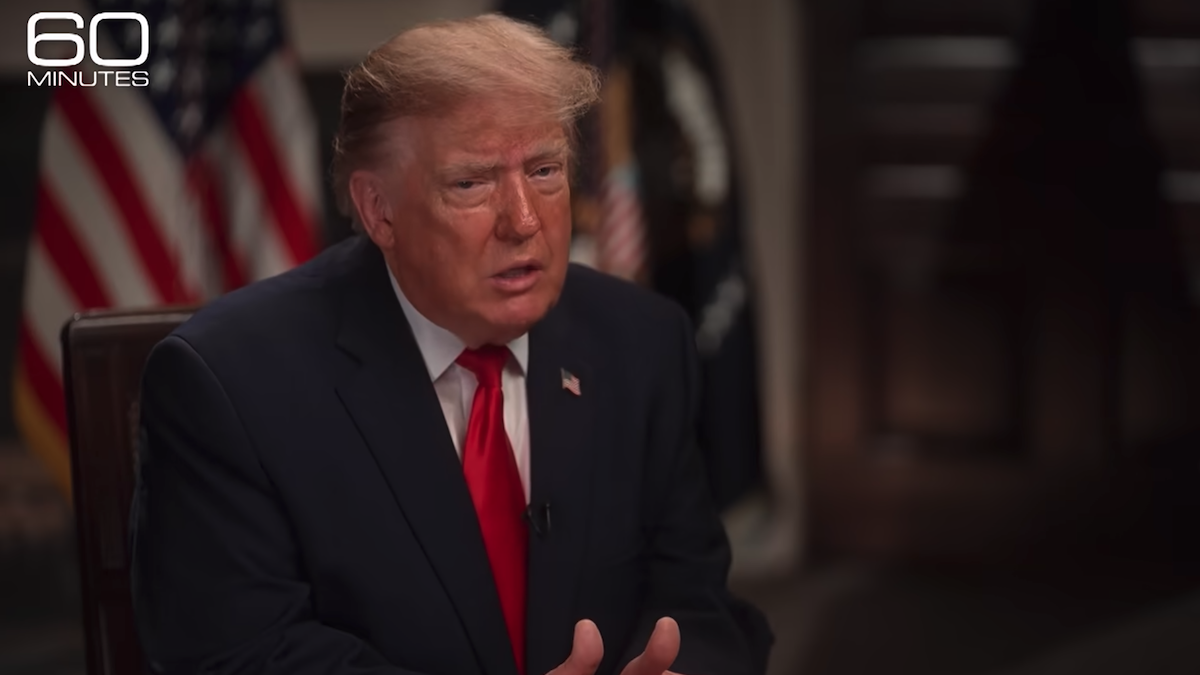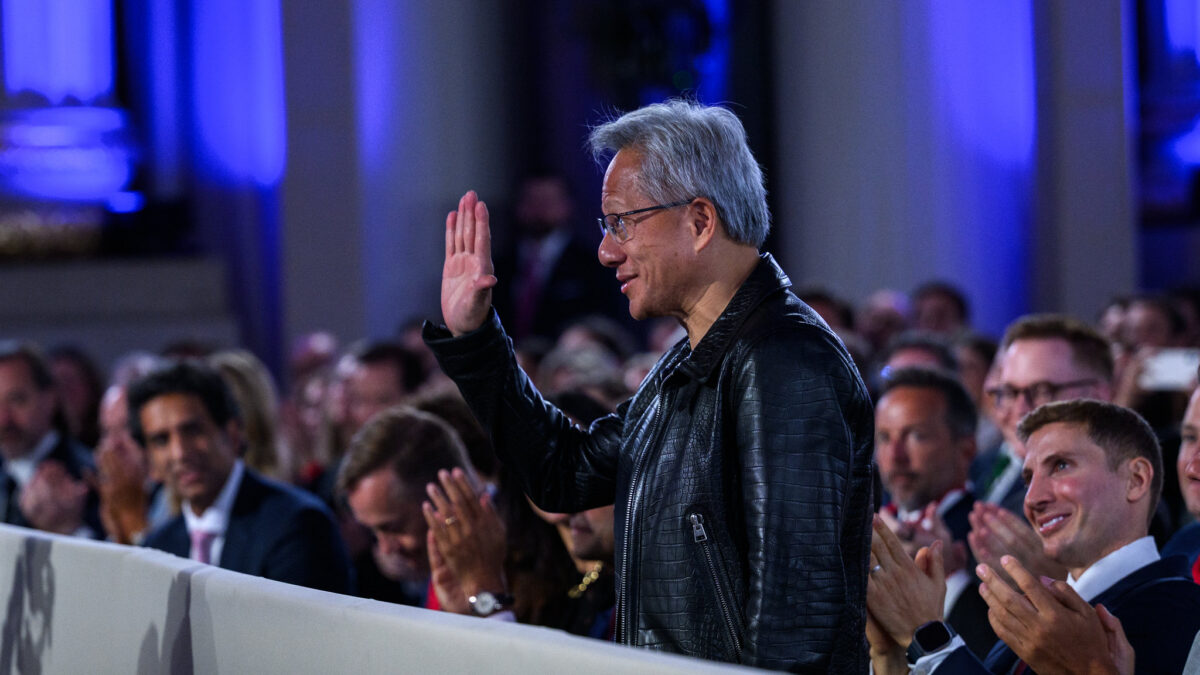

The CEO of one of the largest public companies on Earth has reportedly acknowledged sleeping with an accused Chinese spy.
Jensen Huang, CEO of multitrillion-dollar company Nvidia, admitted to an extramarital affair with a Chinese executive whom U.S. intelligence allegedly assessed as a likely asset of Beijing’s Ministry of State Security. At the same time, a major Nvidia customer is allegedly a front company set up to help China acquire restricted chips. This scandal suggests the Chinese Communist Party is intensifying efforts to compete with the United States in artificial intelligence.
In a memo to employees last weekend, Huang apologized to his wife, children, and colleagues, and committed to fully cooperating with the company board, which has launched an independent investigation. The board said it has no evidence indicating national security or proprietary company information were compromised and continued to back Huang’s leadership.
The New York Times first broke the story at the end of October, relying entirely on anonymous U.S. intelligence and administration sources for its most sensitive claims. Those anonymously sourced allegations include that Huang conducted an affair with Alice Huang (Huang Le), a senior executive at Singapore-based Megaspeed, which split off from a Chinese company; that Megaspeed seemed to be a front company of the CCP because it had purchased billions of dollars worth of Nvidia advanced chips while its office in Singapore looks suspiciously empty; that U.S. intelligence placed Alice Huang under surveillance and later concluded she was likely feeding information to Beijing; and that Secretary of State Marco Rubio sent a classified memo in the spring warning senior Trump administration officials about the relationship ahead of the president’s China trip.
Since those details rest on unnamed leakers, they remain unverified by independent reporting at this time. Nvidia initially said the interactions between Jensen Huang and Alice Huang were “not unusual or unexpected.”
Huang is one of the most high-profile American executives because his company, Nvidia, produces the most advanced AI chips, which are the critical hardware powering today’s large language models and other frontier AI systems, making control over access to them a central front in the U.S.-China technology competition. The Biden administration placed the most advanced chips under export controls specifically to limit China’s ability to acquire them. The Trump administration has adjusted those rules in some areas but continues to block China from obtaining Nvidia’s most powerful chips. China, in turn, has tried various ways to evade the control.
Before Jensen Huang’s affair became the big news, Megaspeed had already been under U.S. government scrutiny. The company reportedly sources many of its Nvidia chips from a U.S. subsidiary of Inspur, a Chinese server firm already on the U.S. entity list due to military-related technology concerns. In late 2024, the Commerce Department began investigating whether Megaspeed was helping Chinese entities circumvent export controls. Separate Financial Times reporting has noted that Chinese tech companies, including Alibaba and ByteDance, have been able to train large language models in Southeast Asian data centers specifically to access Nvidia chips and bypass restrictions.
In October 2025, Sen. Tom Cotton, R-Ark., wrote to Commerce Secretary Howard Lutnick to raise concerns about Megaspeed’s “suspicious ownership, affiliations,” and the possibility that it was “violating U.S. export laws.” Since then, the U.S. Justice Department has taken over the investigation. There is no public allegation that Nvidia itself illegally shipped restricted chips to China; the investigations and reporting have focused on Megaspeed as an alleged front or conduit. Both Megaspeed and Nvidia have stated that Megaspeed complies with relevant laws, including U.S. export controls.
The Trump administration has not publicly disclosed any actions taken in response to the alleged intelligence warnings. Huang continued to advise the administration on AI policy and chip exports. He joined the U.S. delegation to China in May and attended the White House dinner welcoming Xi Jinping.
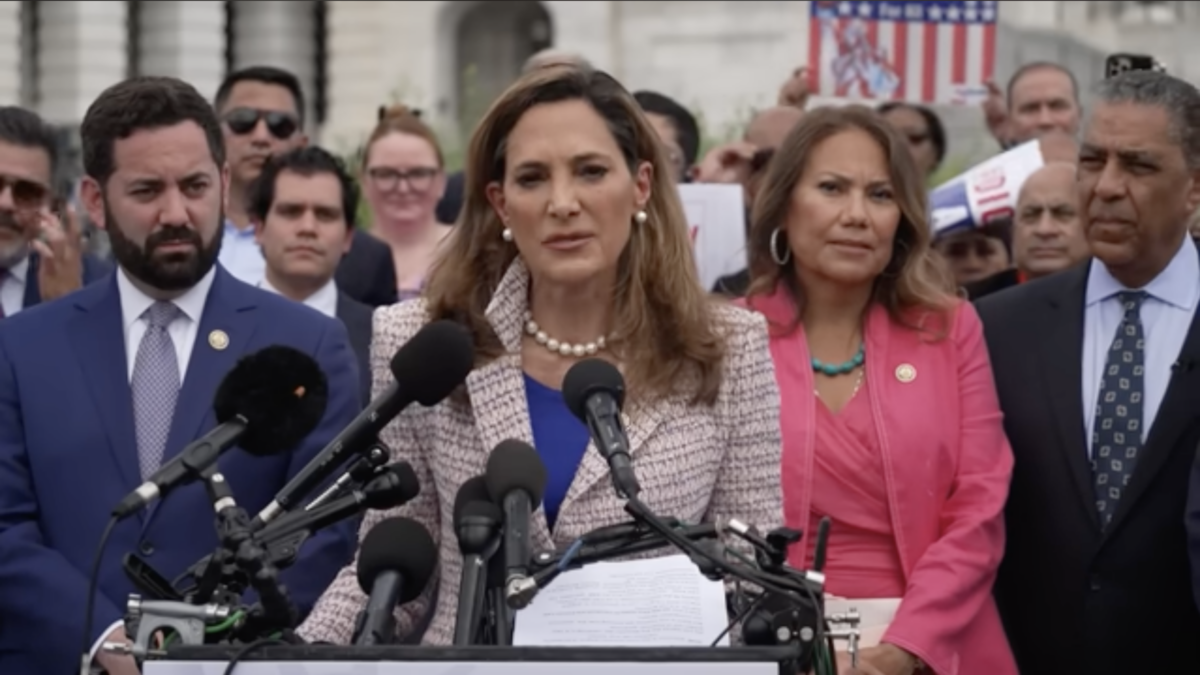
The Times’ report prompted the House Select Committee on the Chinese Communist Party, along with the House Foreign Affairs Committee and the House Permanent Select Committee on Intelligence, to send a letter to Jensen Huang, requesting his attendance at a joint closed-door briefing on Nov. 18 to answer questions related to the Times report.
The persistent media scrutiny and congressional inquiry eventually compelled Jensen Huang to acknowledge the affair on Sunday.
Chinese, and to a lesser extent Russian, intelligence services have long used “honeytrap” or “sex warfare” tactics against Western targets, involving attractive women posing as investors, romantic partners, or professional contacts, including through LinkedIn outreach. A 2025 Times of London investigation documented this pattern among Silicon Valley figures, with experts noting that the United States does not employ equivalent methods and therefore faces an “asymmetric” disadvantage.
For Chinese intelligence, Jensen Huang was a high-value target because he leads the company that designs critical AI hardware and frequently engages with the White House. Access to him could provide commercial intelligence on product roadmaps and insight into administration thinking on China policy.
Jensen Huang should have been well aware of the geopolitical competition between the United States and China and the stakes involved. Yet he appears to prioritize commercial interests over national security concerns. He has opposed U.S. export controls on Nvidia’s most advanced chips, arguing they have failed to slow China’s progress, and has lobbied the Trump administration to relax them. He has said little about the documented global smuggling networks that continue to move restricted Nvidia hardware into China, networks in which some of Nvidia’s own customers appear to be involved.
For instance, in March 2026, U.S. authorities arrested Wally Liaw, cofounder of server manufacturer Super Micro, a major Nvidia customer and partner, on charges of violating export-control laws by allegedly helping send $2.5 billion worth of servers with advanced Nvidia chips to China. This case, along with the ongoing investigation into Megaspeed, has raised tough questions about Nvidia’s due diligence, or lack thereof, and whether the company’s promises about end-use compliance really address the risk of diversion in its customer network.
The recent news that Jensen Huang may have been the target of a spy plot shows that Beijing sees the AI race as a zero-sum game. In this contest, commercial ties, smuggling, and spying are all used, and any tactic is possible. Keeping America ahead in AI depends not just on better technology but also on stopping rivals from getting it through legal loopholes or by targeting people. The Huang case reminds us that personal weaknesses and business incentives can be exploited as easily as technical flaws.
The United States cannot depend only on export controls or on trusting companies whose business interests might conflict with national security. Good policy needs strict, consistent enforcement against diversion, including action against U.S. or allied firms that help it happen. There should be required, auditable checks on end use and end users that go beyond self-certification. There also needs to be a clearer line between companies’ business lobbying and government decisions about sensitive technology, plus targeted counterintelligence focused on key people in the AI hardware and software world.
These steps are the minimum needed to keep America’s most advanced computing power out of Beijing’s hands.