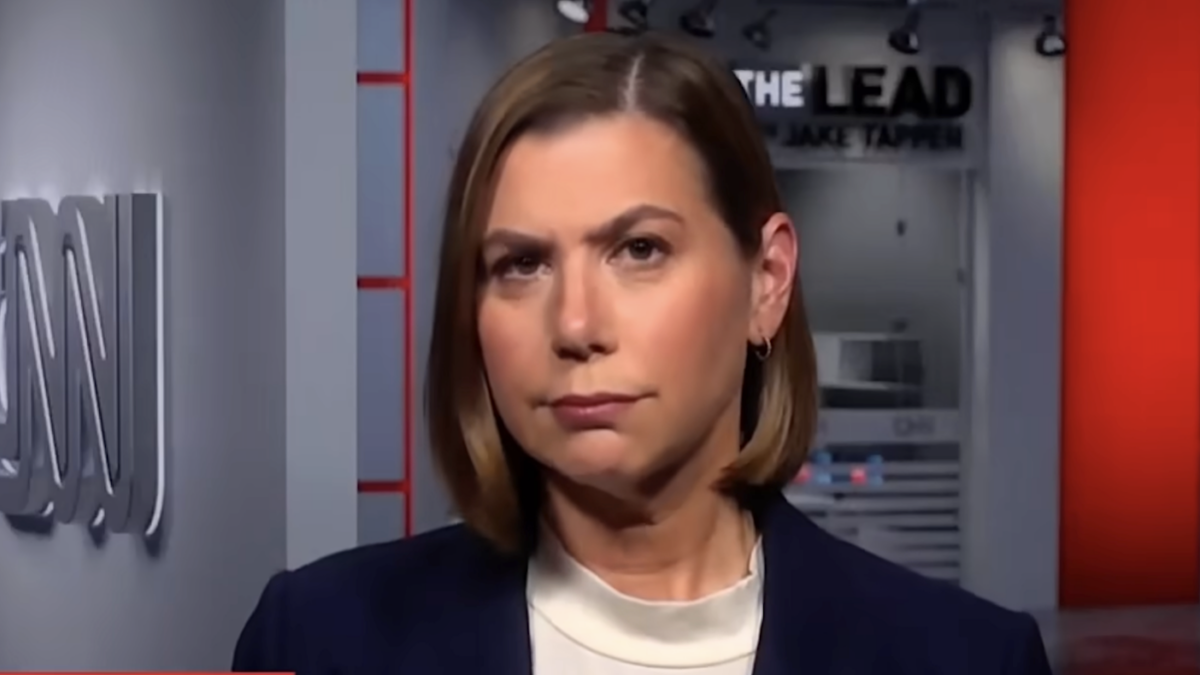

While recording a recent podcast at the University of Chicago, Sen. Elissa Slotkin of Michigan said that if Democrats win the House in the midterms, they should “go after” Trump administration staffers. She added that Democrats’ efforts should have a “deterrence” effect on college graduates seeking to join the federal government during the Trump administration.
Slotkin’s goal would be to make it clear to anyone seeking entrance to the federal government that upon joining they would be “buying [themselves] a ton of problems.” This is not only wrong, but it provides evidence for those who wish to block enforcement of future congressional subpoenas.
Congress’s Investigative Powers
There is no enumerated constitutional provision that gives Congress oversight or investigative power. Instead, its power to conduct investigations and issue subpoenas is an implied power recognized by the Supreme Court. The U.S. Constitution grants Congress “all legislative powers” and the power to “make all laws which shall be necessary and proper for carrying” out Congress’s duty to make legislation.
In Trump v. Mazars USA, LLP, the Supreme Court explained that Congress possesses the power to issue subpoenas and conduct investigations “‘to secure needed information’ in order to legislate.” The court has described Congress’s investigative power as “broad” and “indispensable” because, otherwise, Congress would be “unable to legislate ‘wisely or effectively.’” But a congressional investigation or subpoena must be “related to, and in furtherance of, a legitimate task of the Congress,” and for a “valid legislative purpose.”
Congressional investigations outside of Congress’s power to legislate are invalid. Courts have held that Congress cannot use its power “to expose for the sake of exposure,” or conduct investigations “solely for the personal aggrandizement of the investigators or to ‘punish’ those investigated.” Nor can Congress “issue a subpoena for the purpose of ‘law enforcement’” or “‘try’ someone ‘before [a] committee for any crime or wrongdoing.’” And congressional subpoenas aimed at the executive branch require further scrutiny.
In Mazars, House committees subpoenaed Trump’s accounting firm, Mazars USA, and other institutions seeking financial information about the president, his businesses, and his children. The president, his businesses, and his children brought suits seeking declaratory relief and to enjoin the subpoenas.
The Supreme Court held that when subpoenas seek personal information about a sitting president, strong separation-of-powers considerations exist. It explained that the president and lawmakers “have an ongoing institutional relationship as the ‘opposite and rival’ political branches established by the Constitution.” Subpoenas aimed at gathering the president’s personal info “unavoidably pit the political branches against one another.” And absent any relevant limitations, Congress could “‘exert an imperious controul’ over the Executive Branch and aggrandize itself at the President’s expense.”
The court provided four factors to consider when determining whether a congressional subpoena aimed at presidential information relates to a legitimate lawmaking objective. First, courts must consider whether Congress’s stated legislative goal necessitates probing the commander in chief’s personal effects. Second, courts should not allow sweeping subpoenas that are “broader than reasonably necessary to support Congress’s legislative objective.” Third, courts should pay attention to make sure Congress’s purported evidence actually justifies a subpoena for “a valid legislative purpose.” And finally, “courts should be careful to assess the burdens imposed on the President by a subpoena.”
The Supreme Court also noted that the separation-of-powers issue didn’t disappear just because the subpoenas sought documents from third parties rather than the president himself. The president’s personal information is no less his information because a bank or other third party maintains it.
Slotkin’s Comments
Given the court’s considerations in Mazars, Slotkin’s comments provide evidence to those defending against a congressional enforcement action or seeking to enjoin Congress from enforcing a subpoena.
First, her comments show an effort to use Congress’s investigative power to enforce the law, a power reserved for the executive and judicial branches. Slotkin said Democrats should use Congress’s investigative power to seek “accountability for the unbelievable corruption that we are living under right now.” But as noted in Mazars, the responsibility to hold individuals accountable for their actions falls to the other two branches. When someone commits a federal crime, the executive — represented by a federal prosecutor — and the judiciary investigate and dispose of the matter. A congressional investigation aimed at holding people accountable for corruption would encroach on the constitutional powers reserved to the executive and judicial branches.
Second, Slotkin seems to support Congress conducting investigations simply to expose behavior Democrats disagree with, or to expose for exposure’s sake. The Supreme Court has made it clear that “there is no congressional power to expose for the sake of exposure.” Slotkin’s comments that Democrats should “go after … the people around Donald Trump” and, by doing so, send a “deterrence message” to aspiring federal employees are exposure for exposure’s sake. Such investigations would be punitive, penalizing federal officials and third parties who contract with the administration by exposing their personal information and subjecting them to the intrusive process of a congressional investigation.
Third, Slotkin’s comments show a blatant disregard for the separation of powers. Congressional investigations meant to deter people from joining or working with a presidential administration would give Congress enormous power over the executive, empowering it to hold the executive branch hostage. That investigative power would have a chilling effect on the executive branch’s operations because individuals and companies would refuse to work with any presidential administration for fear of being subjected to a congressional investigation.
Mazars left many questions unanswered, and the full scope of Congress’s oversight powers remains undecided by the Supreme Court. But Slotkin’s statements not only crossed a line but also make it harder for Congress to defend its oversight powers before the Supreme Court.