
At a time of steep home prices and high mortgage rates, the prospect of 265 new, single-family houses going up in one of the nation’s fastest-growing metropolitan areas provided a ray of hope to prospective homebuyers in Salt Lake City.
But a federal agency’s claim of wetlands jurisdiction over a small drainage ditch on the edge of the 142-acre parcel where the homes are to be constructed has brought the project to a screeching halt.
The U.S. Supreme Court’s 2023 ruling in Sackett v. EPA put clear limits on federal authority to regulate wetlands under the Clean Water Act (CWA), but the Army Corps of Engineers persists in throwing its weight around as if nothing had changed. If the Corps’ action on the property north of Salt Lake City is allowed to stand, there is nothing to keep the agency’s bureaucrats from imposing similar restrictions on landowners elsewhere in the country.
About 20 years ago, longtime Utah residential real estate developer Lew Swain and his business partner Brent Baily eyed land just south of Willard in Box Elder County for development as a subdivision. They established a company, Willard Land, bought the parcel, and gave their project a name, “Old Farm Subdivision.” After acquiring assorted permits and agreeing to the construction of regional water and sewer lines connecting the subdivision and other properties to Willard City’s public systems, things appeared to be going smoothly. But that changed when Willard Land encountered an obstacle that had bedeviled rural landowners for decades.
Under the CWA, the Corps and the Environmental Protection Agency share jurisdiction over discharges into “navigable waters.” But over time, the Pacific Legal Foundation points out, EPA and the Corps “interpreted the term ‘navigable waters’ not as a limitation on their authority, but as a near limitless grant of authority to assert control over enormous areas of private land across the country,” (emphasis in the original). Eventually, the agencies’ interpretation of “navigable waters” came to include “small ditches, isolated wetlands, and all manner of otherwise dry land features.”
As a result, in the decades following the CWA’s enactment in 1972, farmers, ranchers, and other landowners contemplating even small construction projects on their property had to hire lawyers and consultants to protect themselves from stiff fines imposed by power-hungry wetlands regulators in Washington.
Finally, in 2023, the steady expansion of federal authority was brought to a definitive halt (or so it seemed) with the Supreme Court’s Sackett decision that determined that the agencies’ CWA authority can expand no further than “waters” and can include only “those relatively permanent, standing, or continuously flowing bodies of water” forming geographical features that are described in ordinary parlance as “streams, oceans, rivers, and lakes.”
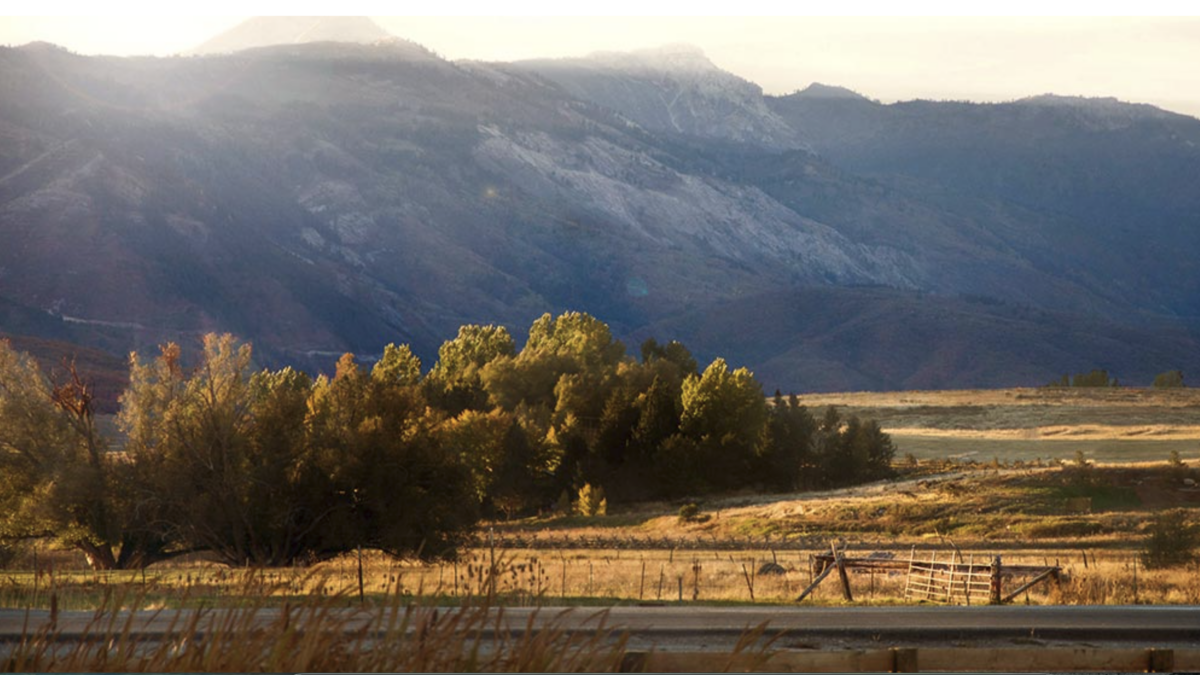
By any reasonable standard, the Old Farm property, with its drainage ditch and nearby 2.74-acre damp area, does not meet the post-Sackett criteria of “waters” subject to regulation under the Clean Water Act. The parcel is located nearly nine miles from the nearest navigable water, the Great Salt Lake, nor is there a hydraulic connection between the prospective homesites and the lake. Separating the Old Farm parcel from the Great Salt Lake is an upland area, the Union Pacific Railroad, Interstate 15, and the Willard Bay reservoir.
After years of battling federal red tape, the developers of Old Farm had good reason to believe that the Supreme Court’s Sackett decision would at last allow them to move forward with their homesites. Not so. On April 8, 2026, the Corps withdrew (and thus effectively denied) the developers’ CWA permit request, effectively killing the project.
Such a move might have been expected under the Biden administration, which rarely missed an opportunity to assert federal power over the benighted rubes out in the sticks. That this kind of decision could be handed down by an agency headed by Trump appointees raises serious questions about who’s in charge at the Corps.
The Trump administration has made significant progress in rolling back the administrative regulatory state. But the Corps’ latest wetlands overreach shows that the beast is still roaming the countryside. Administration officials need to reverse the Corps’ action immediately.
Entrenched bureaucrats aside, Administrator Lee Zeldin’s EPA has posted a proposed rule to the Federal Register designed to provide certainty to landowners and bring the government’s interpretation of what constitutes a regulable wetland into compliance with Sackett v. EPA. Under the proposed rule, such wetlands must have a “continuous surface connection” to a covered relatively permanent body of water, a standard not met by the Corps in Utah. Public comments on the proposed rule must be submitted to EPA by Oct. 9.
For their part, the developers have enlisted the pro bono services of the Pacific Legal Foundation in a lawsuit, Willard Land v. U.S. Army Corps of Engineers, filed Aug. 11 in the U.S. District Court in Utah.
“The Clean Water Act gives the Army Corps of Engineers limited authority to regulate navigable waters — not total control over every drainage ditch and damp parcel of land in the country,” said Charles Yates, an attorney with the Pacific Legal Foundation. “Federal agencies cannot expand their authority beyond the limits Congress set and the Supreme Court has enforced. When the Court and Congress draw a line, lower courts and agencies must follow it.”