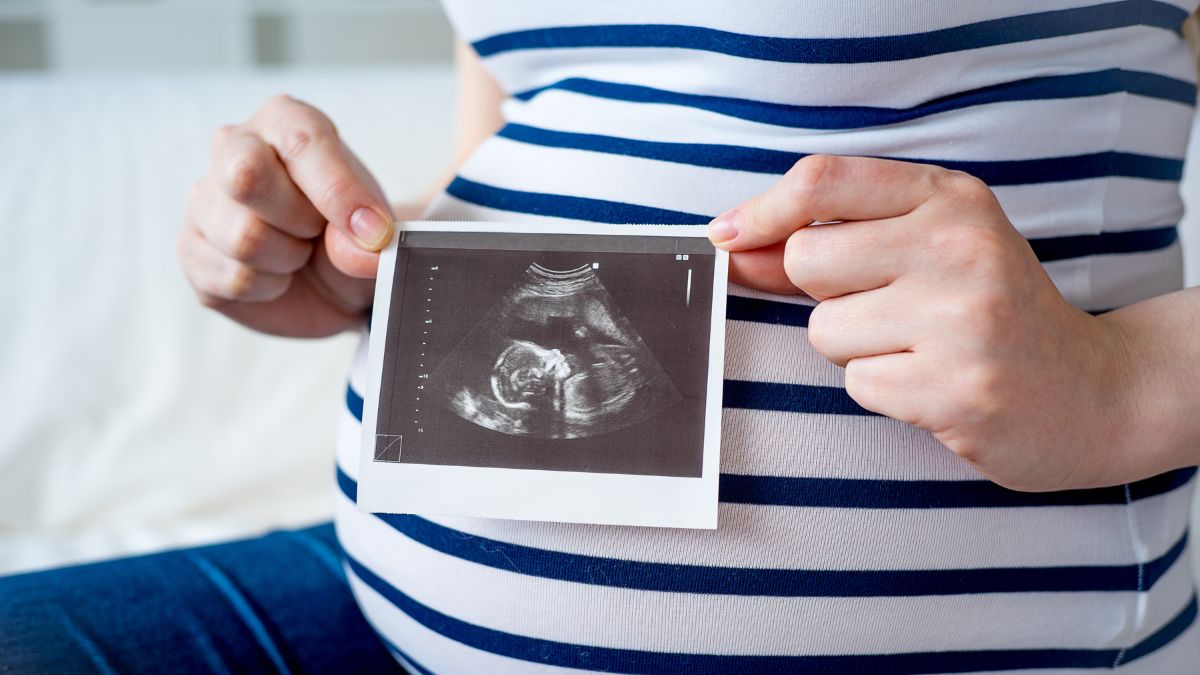

In vitro fertilization is getting the attention among Christians it has long deserved.
Catholics have long condemned the practice, but Protestants have been largely silent. That began to change when the Southern Baptist Convention put out a statement on IVF in 2024. Even though the statement stopped short of fully condemning the practice, it got people talking.
As Christian couples struggling with infertility realize the corruptions of the industry, they begin to seek to “do IVF ethically.” But can that actually be done? The complexities of this question can be illustrated through a hypothetical story.
Imagine a married, Christian, heterosexual couple named Genna and Joe. Genna and Joe already know the ethical basics. They took a study from Them Before Us on children’s rights, led by Pastor Elias at their church. As Christians, they realize that third-party reproduction is against children’s rights and violates the marriage covenant. Together, they commit to using only Joe’s sperm and Genna’s eggs.
They also believe, as many Christians do, that pornography use is immoral. Joe opts to use a perforated condom during intercourse for sperm collection or, if necessary, to have surgery to extract sperm that way.
Joe and Genna understand that life begins at conception, and they view any embryos that would be created from their gametes as their children, not their property. They agree that embryos can’t be discarded or frozen forever without intending to use them. They also reject the eugenics of embryo selection out of respect for each embryonic life. They plan to ask the lab to make only five embryos at a time, knowing some likely won’t survive but hoping some will, and welcoming them all if they do.
With all these caveats, they ask Pastor Elias if they can proceed with “ethical IVF.” They know seeking counsel and support from their community is wise, but they are confronted with some other questions about the process they hadn’t fully considered.
First, Elias asks if they have sought alternatives. He explains that many couples aren’t aware of restorative reproductive medicine (RRM) that can get to the root causes of infertility. RRM protocols and tests essentially intervene to help conception still occur within the body. Surgeries, supplements, medications, and lifestyle changes can all be a part of this process. But in Joe and Genna’s case, RRM hasn’t worked for years.
Joe and Genna know of an IVF facility willing to comply with their wishes to create only five embryos and not discard any of them. But, Elias asks, are they comfortable with the fact that the clinic is creating and destroying other couples’ embryos and participating in third-party reproduction? They must ask themselves if participating in the IVF industry at all is justifiable. It’s analogous to going to Planned Parenthood for a pap smear, knowing you’re contributing to an unethical industry that kills unborn human life. Would moral consideration necessitate traveling further or spending more money to go somewhere else?
Joe and Genna also learn from Elias about Chelsey Painter Davis, who was conceived in IVF but is now against it. She reports hearing from former IVF doctors, who have now come to view the practice as unethical and admit they used to lie to Christian couples about the number of their embryos being created. Essentially, they assure the Christian couple they won’t destroy their embryos but then do it anyway, saving the “best genetically” for implantation and claiming they only made those. This is a pretty extreme admission, and there’s no way of verifying if it is or isn’t true. As Davis puts it: “There’s no nanny cam in the clinic.” But it makes sense for an industry that lives or dies by its “success” rates.
Joe and Genna are committed to not destroying embryos and realize they want to travel to one of the very few labs that shares that commitment.
Then they talk with Elias about stewardship questions. Joe admits he’s asked himself if it’s right to be spending all this money and time, thousands and thousands of dollars, to have their own biological child, especially when there are so many children who need adoptive parents.
Elias says there is no Bible verse saying you must adopt, and he affirms their desire to have their own biological children. Joe and Genna love God, tithe faithfully, and still have the means to undertake IVF.
So they then talk together about whether it’s ethical to create embryos in a lab environment where so many don’t survive. They’ve already ruled out intentional death, such as “donating” embryos to science or discarding them. But what about unintentional deaths? Can they be justified?
Some eggs fertilize successfully, becoming a zygote, but don’t grow beyond that. Some embryos never reach the stage where they are ready for implantation. If they do, some are frozen for later use, only to die during cryopreservation, their death discovered later after the thaw. Maybe embryos fail to implant upon transfer or result in a miscarriage or stillbirth.
But Genna has thought about this. She thinks embryos always face some risk anyway in a natural womb environment. She acknowledges she doesn’t know if the lab environment itself exacerbates the risk of death, but she wants to leave that in God’s hands. Elias asks if they see a difference between intentionally putting their kids in an environment where they often can’t thrive and merely accepting the imperfections of the womb — fallen in this world, but ultimately where children belong with warmth and love and their mother. Joe says he sees no difference between lab death and the possible natural death of embryos that never implant inside Genna.
So Genna and Joe talk to the lab more. They learn that if all five embryos do survive, they can’t implant them all at once. They assume maybe three will die on their own and two will be implanted. If both split, that’d be a risky quadruplet pregnancy, but that’s very rare. If the other three do survive, they will be frozen for later use, and they intend to go back for their kids.
But one night Genna can’t sleep. She wonders if freezing their children is ethical. Would they consider freezing a toddler to “come back for him later”? There’s no therapeutic benefit for the child, just the needs of the adults being prioritized.
Ultimately, Genna doesn’t see another way. She’s tried RRM. She doesn’t feel called to adoption. She’s not intentionally killing these lives. The thought of childlessness is too much.
But Joe begins to research IVF health risks for women and children. IVF has implications for women’s long-term health that are still being studied. Ovarian hyperstimulation has risks. Furthermore, there are health risks for the children born from IVF. But Genna tells him every pregnancy has risks, and every child with health issues is valuable anyway. They are willing to undertake the risks.
Still, with all these thoughts, they begin leaning against using ovarian stimulation and egg freezing. “Ok, just use natural cycle IVF. Take only the egg my wife would have ovulated anyway,” Joe tells the lab tech. That lab still freezes other couples’ embryos, which bothers Genna a bit, but she understands that other couples don’t share her same concern with that.
Joe then learns his sperm will be injected straight into Genna’s egg for increased chances of conception. He had wished the sperm and egg could just “do their thing” to come together on their own. He feels weird that a lab tech is involved in deciding who his child will be. But with dual-factor male and female infertility, Joe agrees.
At this point, Joe and Genna have thought through the many issues most couples forget. They know there are still risks. There could be an accidental embryo mix-up, but they trust their lab.
Of course, there could also be a very low success rate. Lurking under all of this, Genna’s so worried they still won’t bring a baby home — that after tens of thousands of dollars and multiple rounds, no embryos will survive. Still, she knows God will never abandon them no matter what sorrows they face. God can decide whether the baby comes home.
But Joe still doubts a bit, wondering about taking things into their hands or leaving them in God’s hands, and how those things work together. He comes across a quote by Dr. Jerome Lejeune:
To dissociate the child from love is, for our species, a methodological error: contraception, which is to make love without making a child; artificial (in vitro) fertilization, which is to make a child without making love; abortion, which is to unmake the child; and pornography, which is to unmake love: all these, to varying degrees, are incompatible with natural law.
Joe starts to wonder: Are humans meant to be begotten, not made?