
Federal prosecutors in New York this week unsealed an indictment charging 11 defendants with running a marriage fraud ring that allegedly staged more than 1,000 sham weddings over a decade, pairing primarily Chinese nationals with U.S. citizens willing to sell their names for a green card. Foreign nationals paid facilitators up to $100,000 apiece. The citizens who agreed to marry strangers collected as much as $30,000, paid in installments tied to each milestone in the immigration paperwork. Recruiters pocketed roughly $5,000 a head for every citizen they signed up.
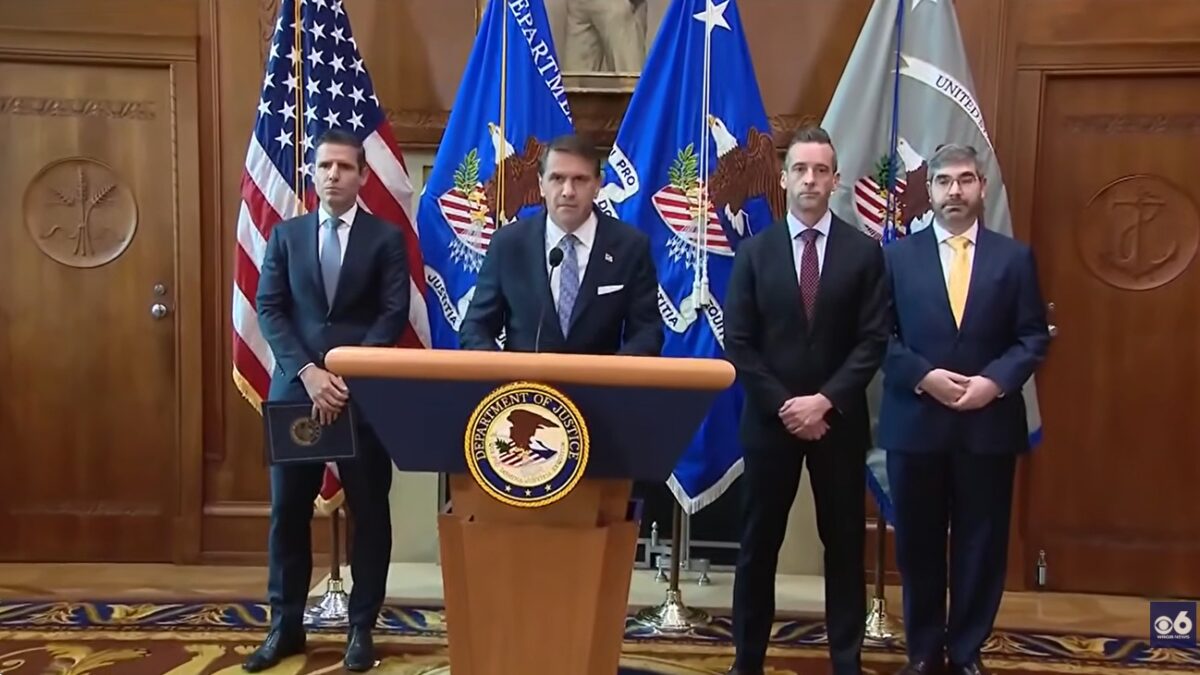
“This Department of Justice is rooting out fraud everywhere, including in our immigration system,” Attorney General Todd Blanche said in the announcement. All 11 are charged, not convicted, and every one of them is presumed innocent until a jury says otherwise. But read that indictment next to the Supreme Court’s ruling six weeks ago in Trump v. Barbara, and a pattern comes into focus that should worry anyone who thinks citizenship is supposed to mean something.
The court handed down Barbara on June 30. Chief Justice John Roberts, joined by Justices Brett Kavanaugh, Sonia Sotomayor, Elena Kagan, Amy Coney Barrett, and Ketanji Brown Jackson, struck down the executive order that would have denied automatic citizenship to children born here to parents unlawfully or temporarily present. Justices Clarence Thomas, Samuel Alito, and Neil Gorsuch dissented. The majority’s reading of the jurisdiction clause is wrong. Right or wrong, though, Barbara settled something. Birthright citizenship by presence at birth is now constitutionally locked in place, and no statute, no executive order, and no amount of prosecutorial will can touch it. The only route left to change that outcome would be under Article V — a constitutional amendment ratified by three-quarters of the states. Nobody seriously expects that to happen anytime soon.
What Barbara did not touch, and what this week’s indictment shows in granular detail, is the second door into American citizenship: marriage to a citizen. Marriage does not confer citizenship by itself. It only makes a foreign national eligible to apply for a marriage-based green card, and citizenship becomes possible only after three years as a lawful permanent resident married to and living with the citizen spouse, followed by a naturalization interview and an oath. The administration should increase its efforts at reducing abuse of this route to citizenship via U.S. Citizenship and Immigration Services adjudication and federal prosecutors willing to build a case, based on 8 U.S.C. § 1325(c) and 18 U.S.C. § 1546.
Signs of a Scheme
I spent 30 years building and running private credit and hedge fund strategies before I ever set foot in a courtroom as an expert witness, and I recognize a financing structure when I see one dressed up as a wedding. The network described in this indictment paid recruiters a flat commission per head, staged milestone-based disbursements to the citizen spouse tied to each stage of the green card process, and kept the machine running for roughly a decade before anyone in a federal building noticed the pattern. That is not a crime of passion or desperation. That is a payables schedule with a marriage license stapled to it. The foreign nationals were not fleeing anything. They were buying a product, and the product was a stranger’s last name.
I have sat across from expert witnesses and opposing counsel enough times to know that fraud schemes rarely announce themselves. They hide inside paperwork that looks routine: a joint bank account opened the week of the ceremony, a lease signed for an apartment nobody lives in, photographs staged for an album nobody will ever open. USCIS adjudicators see thousands of these files a year, and a scheme built to survive interviews and site visits for a decade tells you the fraud was engineered by people who understood exactly what an examiner looks for and built around it.
Federal Focus
Here is where Barbara and this indictment connect: When the Supreme Court closed off any argument that citizenship at birth could be conditioned on a parent’s legal status, it did not just settle a constitutional question. It removed one entire category of fraud risk from the government’s toolkit, because birth on American soil is now bulletproof against enforcement no matter how it was arranged. That leaves marriage fraud, employment-based fraud, and asylum fraud as the remaining fronts where investigation and prosecution actually matter, because those are the paths Congress still controls by statute and where a false statement on a form can still be charged as a crime. If federal agencies treat this indictment as a one-off headline instead of a signal to reallocate investigative resources toward the paths still open to enforcement, they will have learned nothing from a decade of birth tourism cases that ran the same playbook in plain sight before anyone acted.
The financial habits of these networks are not subtle once you know where to look. Recurring international wire transfers tied to newlywed accounts, joint filings that never show shared income, USCIS interview appointments scheduled and then postponed for years. Bank compliance officers flag exactly these patterns for other kinds of financial crime every day. There is no technical reason the same red flags could not trigger a referral when the underlying product is a fraudulent marriage instead of a shell company laundering drug money. The tools exist. The willingness to use them before a scheme runs for a decade is the actual shortfall.
Citizenship used to mean something you earned through allegiance, not something you purchased through the right intermediary. The Supreme Court decided that birth on American soil settles the question regardless of how the parents got here, and that decision is not going anywhere without a constitutional amendment nobody is close to passing. Marriage fraud, by contrast, is still a felony under 8 U.S.C. § 1325(c), the same statute this week’s indictment invokes. This week’s indictment proves the fraud networks never stopped working the system. It remains to be seen whether the government has the will to work it back.