
Colonel Benjamin Tallmadge noticed it from across the room. For eight years, he had watched Washington and learned to read the small signals: the set of the jaw, the economy of movement, the way the general’s silence could crowd out other men’s noise. He had never seen the hand shake — not at Long Island, where the army nearly dissolved into the East River; not at Valley Forge, where it nearly froze to death; not at Yorktown, where it won.
It was Dec. 4, 1783. The fighting had ended months earlier. Washington had asked his officers to meet him at Fraunces Tavern, on the corner of Pearl and Broad in lower Manhattan. They came up the stairs to the Long Room on the second floor. He raised a glass of Madeira, and when he opened his mouth to speak, what came out was one sentence: “With a heart full of love and gratitude, I now take leave of you.”
That was all he managed. He stood there, unable to continue while the officers who had followed him across eight years and a continent wept without embarrassment, without apology, without any of the management that men in uniform usually apply to grief in public. Then he walked to Henry Knox, put his arms around him, and said nothing. He moved to the next man, and the next, until he had embraced every officer in the room, and then he walked out.
He could have done this anywhere. He chose a tavern. That choice tells us something about the country those men had just made.
The men who made the American Revolution made it in rooms like this one. Start with a brick building on Union Street in Boston, the one with a copper dragon over the door.
The Green Dragon Tavern was owned by a Masonic lodge — a tavern on the ground floor, a lodge hall above — and Samuel Adams used it the way a general uses his headquarters. The Sons of Liberty met there. The North End Caucus met there. Paul Revere later recalled that through the winter of 1774 and into 1775, he belonged to a committee of about 30 men, “chiefly mechanics,” who gathered at the Green Dragon to watch British troop movements and report back, swearing themselves to secrecy over a Bible before every meeting.
Adams had learned the room’s machinery from his father, who had run the original Caucus Club out of a similar room a generation earlier. What he understood, and what his British counterparts perpetually underestimated, was that a tavern was not merely a place where men drank. It was where men without formal power could sit long enough to become dangerous together: arguing, drinking, counting votes, testing courage, and leaving with something to do before anyone official knew enough to stop them. The Green Dragon held carpenters and lawyers at the same tables, men who disagreed about religion, about commerce, about how far resistance ought to go… and it held them long enough for disagreement to become coordination.
In the fall of 1773, the British East India Company shipped half a million pounds of tea to the colonies, undercutting local merchants and forcing the colonists to pay a tax Parliament had imposed without their consent. The consignees — the merchants designated to receive and sell the tea — were a handful of well-connected men who had decided they could do business with the arrangement. The rest of Boston had decided otherwise.
A surviving lodge record from that winter notes drily that the “Consignees of Tea took up the Brethren’s time” at one meeting, and that the gathering broke up late. On the night of December 16, 1773, somewhere between 30 and 130 men (the historical record is deliberate in its vagueness) boarded three ships in Boston Harbor and dumped 342 chests of tea into the water. The men who planned it were the same men who poured drinks and paid their tabs at the Green Dragon. They did not leave a detailed written record of the planning. They knew better. They left a lodge note that said the consignees took up the time, and they let history figure out the rest.
That is the thing about the rooms that were doing the real work. Their power was that they left so little for the official record to seize. The Crown could read pamphlets. It could read newspapers. It could not read what happened at a table of men who had sworn an oath and knew how to keep it.
By April of 1775, the British had run out of patience. General Thomas Gage ordered his troops to march to Concord and seize the colonial military stores. On the night of April 18, Revere rode out from Boston. The man riding was the same man who had sat in the Green Dragon through those long winters of organizing, watching, and waiting.
The next morning, British regulars marched onto Lexington Green and found a line of about 77 colonial militiamen waiting for them. Parker’s men had spent the small hours before dawn gathered in Buckman Tavern, a few steps from the green, warming themselves by the hearth, muskets stacked against the wall. When the alarm finally came, they walked out the door and formed their line on the grass. A shot was fired — famously, no one has ever established with certainty who fired it. And when the smoke cleared, eight militiamen were dead. The war that had been organized in a bar began, in earnest, at the door of another one.
The war lasted eight years, and when it was finally, officially over, the men who had survived it had to figure out how to build what they had fought for. That turned out to be a different kind of problem.
In the summer of 1787, the delegates to the Constitutional Convention gathered in Philadelphia with the explicit assignment of fixing the Articles of Confederation and the implicit understanding that the whole frame of government might need to come down and be rebuilt. They sealed the windows of the Pennsylvania State House against the July heat and the public ear, posted guards at the doors, and argued for four months in secret.
The arguing was real, and it was brutal. The small states and the large ones nearly broke the convention over how seats in Congress would be apportioned. The slaveholding states and the northern ones struck bargains that both sides knew were postponements rather than resolutions. Men who had fought a revolution together voted against each other week after week and walked out into the Philadelphia summer carrying grievances that had no outlet inside the sealed room.
The outlet was City Tavern, four blocks east on Second and Walnut, the most genteel public house in America. The delegates ate there most evenings, off the record, in the way that people who have been formally disagreeing all day sometimes need to be informally together at night. A bill from one September dinner survives. 55 gentlemen. 54 bottles of Madeira. 60 of claret. Seven large bowls of rum punch. And at the bottom, in the tavern keeper’s even hand, one final line: Breakage. The glasses had broken. So, nearly, had the convention.
Three days after that dinner, the Constitution was signed. Washington wrote in his diary that the members “adjourned to the City Tavern, dined together and took a cordial leave of each other.” Twelve words for the last night of the most consequential summer in American political history. The document was finished. The harder task was finding out whether the men who had fought over it could remain in one another’s company. That, too, had been worked out, over months of evenings, in a room four blocks from the official one.
Which brings us back to Fraunces Tavern, and the shaking hand.
Tallmadge recorded what happened. Washington filled his glass, said one sentence, and then stopped. He was, Tallmadge wrote, “suffused in tears and incapable of utterance.” He walked to Knox and held him in silence. Then every officer in the room came forward one by one, and Tallmadge wrote: “Such a scene of sorrow and weeping I had never before witnessed and fondly hope I may never be called to witness again.”
Consider what those men had been through to get to this room. Revere riding out in the dark from the Green Dragon, the whole conspiracy of a revolution carried in his head. Parker’s men walking out of Buckman Tavern into the cold and the gunfire. Eight years of war. And then Philadelphia, the sealed windows and the brutal arguments and the broken glass at the bottom of the bill, and somehow, against the weight of every precedent in human history, a constitution. They had built something that had never existed: a republic of free men, equal before God and law, governed by their own consent, answerable to no crown. For all of recorded history, that had been an idea. These men, in these rooms, had made it a country.
They wept because they knew what it had cost. They wept because they knew what it was.
What Tallmadge was witnessing was not a ceremony. It was the thing a ceremony is supposed to honor but almost never actually depicts: the human cost of what got done, acknowledged among the people who paid it, in a room where that acknowledgment was allowed.
None of this diminishes the documents. The Declaration and the Constitution deserve their place under glass. The chambers matter. The signatures matter. Go see them. But do not mistake the official room for the whole republic.
The documents could not contain what the monuments cannot show. Paul Revere and 30 mechanics swearing oaths over a Bible in a lodge hall above a tavern bar. The Brethren’s time taken up by the consignees of tea, and the note in the ledger that names no names. Parker’s men at the hearth in Buckman Tavern in the hour before the war. The broken glass at City Tavern was tallied honestly at the bottom of the bill. Washington’s hand shaking over a glass of Madeira while 30 officers wept without shame in the room around him.
That is where the republic was practiced, not just proclaimed. The founders did not agree themselves into a country. They argued themselves into one, and then kept returning to rooms where they could leave without making every disagreement permanent.
Nineteen days later, Washington resigned his commission before Congress in Annapolis. But before he became the marble figure surrendering power, he stood in a tavern with a shaking hand and became, briefly and completely, a man among men.
This July, America turns 250. There will be fireworks and speeches and ceremonies, and all of that is right and good. But the founders would recognize the fireworks more readily than they would recognize us: a country that has largely stopped sitting in rooms with people it disagrees with, that has traded the tavern for the timeline and the cordial leave for the mute button.
Most of the rooms are gone now. The Green Dragon disappeared in 1854, and City Tavern followed it into dust the same year. Fraunces survives, restored and slightly domesticated, with a museum upstairs and decent food downstairs for tourists who may or may not know what happened above them.
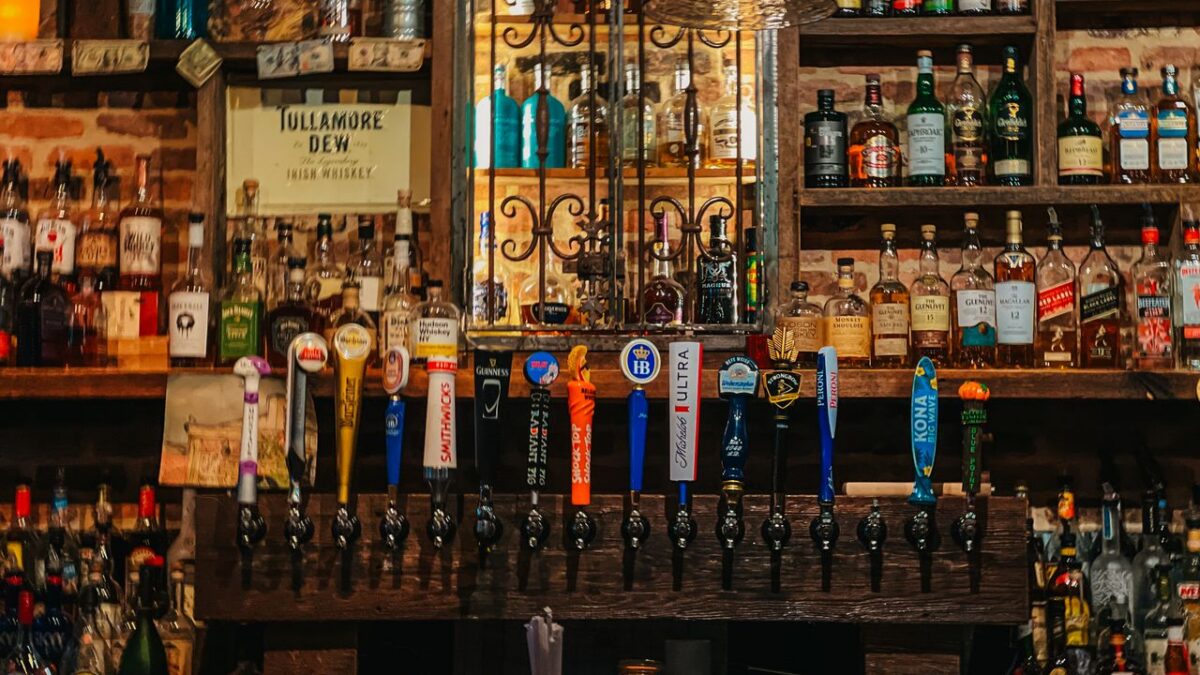
But the specific building was never really the point. You need a table, a few people you don’t see entirely eye to eye with, and the willingness to order something and have it out — over a bowl of punch if you want to be historical about it, over a Zombie Dust if that’s what’s on tap. At the end of the night you settle the bill and take a cordial leave, the way they did, because the argument is not finished and you are going to need to come back.