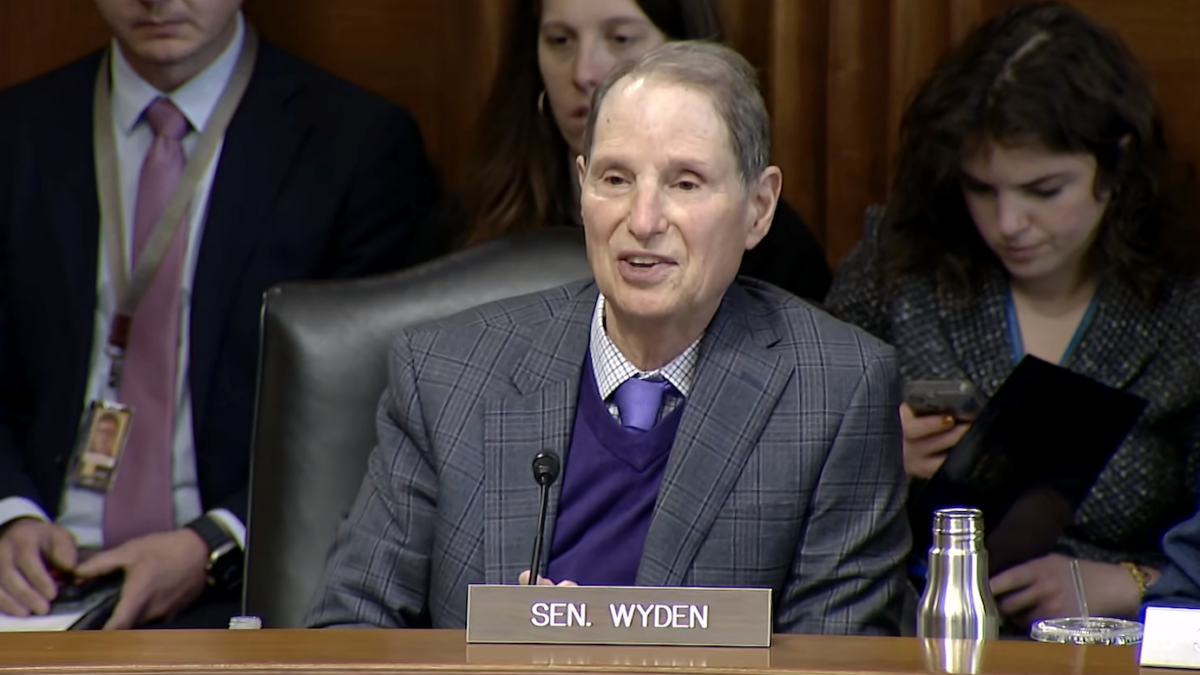

Senate Democrats have an ironic sense of timing. Mere days after a report raised the long-term costs of the Medicare Part D prescription drug benefit by $5 trillion, due in part to Democrats’ Inflation Reduction Act, Senate Finance Committee Ranking Member Ron Wyden, D-Ore., and his colleagues released a white paper that would double down on the IRA’s failed policies. It’s the latest illustration of how the party’s “affordability” agenda is anything but for taxpayers.
Major Changes to Part D
Most of the attention on the IRA has focused on provisions requiring federal officials to “negotiate” drug prices. These “negotiations” amount to take-it-or-leave-it propositions, and the arbitrary benchmarks that Congress mandated as part of that process have already discouraged companies from investing in potential new cures.
But the IRA also dramatically restructured the Part D benefit. Among other changes, it eliminated cost-sharing for beneficiaries above a catastrophic spending cap, lowered the effective threshold for reaching that cap by about half, and expanded a low-income subsidy program under which beneficiaries face little to no cost-sharing. All these factors raise drug consumption, including consumption of costly brand-name drugs, and overall spending.
Budget Experts Note Skyrocketing Costs
As a result, despite the IRA’s price controls, federal Part D spending has soared since its main provisions took effect. In November, the Congressional Budget Office noted that such spending “will increase much more in 2026,” which, if continued “over the next decade[,] would be about $500 billion more than CBO previously projected.”
CBO cited tariffs and general trends to explain some of the higher spending. But other factors stem directly from the IRA: “CBO, CMS [the Centers for Medicare and Medicaid Services], and private insurers may have underestimated the cost to insurers of the reduced cost-sharing arrangements” due to the IRA’s caps on out-of-pocket spending. Referencing a Part D “stabilization” — read: bailout — program the Biden administration launched in 2024, the budget gnomes opined that “if insurers expect administrative actions to shield enrollees from the full impact of increased premiums, they may be less constrained in submitting bids with higher costs.”
In March, the annual Medicare Payment Advisory Commission report reinforced CBO’s conclusions. The commission interviewed actuaries, one of whom said the IRA’s new, richer benefits are “likely having a bigger impact than plans expected.” MedPAC’s analysis found that, but for $40 billion in federal “stabilization” spending, premiums for standalone Part D plans would have more than doubled from 2024 to 2026. Put simply, Democrats’ IRA restructuring encouraged additional drug consumption, sending insurer costs and federal spending soaring.
Earlier this month, the Medicare trustees raised the 75-year cost of the Part D benefit by nearly 50 percent, from $10.7 trillion in last year’s report to $15.7 trillion this year. Actuaries attributed the change primarily to “increases in the utilization of GLP-1 and expensive specialty drugs in 2025,” and “higher cost trends,” consistent with the effects of the IRA’s structural changes.
Doubling Down on Failure
At a time when multiple budget analysts have highlighted an explosion in Medicare spending due to the IRA, what did Wyden’s white paper propose? More of the same. More, quicker, and more onerous drug price controls, including price controls from overseas, which would import British-style cost-effectiveness rationing to the United States.
Wyden also endorsed more subsidies — proposals to lower seniors’ out-of-pocket costs further, “expand[] eligibility for Part D Low-Income Subsidies,” and “contain[] Part D premiums.” All of these proposals will raise government spending, likely well in excess of any “savings” created by expanding price controls. His paper also proposed extending an IRA provision that effectively sees federal taxpayers, as opposed to beneficiaries, funding a greater percentage of Part D plan premiums.
Earlier this spring, a separate Wyden letter conceded Obamacare’s failures, which he promised to fix with yet more regulations and spending. His latest proposal, which would double down on IRA policies that have caused a Medicare spending explosion, brings to mind the definition of insanity as doing the same thing while expecting different results.
But perhaps the most succinct judgment on this “affordability” agenda came from Margaret Thatcher 50 years ago: “Socialist governments traditionally do make a financial mess. They always run out of other people’s money.”