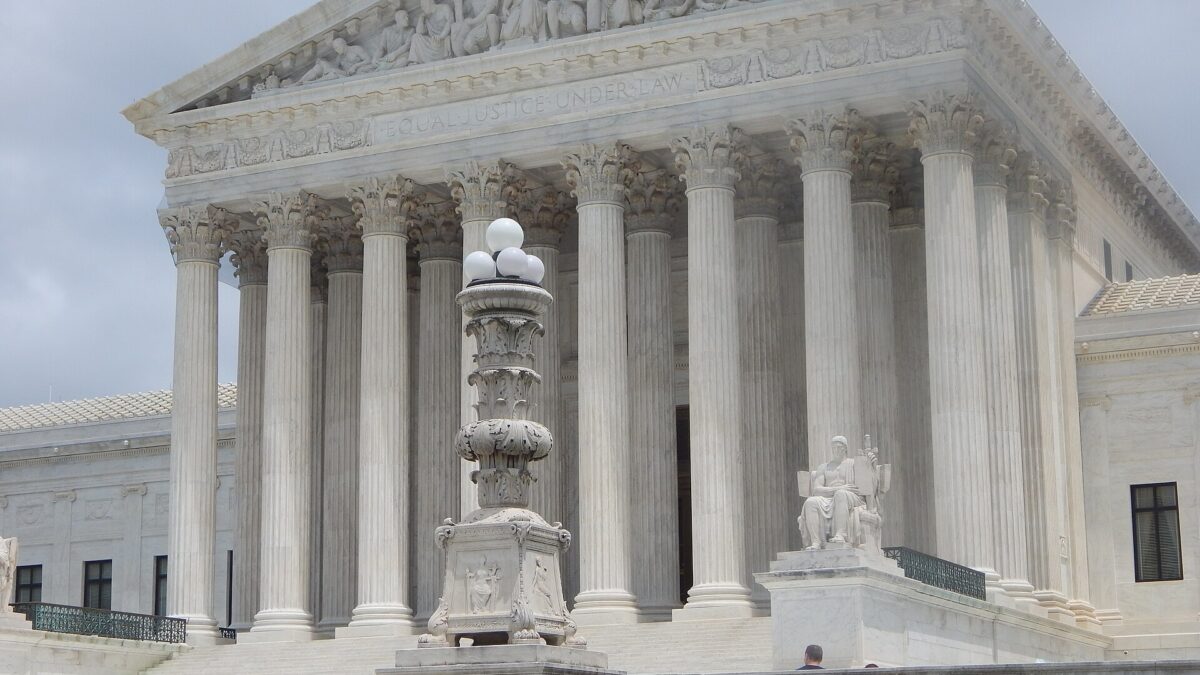
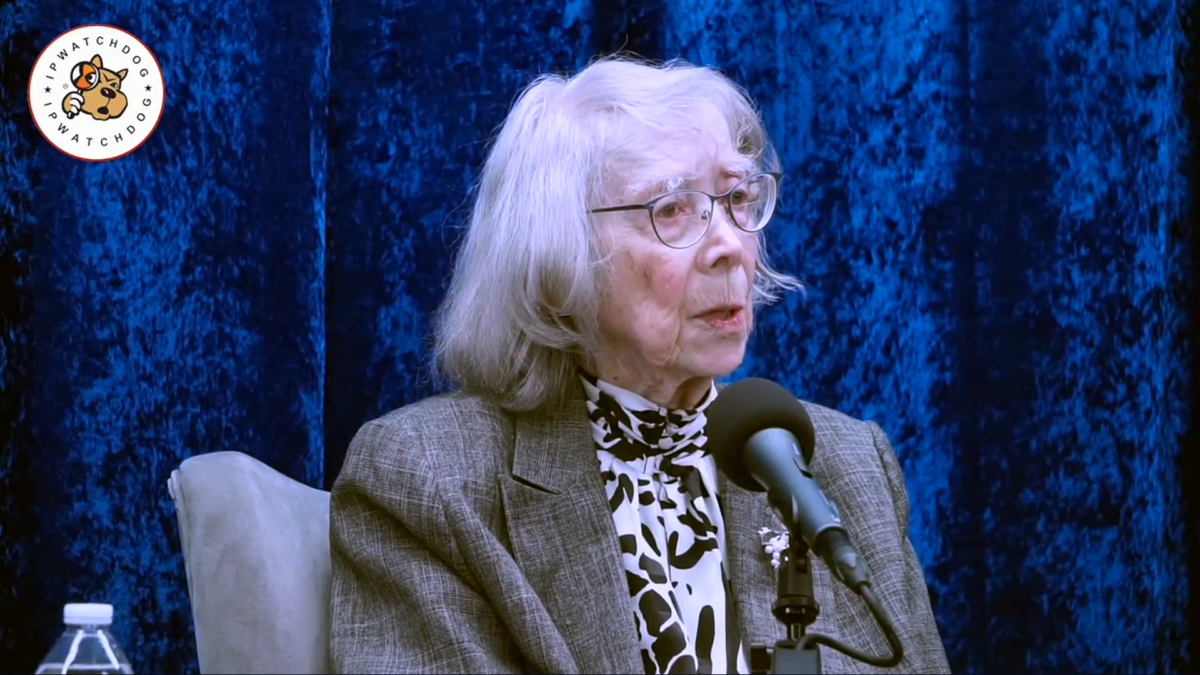
The U.S. Supreme Court has declined to help a 98-year-old judge facing seemingly unlawful efforts to suspend her from the federal bench.
The revelation was disclosed in the high court’s Monday order list, in which the justices rejected a request by Federal Circuit Judge Pauline Newman to take up and hear arguments in her case (Newman v. Moore). There were no noted dissents, and no explanation was given for the decision.
As The Federalist recently reported, Newman was first suspended from the bench in 2023 by Federal Circuit Chief Judge Kimberly Moore and the court’s Judicial Council over alleged concerns about her mental and physical health. Despite protests from Newman and her counsel, the New Civil Liberties Alliance (NCLA), this indefinite suspension — which remains ongoing — has barred the Reagan appointee from partaking in cases brought before the court.
Newman and the NCLA challenged her de-facto removal from the bench by arguing that the Judicial Council’s actions are unconstitutional and violate the 1980 Judicial Council Reform and Judicial Conduct and Disability Act (“the Disability Act“), which governs the process for filing misconduct and disability complaints against federal judges. As described by the NCLA, they argued that only Congress possesses the power to remove judges from the bench and that the Disability Act “permits administrative suspensions, but only a time-limited suspension with a definite end-date” and “explicitly forbids removing a judge from office.”
D.C.-based District Judge Christopher Cooper rejected Newman’s arguments in 2024. Citing a past decision by the D.C. Circuit Court of Appeals, the Obama appointee argued that federal courts are precluded from hearing her case and that she must seek relief from the U.S. Judicial Conference. A three-judge panel on the D.C. Circuit — comprised of all Democrat appointees — upheld Cooper’s ruling on similar grounds in August 2025.
With nowhere left to turn, Newman petitioned SCOTUS for relief earlier this year. In asking the justices to take up her case, she and the NCLA forewarned about the dangers of federal judges being allowed to seemingly violate the Constitution by effectively removing their colleagues from the bench.
“This administrative removal of a judge who is famous for dissenting from her colleagues, by those same colleagues, with judicial refusal to review the merits of the action, undermines the judicial independence that is a vital foundation of our constitutional design,” the petition reads. “Every judge who gets crosswise with her chief judge or her colleagues must now worry whether similar tactics could be used to remove them.”