
Democrats defended the far-left Southern Poverty Law Center (SPLC) and its mission to manufacture hate hoaxes and target conservatives by claiming Tuesday that the SPLC is basically a government law enforcement agency and also not at all anything like a government law enforcement agency.
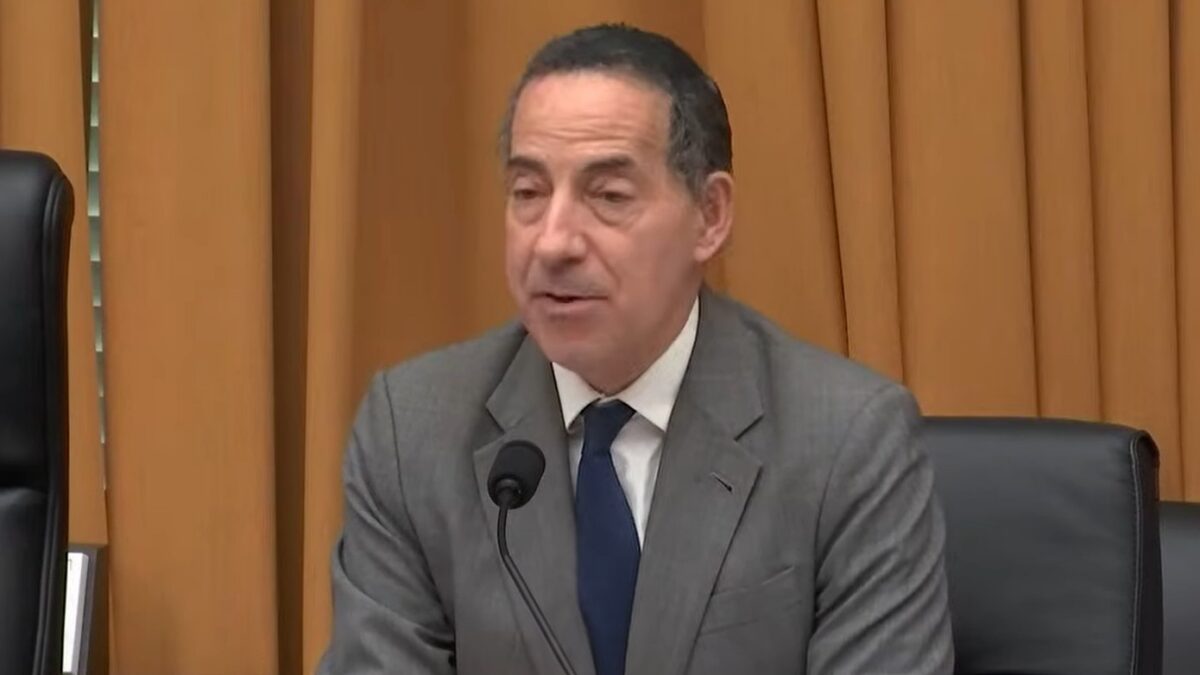
At the second edition of the House Judiciary Committee hearing series “The Southern Poverty Law Center: Manufacturing Hate,” Ranking Member Jamie Raskin, D-Md., indicated the SPLC has the same power and authority as the FBI or other government law enforcement agencies to maintain confidential informants in extremist groups — and, ostensibly, to then fundraise off the manufactured chaos.
In an exchange with Georgetown Law Professor Mary McCord, a Democrat witness, Raskin justified the SPLC’s alleged funding of people to be “undercover as informants to find out what these groups are doing.”
“It is a very useful law enforcement tool to use informants and … cooperators to learn more, not just about hate groups and potential domestic violent extremism, but also as a tool to dismantle drug trafficking groups and human trafficking,” McCord said, listing other law enforcement activities.
Raskin then drew a direct comparison to the FBI, stating, “If the FBI sent someone undercover to expose a mafia organization, narco-traffickers, international human traffickers, that wouldn’t mean that the FBI is supporting those groups, would it?”
McCord also shrugged at violence against conservatives, stating a Trump memorandum about combatting left-wing domestic terrorism “relies for support on the murder of Charlie Kirk, assassination attempts against the president and Justice Brett Kavanaugh, and the so-called riots in protest of ICE activity.”
Despite how much the Democrats have tried to make the SPLC a tacit branch of the Department of Justice, the group has no jurisdiction to do anything close to what the FBI does. Ironically, Democrats have also worked overtime to paint the SPLC as the farthest thing from a government entity while indicating it has no role or influence in government. But the issue, as Alliance Defending Freedom’s (ADF) Ryan Bangert pointed out, is much more sinister, as the SPLC and Democrats are trying to co-opt the Bill of Rights as cover for the SPLC’s collusion with government (while dismissing that collusion).
“Nonprofit groups are not politically accountable to anyone; they’re not politically accountable under the First Amendment, and of course they have the right to freely speak, of course they do. But when they use that right to persuade government actors, powerful corporations to refuse the public square to their political opponents, that’s a problem,” Bangert said. ADF is one of the groups targeted by the SPLC on its “hate map,” despite being a pro-family, Christian organization that advocates views held by most Americans, as Bangert testified.
“A government-paid informant and a law enforcement-paid informant is different than a private sector-paid informant,” said committee Chairman Jim Jordan, R-Ohio. “When you add to it that the private entity is paying an informant or a field source millions of dollars that they’re not telling their donors, that’s different than the FBI or local law enforcement paying some informant.”
The collusion between the SPLC and the Biden administration is something Raskin attempted to cover up, and SPLC interim President Bryan Fair testified was nonexistent, despite the fact that staff “met regularly” with Biden officials, Bangert said. Raskin — after directly comparing the SPLC to the FBI — brushed off the idea that SPLC has any institutional or governmental power, claiming the group has merely said certain mainstream conservative organizations are “hate groups,” which is ostensibly protected by the First Amendment.
“That’s the great thing about the First Amendment: It’s up to you. You can say whatever you want. If you don’t like the fact that someone’s called you a hate group, then you get up, and then you rebut them, you denounce them,” Raskin opined.
“The proper response to speech you don’t like is counter-speech, not government prosecution, not government censorship,” he said, ignoring the SPLC’s role in the weaponization of government against conservatives. “Let the public figure it out,” he added.
Censorship and government prosecution are exactly the outcomes the SPLC has achieved using its institutional power in the Biden administration and its influence with corporations, as The Federalist has reported. And, as Jordan said, it is not exactly First Amendment activity when a group has implicit power to mobilize government resources, authority, and physical coercion to achieve its political goals.
“They can say whatever they darn well want … when the organization colludes with corporations, colludes with banks, and worse yet, colludes with the government to silence and go after people for political reasons or other groups for political reasons, like the Alliance Defending Freedom and the Family Research Council, that’s where the rub comes in,” Jordan said, noting the “cozy relationship” between the Biden Justice Department and the SPLC.
“When the Justice Department is making them [SPLC] out to be the end-all, be-all standard objective source out there, bringing them into quarterly meetings, using their material, helping them, having them train their prosecutors, that’s when we get into the problem,” he continued, saying that kind of relationship and reliance on the SPLC leads to the anti-Catholic FBI memorandum produced by the Richmond Field Office.
The institutional power of the SPLC runs much deeper than being given the unchecked authority to pick and choose the enemies it wants Democrat administrations to destroy. As Bangert testified, the SPLC launched the “Change the Terms” coalition in order to destroy conservative organizations financially and functionally.
“They understood that you don’t have to win a debate with your opponents if they’re invisible. So the coalition targeted critical banking, payment processing, donor advisory technology, and digital communications infrastructure,” he said. “It embedded the SPLC within that infrastructure of corporate decision-making, allowing it to influence terms of engagement, flag business partners, and bully corporations into compliance. In short, the SPLC mobilized corporate America to crush the voices of mainstream conservative organizations.”
That meant SPLC was able to “de-platform, de-bank, and deny services to every single organization on that hate map,” he said, no matter how mainstream they were, because its goal has been to “shut down debate in the public square.”
“A partisan political organization like the SPLC should never have been allowed to function as an unaccountable private gatekeeper to critical financial technology and communication services, and corporations should never have accepted the word of an organization that is itself severely compromised,” Bangert said.