
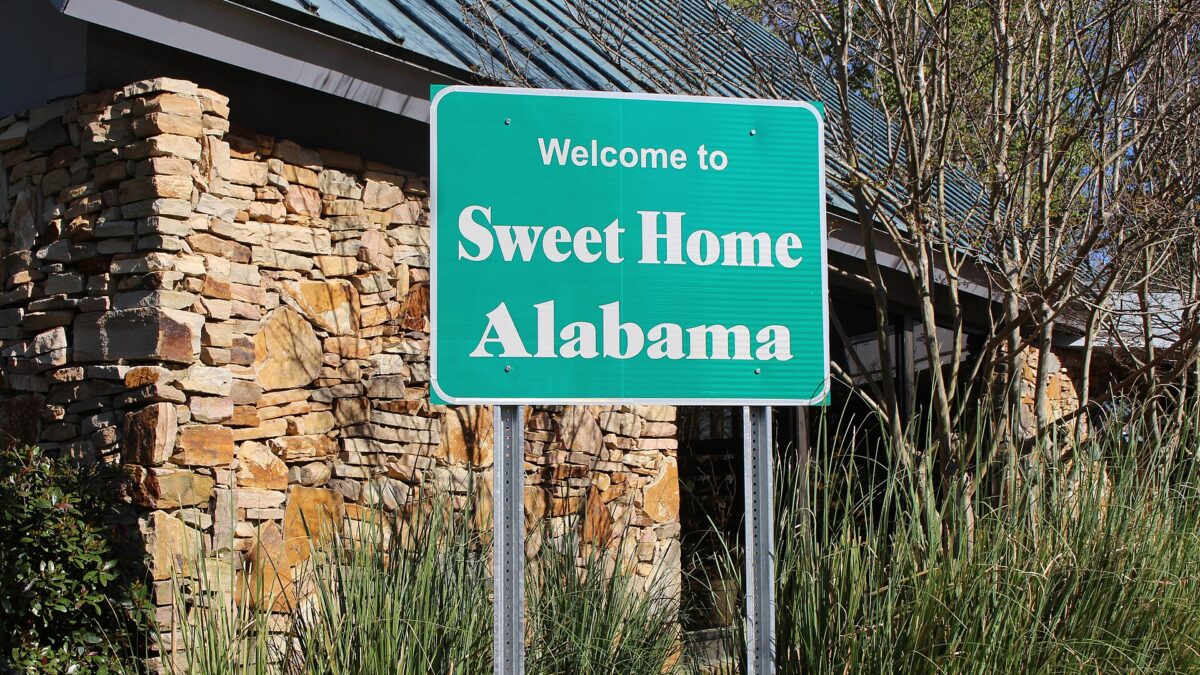
The U.S. Supreme Court cleared the way for Alabama to implement a new race-neutral congressional map ahead of the 2026 midterms on Monday.
In a 6-3 order, the high court vacated a series of lower court rulings that effectively resulted in the state’s use of a congressional map that includes two majority-minority districts. As The Federalist reported, such affirmative action districts were historically carved out under past interpretations of Section 2 of the Voting Rights Act to Democrats’ benefit.
Associate Justices Sonia Sotomayor, Elena Kagan, and Ketanji Brown Jackson dissented from the court’s decision.
In vacating the rulings, the Supreme Court remanded the matter back to the lower judiciary in light of its recent Louisiana v. Callais decision. In that 6-3 ruling, the high court smacked down the use of race in the redistricting process, with Justice Samuel Alito writing that “lower courts have sometimes applied this Court’s §2 precedents in a way that forces States to engage in the very race-based discrimination that the Constitution forbids.”
At the end of April, Alabama Attorney General Steve Marshall petitioned SCOTUS on behalf of Secretary of State Wes Allen and other state leaders to expedite consideration of the matter given its Callais decision. The Yellowhammer State subsequently made a secondary filing over the matter late last week, shortly after Gov. Kay Ivey signed legislation “that would demand the governor call special primary elections for impacted U.S. House districts if the Supreme Court allows the state to utilize district lines its legislature approved in 2023 but has been blocked from using,” according to Fox News.
Writing for the dissent, Sotomayor argued that “[t]here is no reason” for the Supreme Court to vacate the district court’s order and remand the matter “for reconsideration in light of the Court’s new interpretation of §2 of the Voting Rights Act” in Callais. She contended that the lower court’s “finding of intentional discrimination” in the battle over Alabama’s 2023 proposed map “is independent of, and unaffected by, any of the legal issues discussed in Callais.”
“Vacatur is thus inappropriate and will cause only confusion as Alabamians begin to vote in the elections scheduled for next week,” Sotomayor wrote. “As with all vacaturs of this kind from this Court, the District Court remains free on remand to decide for itself whether Callais has any bearing on its Fourteenth Amendment analysis or if its prior reasoning is unaffected by that decision.”
Responding to Monday’s decision, Allen said in a statement that Alabama’s May 19 primary election “will proceed as scheduled,” and that his office “will remain in close contact with the Governor’s Office and the Attorney General’s Office as this situation continues developing.”
“I appreciate the hard work of Alabama’s local election officials as we continue to work towards the administration of a secure, transparent, and accountable election,” Allen said.



.JPG)