
If you watched Nick Shirley’s videos from Minneapolis, you’re wondering how: How did a bunch of people get millions of dollars in public funds to run apparently fake service organizations, with no apparent qualifications and no apparent intent to actually do anything? How do you run a wink wink “daycare center” without being a plausible daycare provider?
Before I start answering that question, file this January 26 CBS News headline somewhere in your head, because you’ll want to remember it: “California lawmakers ignore most state audit warnings, costing billions.” Gavin Newsom’s failing state has a remarkably capable team of auditors, and they keep pointing out all the systemic failures in the state’s financial controls. Weirdly enough, no one ever fixes those gaps.
With that in mind, we can dig into the details of a single blue state fraud case to see how the machine works. Blue states, and blue state local governments, are pouring out cash with a system of pretend-rules that don’t matter. They’re running free money programs with no lock on the front door. If you aim to misbehave, you probably can. If “a purpose of a system is what it does,” then the purpose of blue state social welfare programs isn’t social welfare. They’re just spending money to spend money, using government as a mechanism of pure redistribution, with a light sprinkling of performative caring.
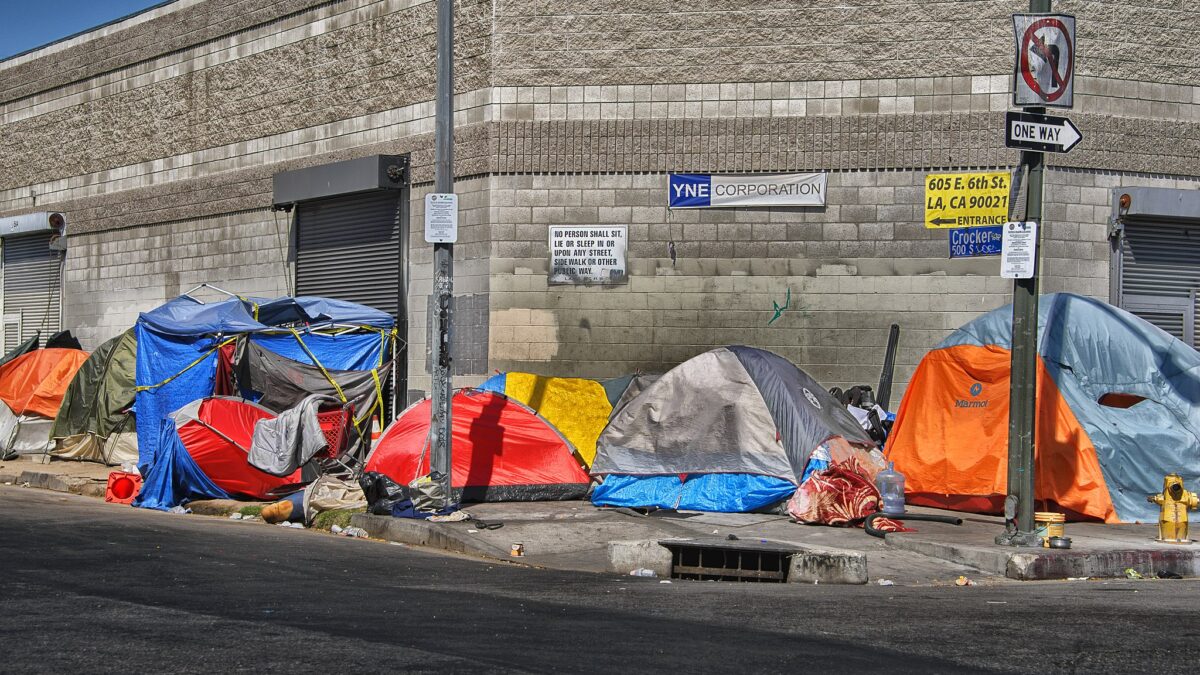
In Los Angeles, as I recently mentioned, a homeless services contractor named Alexander Soofer is facing a long list of federal and state fraud charges over allegations that he took $23 million in public funds to provide housing to people, but kept at least $10 million of it for himself. But I’ve been trying to get in front of the alleged fraud, winding back the days to the moment when Soofer showed up and started asking for government contracts. Who was he? What was his background in homeless services, working with a challenging population that can show up with mental health problems and drug addiction? Like someone running a Quality “Learing” Center, how did he qualify for that government funding? Soofer also ran the “Los Angeles Public Health Medical Center” out of a PO box for a while, so he’s apparently qualified as a social worker and a medical provider. But who is he?
The problem of qualifying for government cash is one that Democrats suddenly seem to be concerned about. A Democrat-authored bill introduced in the Virginia state legislature, HB 1369, proposes to explicitly forbid vetting by nonprofits for some publicly funded social services: “No state agency responsible for the administration of federal funds shall impose a requirement on a nonprofit charitable organization providing a federal public benefit to determine, verify, or otherwise require proof of eligibility of any applicant for such benefits.” If someone says they want free money, you can’t be mean — you just have to give it to them.
Officially, the Los Angeles Homeless Services Authority has a lot of contracting rules, and does require service providers to qualify for government funding. You can see an example of a “REQUEST FOR STATEMENT OF QUALIFICATIONS FOR CERTIFICATION AS A QUALIFIED BIDDER FOR LAHSA FUNDING OPPORTUNITIES” here. Start on pg. 9: “Agencies seeking certification as a qualified bidder for LAHSA funding opportunities must demonstrate a minimum of at least two (2) years’ experience in providing one or more of the following types of supportive services/housing intervention for persons experiencing homelessness…” On paper, at least, you can’t just show up and start grabbing cash: You have to prove that you have experience.
But my extensive search for Soofer’s professional background in homeless-focused social services has so far turned up only one piece of prior experience: He apparently owns, or owned, a Yogurtland franchise on the 3rd Street Promenade. I went there, and couldn’t find their business license inside the building, although I did discover that the outraged Yelp reviews were right about the fact that the place charges $1.37 an ounce. I’m guessing that the next price point after $1.37 an ounce is that you just have to give them one of your kidneys.
The City of Santa Monica has explicitly declined to answer my apparently complex question about a froyo place having a business license in Soofer’s name, but I’ve filed a formal request for that public record.
So if the charging statements filed by prosecutors are correct, a guy whose professional background is that he owned a frozen yogurt franchise got $23 million in public funds to provide complicated services, with case management and extensive client wellbeing requirements, to the homeless.
The financial disclosure forms filed by Abundant Blessings, Inc. with the IRS are quite strange, showing not a penny of income before 2022, but the numbers Soofer’s nonprofit sent to the IRS don’t come close to matching the numbers offered by prosecutors. The financial reporting suggests a picture of a nonprofit corporation that was functionally nothing, then took off like a rocket: no contracts, then many contracts in a hurry.
You can see a comparison of the funded services to the actual services here, in a post from the Los Angeles City Controller. In the programs funded by LAHSA, homeless clients are supposed to receive “service coordination, case management, supportive service and activity provision, meals and food, hygiene products and toiletry products, transportation, training, laundry, and storage of participants’ personal property.” What they got was ramen noodles. But taxpayers paid for all that other stuff, even when it wasn’t provided.
I’ve asked Los Angeles officials a series of questions about how they vetted Alexander Soofer and Abundant Blessings, quite explicitly telling them that I wasn’t asking about the fraud or the investigation but only wanted to discuss what happened before that. They successfully avoided the question. Diana Chang, the director of communications for the office of the Los Angeles City Controller — she/her pronouns — said that questions about vetting and qualifications “are outside the scope of our investigation.”
The director of communications at the independent Los Angeles Homeless Services Authority (LAHSA), a city-county joint powers authority, responded to a question that wasn’t about the fraud or the investigation by saying that LAHSA opened an investigation as soon as they became aware of the possibility of fraud.
“LAHSA takes its stewardship of public funds and its maintenance of the public’s trust seriously,” Ahmad Chapman wrote in an email message. “In the case of Abundant Blessings, we identified issues, investigated and substantiated those concerns, terminated their contracts, and referred them to the proper authorities. We will continue our efforts to monitor provider performance to ensure taxpayer dollars are used to address homelessness as effectively and efficiently as possible.”
The answer is that they terminated the contracts after they became concerned about fraud, but the question about vetting will not be answered. You can take the lack of an answer as an answer.
I’ve filed a written records request with LAHSA for the statement of qualifications provided by Alexander Soofer and Abundant Blessings, Inc. before they got their first contract. We’ll see how that goes. But the available evidence suggests that blue state contracts are vetted after people start to worry if a contractor is inclined to fraud.
Remember what the Trump administration is saying about medical fraud and social services fraud in California, an allegation they frame in multiple billions. We’ll see how the details play out, but the most important political story of the moment is that blue state public institutions are trending rapidly toward insolvency. In Minneapolis, as protesters fight ICE in the street to make the place won’t lose its illegal immigrants, the giant public “safety net” hospital is frantically laying off staff and cutting tens of millions of dollars in spending, desperately trying to stave off financial collapse.
You can see how we got here.