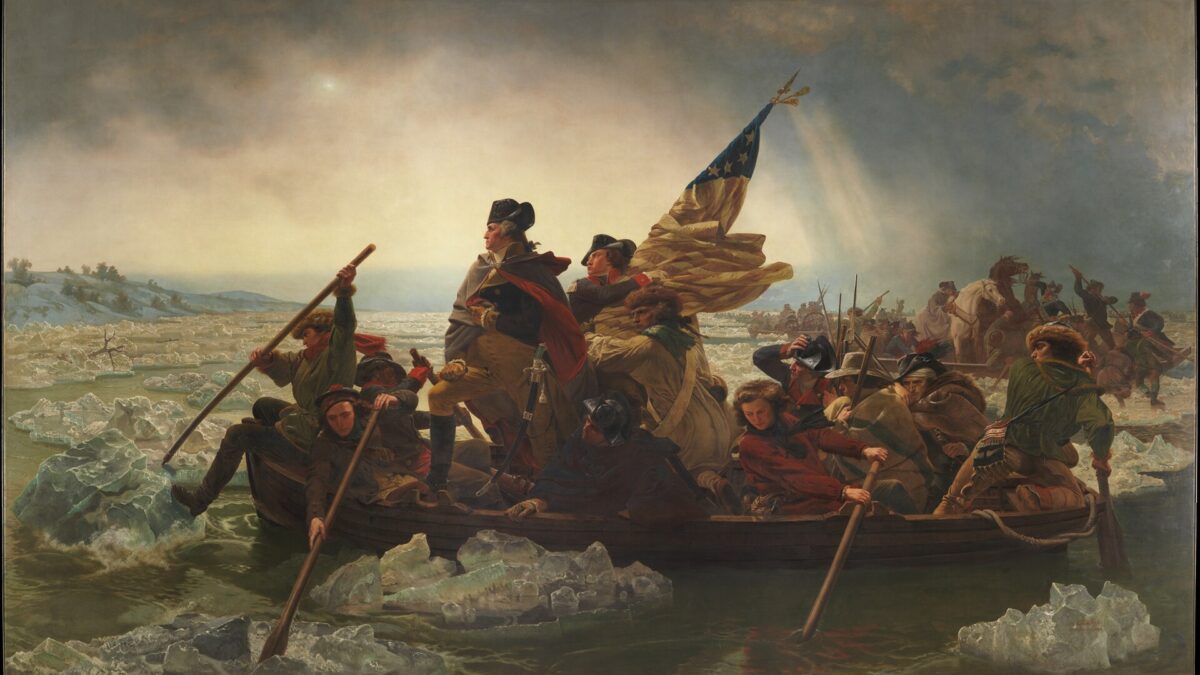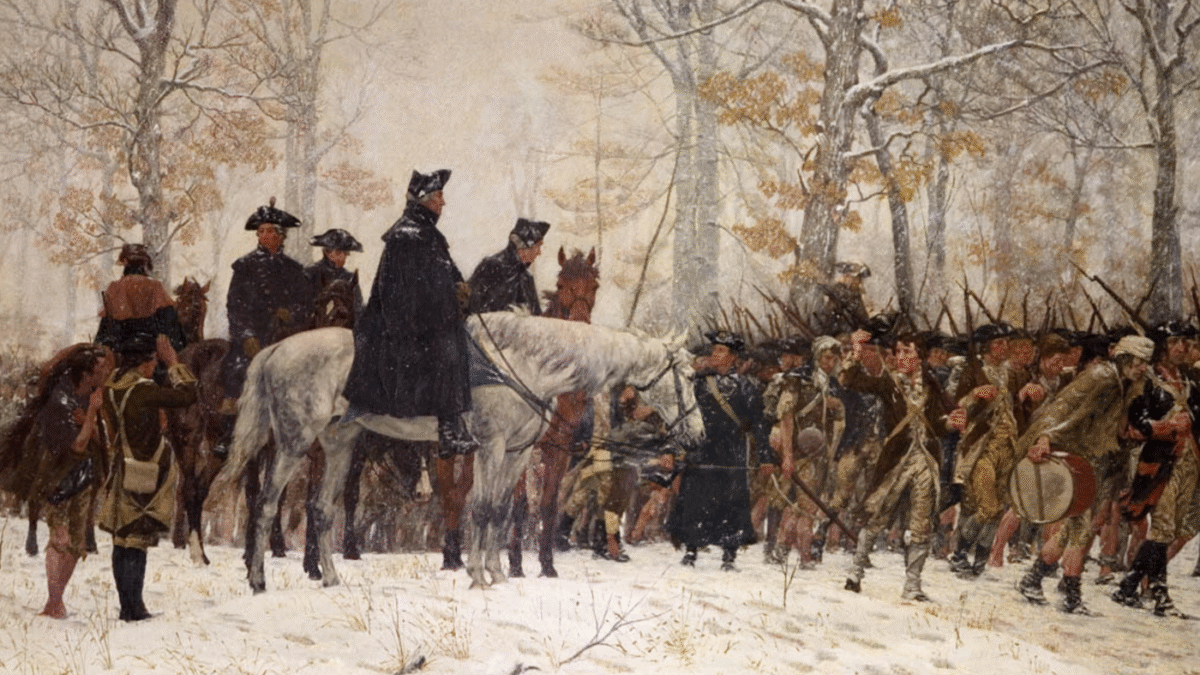
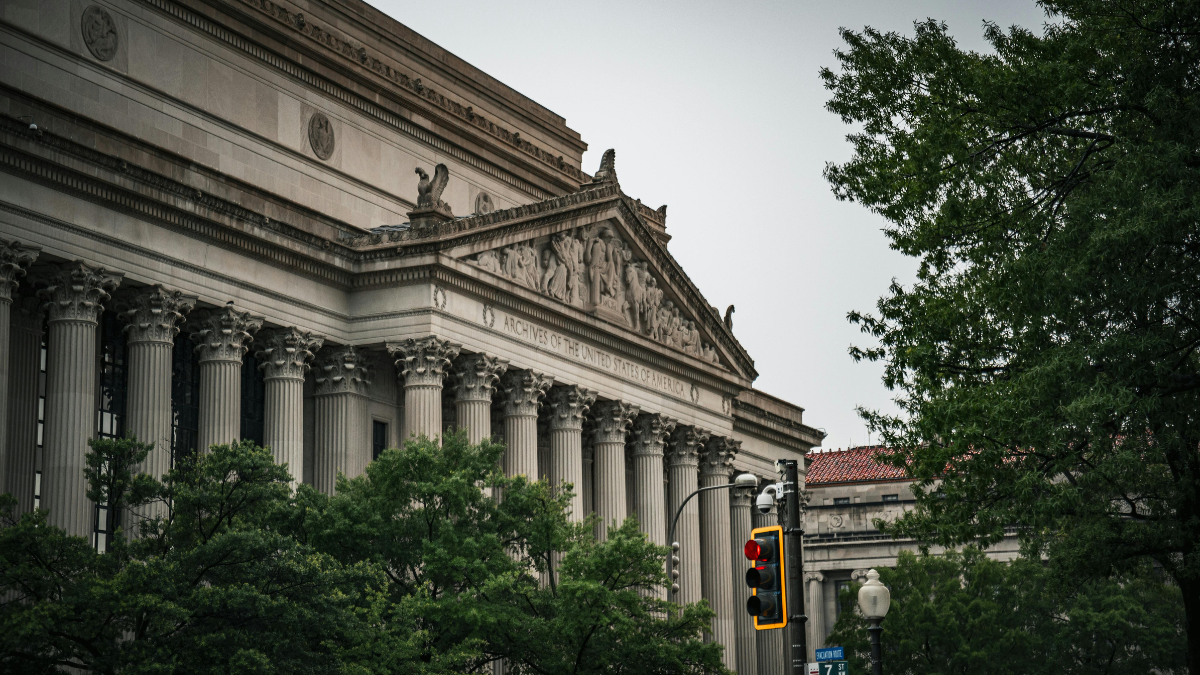

The nation’s impending 250th birthday has given many museums in the national capital an opportunity to unveil new and renovated exhibits exploring American history. The National Archives recently opened its contribution to the anniversary celebrations, launching two new exhibits to provide interactive experiences for visitors of all ages. By using its treasure trove of documents, the Archives can tell the American story, and the themes, places, and people that have defined our first 250 years.
The ‘Nation’s Filing Cabinet’
The National Archives’ vast holdings boggle the mind: collections of more than 12 billion pages — the vast majority of which are not yet available online — and growing. If the Smithsonian Institution functions as the “Nation’s Attic,” the Archives serves as our “National Filing Cabinet,” storing the documents that define the nation’s government and its history. The new exhibits serve to breathe life into those documents, transforming them into something beyond a series of old papers sitting in sterile, acid-free containers.
Rather than focusing on the mechanics of what an archive is or how this particular archive functions, “The American Story” explores the nation’s history thematically, using specific artifacts to touch on important facets of the nation’s life. Examples of particular note: the signed copy of the Louisiana Purchase in a gallery on westward expansion; George Washington’s draft copy of the Constitution — complete with the first president’s handwritten edits — in a gallery on our system of government; and the patent application for Rock ’Em Sock ’Em Robots, part of a gallery on how innovation affects Americans’ daily lives.
For the technologically inclined, or those who eschew static displays of documents in glass cases, the interactive elements personalize guests’ experiences. Visitors can input their preferences on a ticket in the exhibit’s first gallery, and artificial intelligence will offer them personalized documents in subsequent galleries, which visitors can later view when they return home via individual QR codes. Visitors can also watch films from the Archives’ collection in a separate gallery, including a World War II-era malaria prevention video featuring Disney’s Snow White and the Seven Dwarfs.
A separate exhibit, opposite The American Story on the other side of the building’s rotunda, focuses on younger visitors. The Discovery Center includes family-friendly educational games in the “Archives Arcade,” which intends to engage with children in ways that promote their interest in history, civics, and government.
New Visitor Experiences in Washington
The two new exhibits at the Archives come shortly after the building publicly displayed the full Constitution — the rarely seen “fifth page,” along with all ratified amendments — on a temporary basis in September. These permanent exhibits represent the first major renovation to the Archives’ public areas in more than two decades, when the Charters of Freedom (the Declaration of Independence, Constitution, and Bill of Rights) received new display cases and a Public Vaults exhibit opened. Those Charters will receive a new addition this year, when the Emancipation Proclamation gets permanently added to the rotunda’s displays, after the Proclamation was temporarily displayed at the Archives several times over the past few years.
These new Archives exhibits echo activities taking place throughout the nation’s capital in the lead-up to the nation’s birthday. The Library of Congress opened an exhibit profiling King George III and George Washington in March of last year, with a new gallery on early America coming this year and an orientation center tentatively scheduled to open in 2027.
Likewise, the National Museum of American History has its own series of exhibitions and programs surrounding the 250th birthday beginning in March. And just outside the capital, Mount Vernon is putting the finishing touches on renovations to the first president’s historic mansion, while also updating museum buildings located nearby.
The exhibits and celebratory activities occurring in and around Washington give families an excellent opportunity to visit the nation’s capital. Hopefully, these experiences will give guests from around the country and all over the world a greater appreciation for the freedoms and people who created the first quarter-millennium of our rich American story.
The National Archives Museum is located in the main Archives Building, 701 Constitution Ave. NW., Washington, D.C. (Metro: Archives-Navy Memorial). The museum is open daily, 10 a.m. to 5:30 p.m. Admission is free.