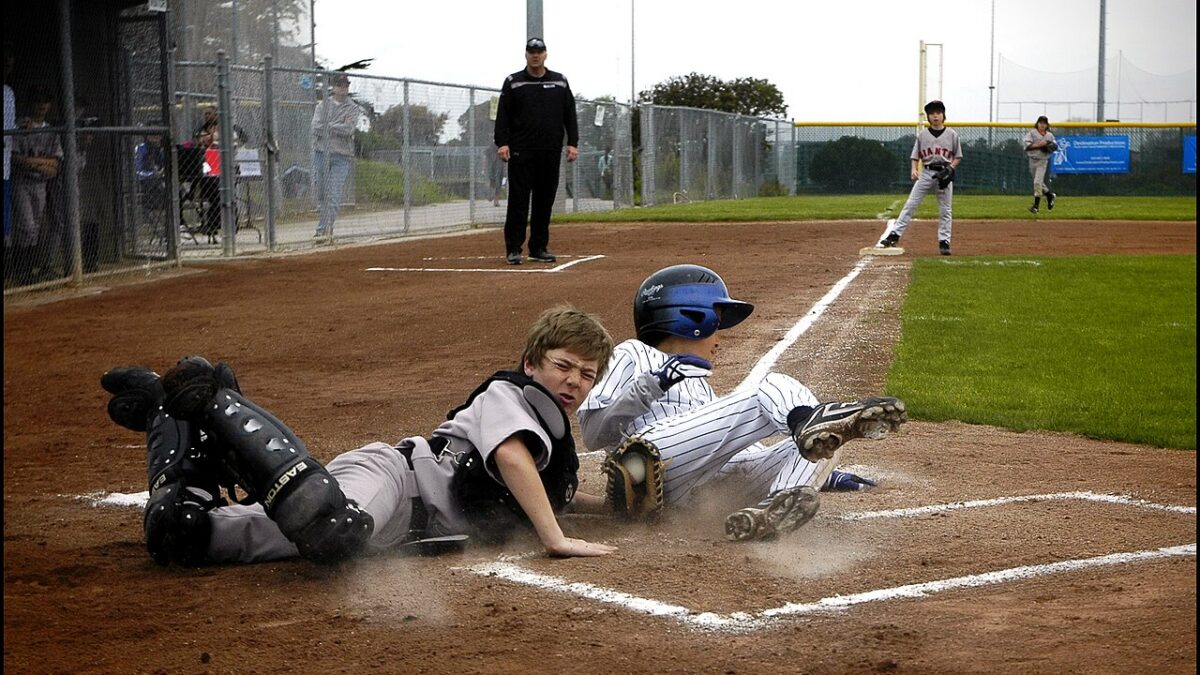

On a recent Saturday, my oldest son had his last Little League game of the fall-ball season, a semifinal match up against a competitive foe. It was a tight game, but, like they say about the playoffs, defense made the difference — twice our bats were silenced by impressive catches in the outfield, including one in which the centerfielder caught the ball over his shoulder while running back to the fence. That night, my son and I watched the second game of the Brewers-Rays World Series and talked strategy and hitting mechanics, already thinking about next season.
For generations of American boys, baseball was an integral facet of their upbringing. They played in local leagues run by volunteer dads and organized pickup games themselves in their neighborhoods. They collected and traded baseball cards and scoured the daily sports section of the newspaper to see standings and statistics. They learned a common American language based on the game’s unique parlance: out of left field, in the ballpark, thrown a curve, struck out. And yet, like many aspects of American life, youth baseball is suffering — not only because kids’ interests have diversified, but because of the professionalization and commodification of youth sports that harms the integrity of the game. Saving America, in a small but important way, means saving youth baseball.
What Little League Gives Americans
Over the last five years, with two of my boys playing and a third soon to join them, I’ve been consistently surprised by the unique character of Little League house baseball. Some of the benefits, of course, are generally applicable to lots of youth sports: exercise, honing athleticism, learning teamwork, making friends, developing resilience. But many others are peculiar to local youth baseball.
For one, because my boys play in the same league we become familiar with lots of families in our community — my son’s most recent majors team was composed almost entirely of kids he had previously played with on earlier teams. Because the coaches are volunteer dads, there is a deeper esprit de corps. No one is paying Steve to make the lineups, prep the fields, or deal with rowdy 10-year-old boys — it’s all out of the goodness of his heart and love for the game. There’s also the built-in volunteer component — not only the (somewhat annoying) annual fundraising of selling coupon books, but running the league’s “snack shack.” Every parent, regardless of their personal schedule or annual salary, has to run the shack for a few innings every season, grilling hot dogs and burgers and interminably waiting for indecisive 8-year-old boys to decide between candy options.
When compared to other youth activities, youth baseball is also a bargain (part of the reason for which, admittedly, is the fundraising). This most recent fall ball season, the registration cost for my two boys was about $400, which amounts to somewhere around $8 per game or practice. Equipment for the kids is minimal, and there are online used-equipment markets (my younger son’s bat was about $40 with shipping). Many other youth activities are much more expensive.
Little League Baseball Is Slowly Dying
Sadly, fewer and fewer kids are getting to experience youth baseball. After reaching its peak in the 1990s, youth baseball participation between 2008 and 2020 dropped by more than 25 percent; a separate study found that between 2019 and 2024, it dropped 19 percent. In my own town in Northern Virginia, only about 10 percent of eligible boys play in our Little League. There are at least three reasons for this: (1) more families are electing to put their boys in travel baseball and private clubs; (2) a variety of other sports and youth activities compete with baseball, and year-round schedules for those activities leave little room for the traditional Little League season; and (3) kids rarely do informal neighborhood play anymore, meaning they don’t play pickup baseball games that generate interest in the sport.
Though I know many parents won’t like to hear it, I’m persuaded that travel sports are bad for kids, families, and the nation. As scholar Tim Carney argues in his recent book Family Unfriendly: How Our Culture Made Raising Kids Much Harder Than It Needs to Be, travel teams eat up huge amounts of time and money because of extensive driving, hotel stays, tournament weekends, and thousands of dollars in fees. Rather than orienting family life around religious faith and quality time together, travel sports demand we coordinate our schedules — including Sundays — around games, practices, and out-of-town tournaments. This means not only minimizing kids’ free play (which they need), but also that we spend less time in our communities. And for what? Few of these kids are going to get collegiate scholarships.
The “professionalizing” of youth sports naturally limits who can compete — few can afford the time or money needed for travel team schedules, undermining the natural democratization of the game. Babe Ruth learned the game in a Baltimore industrial school; Mickey Mantle developed his love for the game in a working-class mining family in Oklahoma; Hank Aaron hit bottle caps with broomsticks and sticks on makeshift sandlots; Rickey Henderson and Tony Gwynn honed their craft in California sandlots and backyards. Moreover, as American Principles Project president Terry Schilling recently argued, private equity is turning youth sports into a lucrative network of profit-making businesses, with investors purchasing teams, facilities, apparel, and streaming services to profit off us and our kids.
Get Involved in Little League and Save America
As Hayden Daniel argued in The Federalist earlier this year, baseball is a truly American game derived from Western, chivalric principles of honor and athletic excellence. Pitchers and batters engage in one-on-one duels. Unlike soccer, where players suffer slight scratches and fall to the ground weeping, a batter will be hit by a 95 mile-per-hour fastball, wince, and stoically take his base. And unlike other sports that disproportionately lean on their best players, it is a truly democratic sport — every few innings, your lackluster right-fielder will have to take his turn at the plate.
If you want to know how you can contribute to the preservation of our nation’s identity and traditions, get your boys involved in youth baseball. Properly throwing and hitting a ball are tough but important skills, and if your kids are late to this great game, you’ll need to spend an hour or two of your week practicing with them in the yard or on the street to help them catch up. But isn’t that itself a gift? Few parts of my week are as happy as those I spend with my sons tossing the ball around or helping the boys improve their swings. Teach your boys the game of baseball, and they’ll learn more than a sport — they’ll learn America.