
In response to the White House warning Congress that malicious investigations are unconstitutional, The New York Times claims that threats to prosecute executive branch staff are of no concern, but the executive checking the power of Congress is a national scandal.
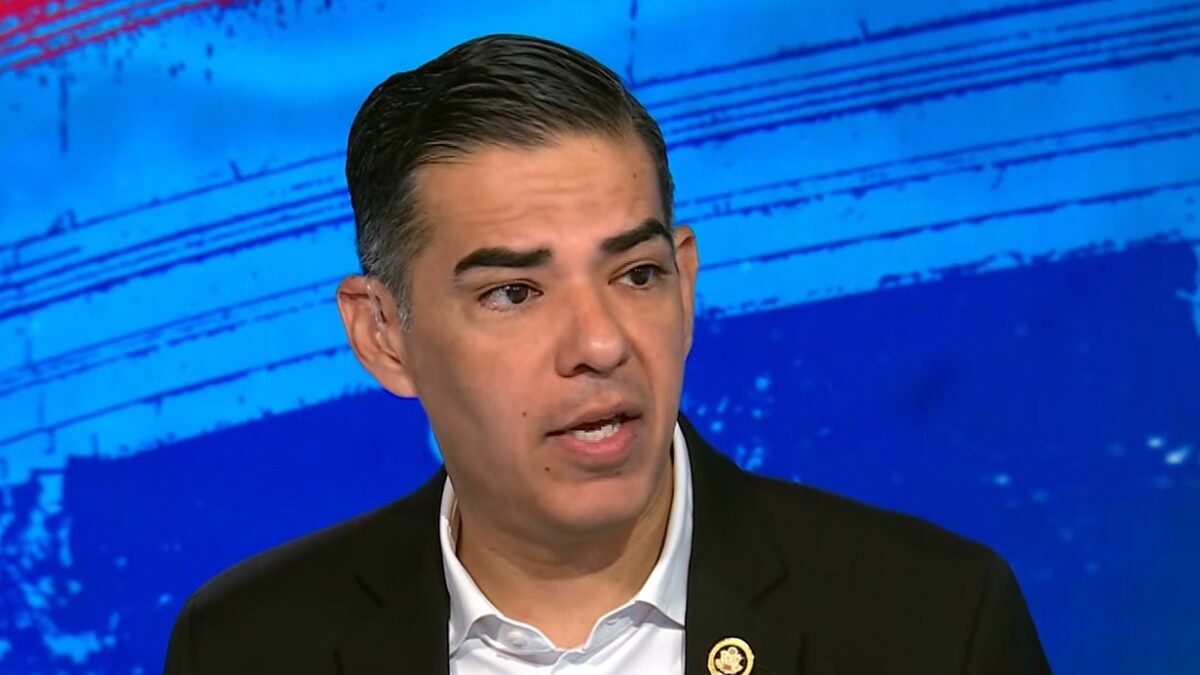
The New York Times published a piece Wednesday titled “White House Threatens Congress, Saying Aggressive Investigations Could Be Crime.” It detailed a letter from White House Counsel Will Scharf to incoming House Oversight Committee Chairman Robert Garcia, D-Calif., wherein Garcia is informed of the constitutional limits on what he and the rest of the Democrats appear to have planned for the next Congress: a barrage of subpoenas and investigations with the “clear intent to transgress” on a coequal branch.
“The Supreme Court has held that ‘[i]nvestigations conducted solely for the personal aggrandizement of the investigators or to ‘punish’ those investigated are indefensible.’ Congressional investigations must further a legitimate legislative task; Congress cannot employ them to exercise powers of criminal prosecution assigned to the Executive and the Judiciary,” Scharf’s letter stated. “These principles require Congress to identify a legitimate legislative purpose underlying its investigative acts. Failure to do so in this context represents a clear abuse of power and an affront to our constitutional system of government and to the rule of law.”
On the night of the midterm elections, Garcia ominously wrote “LAWYER UP,” with many other Democrats following suit in threatening political persecution and prosecution of any staff associated with the Trump administration. Sen. Elissa Slotkin, D-Mich., infamously threatened to destroy the lives of young conservatives who want to work in the administration, and it appears those threats may soon become reality.
Scharf’s letter stated that such conduct “may cross the line into blatant criminality. And issuing unlawful subpoenas with the intention of depriving citizens of their constitutional rights and privileges may warrant further investigation.”
To The New York Times, however, what really matters is that “Mr. Trump has made threatening to prosecute his personal and political adversaries a hallmark of his rhetoric since his 2016 campaign, when his rallies featured ‘Lock her up!’ chants about Hillary Clinton.” Throughout the article, the outlet maintained that Democrats cannot be prosecuted for their attacks because they would be protected while performing the “official duties” of Congress.
Many Americans would have loved to see Clinton put in prison, but the Trump administration never actually did anything to realize that goal. On the other side of the coin — which The New York Times apparently forgot to mention — Democrats actually did attempt to throw Trump in jail, bringing countless bogus charges, many of which targeted him for his official acts as president.
The outlet instead says that the letter “indicates how far Mr. Trump is willing to push the Justice Department to try to protect the White House from legislative investigations.”
Their legal expert for the article, New York University Law School professor Peter Shane, said, “Our Constitution protects legislators from the threat of criminal prosecution while performing official duties as an essential bulwark to repel executive overreach and defend checks and balances.”
Shane’s analysis seems to suggest that “checks and balances” only go one direction: from Congress to the executive. But, as Scharf noted, the Supreme Court has already weighed in on the matter, stating Congress cannot just harass and impede the executive with a wall of investigations.
Shane added that “Congressional oversight and the issuance of subpoenas by definition cannot be the focus of legitimate criminal prosecution.”
The New York Times continued that argument, stating Scharf’s letter might not “square with the ‘speech or debate’ clause of the Constitution, which shields lawmakers from being subpoenaed or prosecuted by the executive branch over their legislative acts.” The question is whether it is possible for a “legislative act” to not have a “legislative purpose,” which is the Supreme Court-imposed requirement on investigations and subpoenas, and seems to be the emphasis of Scharf’s letter.
In 2020, the high court developed a test for congressional subpoenas in a case that involved Democrats in Congress attempting to subpoena Trump’s personal accounting firm, which may become relevant with the new barrage of subpoenas.
In the decision, a 7-2 majority wrote that when courts assess congressional subpoenas, they should make sure they are “no broader than reasonably necessary to support Congress’s legislative objective,” that there should be “detailed and substantial” evidence to “establish that a subpoena advances a valid legislative purpose,” and that courts must consider “the burdens imposed on the President.”
However, as Scharf detailed, congressional Democrats do not appear to have any legislative motivations whatsoever, being open about their purely political purposes:
We are monitoring the abusive and capricious threats that are now proliferating from Democrat legislators who seek to abuse the legislative process to intimidate and to interfere with the lawful functioning of government. Recent public statements underscore these concerns. You and your congressional colleagues have asserted that they will issue subpoenas to harass, threaten, and deter dedicated members of the Administration from further service. Several have compared their subpoena pledges to handing out “candy,” “Mardi Gras beads,” and enough paper to level forests. Representative-Elect Ojeda wants to see Secretary Hegseth “squirm,” while Representative-Elect Padilla Stout told witnesses to “put makeup on for the cameras” at their hearings.
Others have made clear that their motive is to pave the way for witnesses to be prosecuted by state or federal authorities. Representative Ansari recently declared that accountability meant “eventually go[ing] to jail.” She also vowed “to prosecute every single person” affiliated with ICE.” And Senator Markey has sounded approval for “[I]ive televised trials” of the big tech executives that Democrats intend to call before the Senate.
Addressing Garcia specifically, Scharf wrote, “Bizarrely, you have chalked your motives up to nothing more than ‘gay’ ‘pettiness’ rather than any legislative purpose and compared yourself to a demonic clown.”