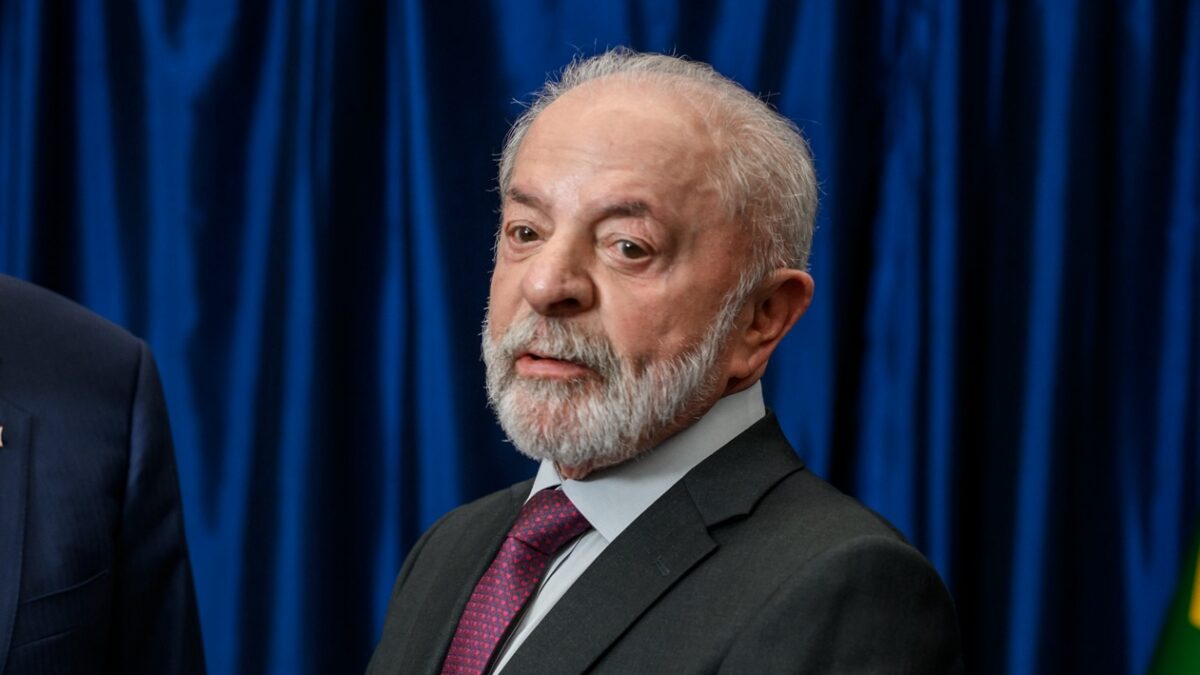

Luiz Inácio Lula da Silva recently won a record fourth term as president of Brazil, beating Sen. Flávio Bolsonaro in the runoff by roughly 51.8 percent to 48.2 percent after trailing him in the first round three weeks earlier.
It was not a clean finish. Three minutes before polls were scheduled to close, Supreme Court Justice Cristiano Zanin, Lula’s former personal defense lawyer and his 2023 appointee to the court, ordered voting to be extended by two hours. Bolsonaro’s campaign had asked for extra time only in rain-soaked southern municipalities; Zanin extended voting nationwide.
Federal electoral prosecutors had opposed any extension, and the president of the electoral court, Kassio Nunes Marques, acknowledged that the court had never extended voting before and that no law provided for it. Confusion followed at polling places, and it is still unclear how many stayed open late. Bolsonaro refused to concede and is seeking to have the election annulled.
Consider what Brazil’s opposition now looks like. Lula’s last opponent, former President Jair Bolsonaro, is serving a 27-year prison sentence. His current opponent, Flávio Bolsonaro, left the country two days after the vote rather than hand over his passports under a Supreme Court order in a money-laundering investigation in which he says he did nothing wrong. People close to him say he feared arrest. Now in Florida on a U.S. visa, he says he will lead the opposition from exile. When one challenger goes to prison and the next goes abroad, “healthy democracy” is not the phrase that comes to mind.
Most American coverage will treat all this as a Brazilian story. It is much more. For more than three decades, Lula has been the organizing hub of our hemisphere’s socialist movement, and the networks he helped build reach into American streets, campuses, and politics. As we document in NextGen Marxism: What It Is and How to Combat It, the trail from Lula’s Workers’ Party to the activists who launched Black Lives Matter is written in the organizers’ own words.
Castro’s Partner
As the Soviet Union crumbled, Fidel Castro watched his bankroll and ideological patron disappear. Lula, then head of Brazil’s Workers’ Party (PT), shared his alarm. In July 1990, at their behest, delegates from 48 socialist and communist parties gathered in São Paulo and created the Foro de São Paulo. Its founding declaration blamed the region’s problems on “the capitalist system.” Today it counts well over 100 leftist parties as members.
Lula has never disowned it. Opening the Foro’s 2023 meeting in Brasília as sitting president, he reminded delegates that he and Castro had founded it and said that being called a communist or a socialist did not offend him; it was a point of pride.
Trading Bullets for Ballots
The Foro’s real innovation was strategic. The guerrilla wars of the 1980s had failed, so drawing on the Italian Marxist Antonio Gramsci, it set out to win power through culture and elections. In a 2008 speech in Lima, Lula recalled that the Foro “began to educate the left” that it could win through democratic means.
The playbook ran like this: First, campaign as a populist reformer against real corruption and keep the Marxism quiet. Second, once elected, rewrite the constitution, concentrate power, and weaken the press and other independent institutions. Third, use the state’s resources to export the revolution to neighbors and to the United States.
Hugo Chávez won this way in Venezuela in 1998; Lula followed in 2002. Spanish Marxist academics who later founded Podemos helped draft new constitutions in Venezuela, Bolivia, and Ecuador. Brazilians who watched a Lula-appointed justice rewrite the voting hours on Election Day may recognize the second step.
The Porto Alegre Connection
The Foro is Lula’s regional network; the World Social Forum is his global one. In 2000, PT-linked activists and French anti-capitalist Bernard Cassen planned a left-wing counter to Davos. Lula gave the green light, and PT-run governments supplied crucial funding. The first Forum convened in Porto Alegre in January 2001 under the slogan “Another World Is Possible.” By 2005, its International Council had set its sights on an affiliate inside the United States.
Into the ‘Belly of the Beast’
Organizers of the first U.S. Social Forum, held in Atlanta in 2007, wrote that it was “strategic” to meet inside “the belly of the beast,” meaning America. A year earlier, at the Social Forum in Caracas, Chávez had urged American activists to wake “the giant” inside U.S. territory and join “a victorious offensive against the empire.”
Among those running the Atlanta forum was a 26-year-old organizer named Alicia Garza, who said the experience politicized her. She later explained that foreign activists had told visiting Americans to go home and organize against their own government, to “create some room” for the rest of the world. In 2013, she co-founded Black Lives Matter. In 2014, an organization born of the Atlanta forum sent her to Ferguson, Missouri, where BLM became a national movement.
In 2017, Lula’s Foro held a gathering in the Washington, D.C., area at which a BLM representative spoke on organizing in American streets.
What a Fourth Term Means
Lula’s victory hands the godfather of our hemisphere’s socialist movement four more years at the helm of Latin America’s largest country. Expect Brazil to keep its distance from Washington and draw closer to Beijing, and expect the Foro and the networks born in Porto Alegre to have a well-funded friend in Brasília.
Americans should stop treating our street upheavals since 2014 as purely homegrown. The people who organized them told us they were building a beachhead for a movement whose leaders sat in Havana, Caracas, and São Paulo. Lula was at its center from the start.
Brazil’s result stands for now: Rules changed on Election Day, one rival is in prison, and the other is in exile. The rest of us should understand who won and what he has spent the past 36 years building.