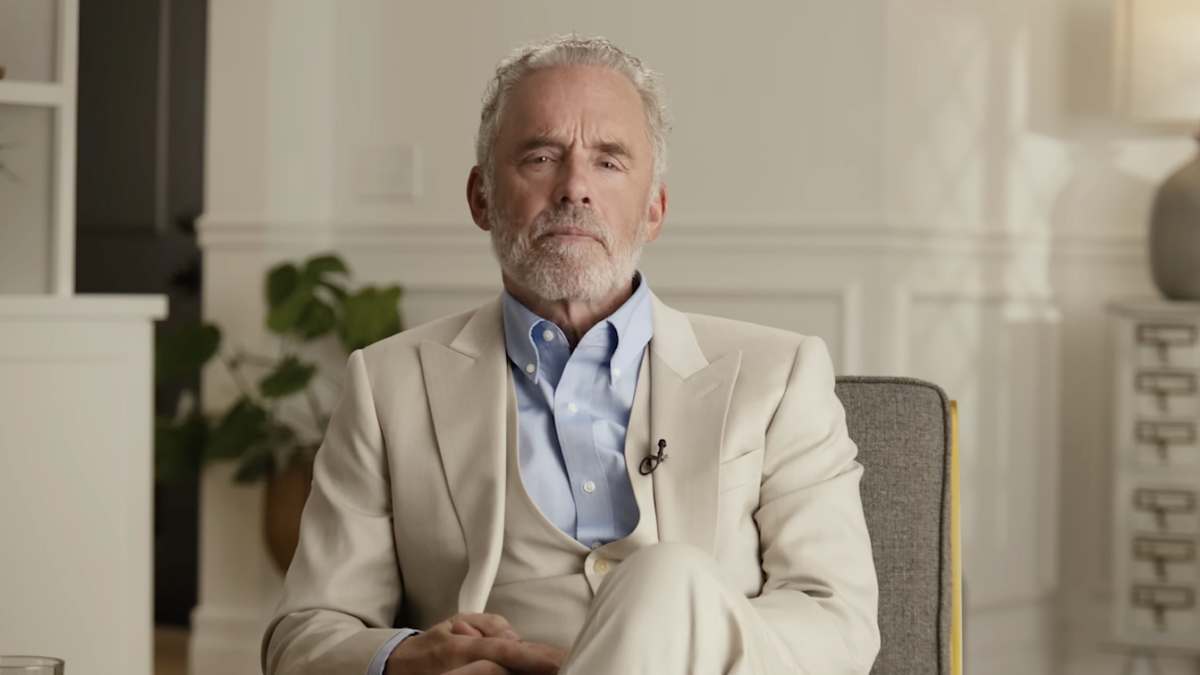

After many years in the public eye, delivering lectures on morality and the Bible, Jordan Peterson still refuses to honestly answer one simple and relevant question: Do you believe in God — yes or no? Instead, he hides behind his celebrity persona with no qualms about playing God or profiting off the One he refuses to embrace.
Peterson Academy, his online educational brainchild, has just emerged from its experimental phase of Beta testing. It has now fully launched. In a short time, it has grown from three courses to more than 110, with a full complement of experts and some 70,000 students. On Sept. 21, tuition hiked. Lifetime memberships are available for $5,000.
With his latest venture, Peterson poises himself as top self-help guru to the world, with the mission of conquering minds poisoned by Marxism and other wrong-headed thinking. Nevertheless, the lead tagline on the academy’s website is well taken: “Learn how to think, not what to think.” Over the years, Americans have become seriously deficient in logical reasoning. Peterson’s advocacy of the existence of and need for moral absolutes is fitting to counter the scourge of moral relativism that has plagued our country for decades.
To prove his points, Peterson has increasingly relied on the Bible for his teachings. He argues that biblical stories contain profound truths about right living. His social media posts are replete with biblical references. Earlier this year, he rolled out an eight-hour course for the academy on Jesus’s most well-known teaching, the “Sermon on the Mount.” Peterson’s newest course offering, “The Sacred and the Profane,” references more biblical accounts and states his belief that “true order requires confronting suffering, death, and malevolence in service of the highest good.”
Yet Peterson continues to reduce biblical truths to symbolism to fit within his framework of clinical psychology. He declines to talk about any personal confrontation of the suffering, death, and resurrection of Jesus Christ and the grace offered thereby. For over a year, he crisscrossed the country and spoke internationally to hawk his latest bestseller, We Who Wrestle With God: Perceptions of the Divine. After plunking down hundreds of dollars of my own to attend one of his out-of-town events, I left the stadium baffled, without learning one scrap about Peterson’s personal wrestling or any progress he might have made. His appearance was merely more of the same — performance art that left me cold and uninspired.
He claims wrestling equates to listening to his conscience. In other words, self-referential, as so much is with Peterson. But where does Peterson think that still, small voice comes from if not from the God he refuses to credit?
No matter how far back Peterson traces human existence to bolster his theory that evolution and history provide the necessary basis for morality, he’s still a moral relativist, albeit probably better than most. The late world-renowned minister and bestselling author Timothy Keller, among many others, addressed Peterson’s form of myopia many times, in print, from the pulpit, and during his podcast series, Questioning Christianity. Through reason and analysis, he laid to rest any argument for morality that does not admit of an ultimate foundation from God and the Son He sent as the source of ultimate truth.
But Peterson refuses to commit. “It’s none of your damned business,” he says when asked about his beliefs. In typical showmanship mode, he turns the tables on questioners by claiming the word “believe” is too ambiguous a term for a man of his elevated intellect to take seriously. He admits, “I don’t like the question,” though he can’t quite explain why, which is puzzling given his so-called expertise. The answer is quite obvious to anyone who’s taken Psychology 101.
To answer, Peterson must become vulnerable, surrender to the unknown, and risk finding out that he must bow to a God greater than that of his own making. Peterson’s tools of reason and analysis have their endpoint. Only by letting go can he discover the faith and grace that exists beyond them. Clearly, however, Peterson can’t bring himself to give up his illusion of control.
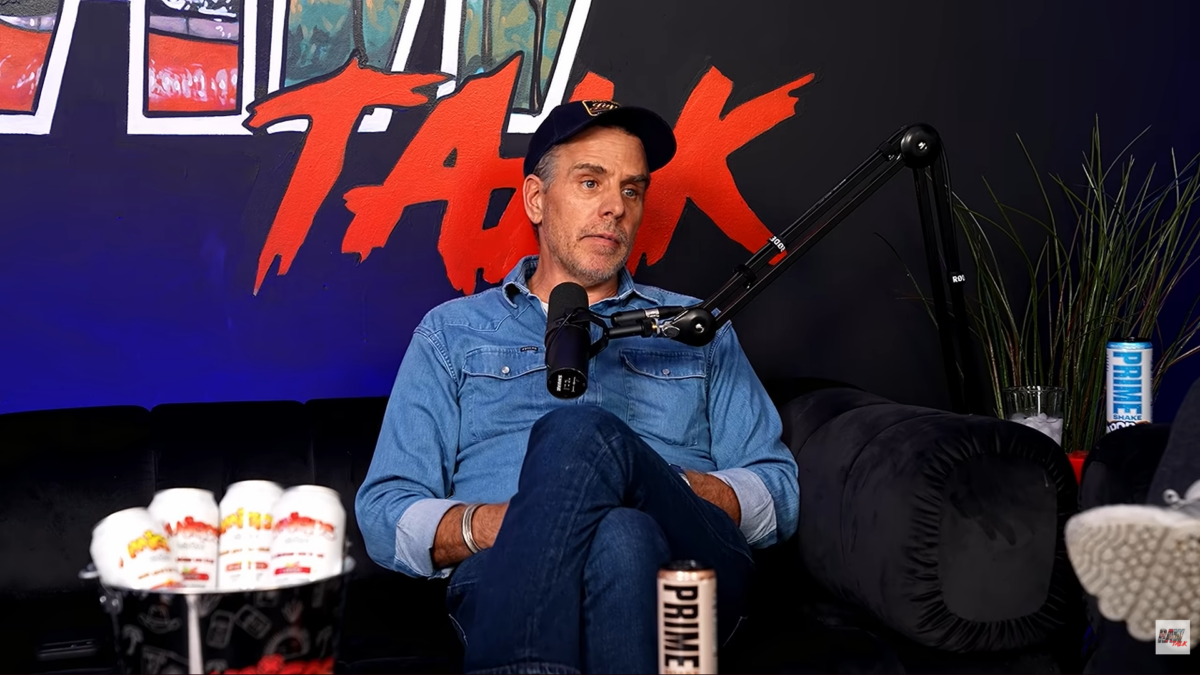
During another more recent interview, Peterson continued his evasion and responded with three answers: “No, but I’m afraid He probably exists,” “No, but I’m terrified He might exist, and “I act as if God exists.” Three answers; three denials. Apparently, he’s not terrified enough.
After going through multiple personal crises, he conceded that Jesus was God. But to Peterson, those beliefs still seem to exist within a theoretical framework, rather than as a personal Lord and Savior.
But Peterson simply cannot avoid accountability to God by refusing to acknowledge His divine omnipotence and plan of salvation. That refusal is the same as a denial. When Jesus commissioned His disciples, He said in Matthew 10: “Everyone who acknowledges me before others I will acknowledge before my heavenly Father. But whoever denies me before others, I will deny before my heavenly Father.”
And when the intellectuals of His own day, the scribes and Pharisees, refused to acknowledge Jesus as Savior, Jesus rebuked their own self-righteousness and spiritual blindness multiple times. He warned repeatedly of false prophets too.
For over a year, Peterson has suffered one health crisis after another that halted his public appearances. At one point, he was alleged to be near death. One day we will all come to the same fate, Peterson included, no matter how long or how hard we try to outrun it. The book of Ecclesiastes aptly asserts that the epitaph “vanity of vanities” will be ascribed even to those who have “labored with wisdom and knowledge and skill.”
Peterson still wants to keep his beliefs private, as he claims they are. That’s fine. God’s free will allows him to do so. But then he should stop using God to line his coffers.