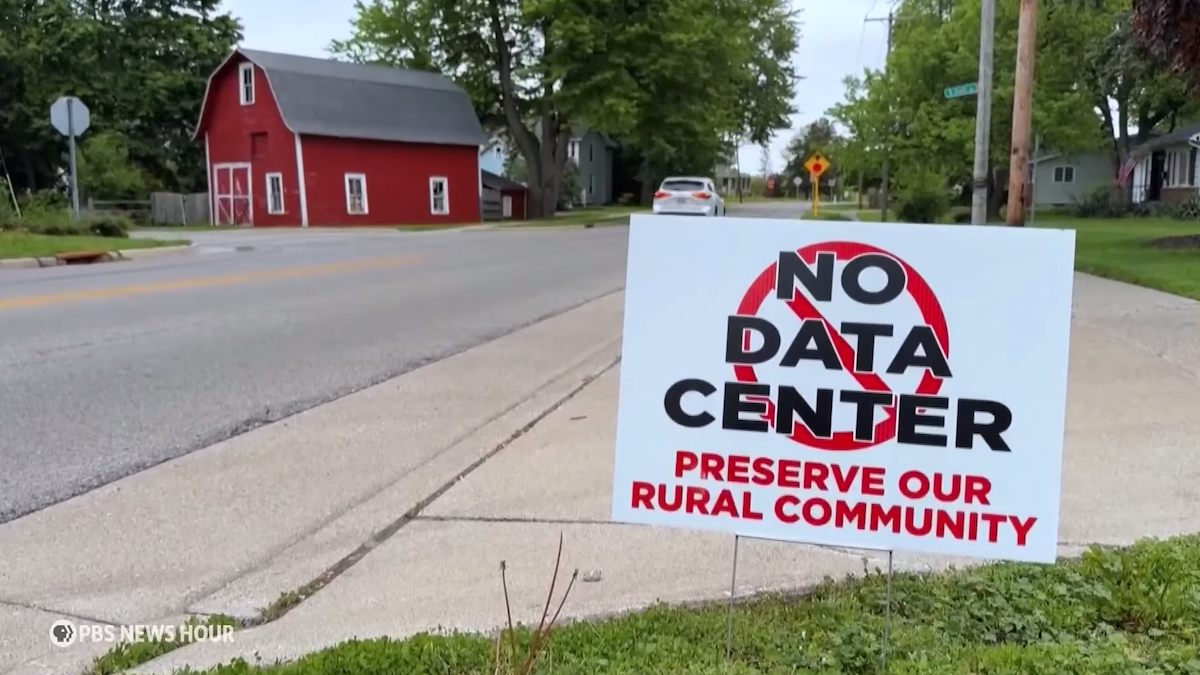

America needs data centers, and right now Silicon Valley is making Americans hate them. The industry does not know how to speak to the American people, and neither do many of the political operatives hired to help.
It is a travesty that American dominance is being stalled because the people leading the charge cannot manage the most basic task in a crisis: tell the truth, listen, and earn trust. These same people warn that China could beat us in the AI race. Yet when the fight became a much simpler communications race here at home, Beijing not only understood the American public better than they did; it ran circles around them.
Tech elites have fueled this backlash by responding to every reasonable concern with the same message: We know better, so trust us. But people want to know what will happen to their power bill, how much water these projects will take, and whether the jobs will still exist after construction.
Growing up on a small almond farm in Bakersfield, I learned to question outsiders making big promises. Water and electricity were not abstract policy questions; they were real issues that affected the economic survival of rural communities. It should be no surprise that people in towns across America are concerned about development projects with lofty goals because they have been burned by investors since the start of the Industrial Age.
Instead of acknowledging real skepticism, Silicon Valley points to X’s disclosure of roughly 200,000 suspected Chinese fake accounts, including 200 that pushed messages about data centers and power prices, as proof that the opposition is manufactured.
This is a serious threat, but those communicating the issue are completely missing the fact that China did not invent the anger; it found an open wound and poured salt in it, knowing people were already worried about electric bills, water, and decisions being made behind closed doors. Blaming the backlash on Beijing is a stupid and ignorant conclusion that allows the industry to dismiss American anger as fake instead of admitting the reality: Tech elites have done a terrible job speaking to their own country.
There is an old acronym people might remember from school: KISS, keep it simple, stupid. The tech elites have gotten stuck on the stupid part when the solution is actually very simple: Listen to the American people instead of paying another pollster to explain what a data map says the American people feel.
At this point, I am left wondering whether any of these CEOs have actually asked people what exactly they even oppose about data centers. Stupidly, the industry’s answer is to spend more money talking. A new advocacy group backed by Republican operatives recently announced plans to promote data centers in battleground states. I have spent enough time around Washington to know what comes next: polling, tested language, and a big tone-deaf ad buy.
That kind of top-down messaging misreads the room, because the conservative base is not the obstacle, and President Trump knows that. He is right that falling behind on AI is a real economic threat, and the right projects can bring a town new investment, jobs, and tax revenue. When he warned that towns rejecting data centers could end up “backwards and poor,” the reaction from some of his own supporters showed how little trust the industry has earned.
Vice President Vance filled in the other half of the argument later that day: Most of the opposition comes from places where these projects mean higher utility prices, and a data center should put “power back into the grid, not taking it out.” Those positions are not in conflict. America needs to build, but the companies profiting from it need to pay their own way.
If tech leaders actually want these projects built, they need to stop insulting the American people and start proving they are willing to invest in their communities. The data center is the newcomer, not the community. Before a shovel hits the ground, the company should sit down with the mayor, the utility companies, the school board, the fire chief, and the people who will live nearby. Not for another listening session where everyone nods and nothing changes, but a true collaboration where both sides agree on what the town needs with real commitments for the project.
Power is becoming the most common argument from the opposition and must be addressed first. If a project creates enormous new demand, the company should bring new generation onto the grid, pay for the transmission and backup capacity it requires, and make sure families are not left with higher bills. Communities also share these concerns about water, and investors must address them responsibly. There must be realistic plans for development, and they must transparently explain to people how much the facility will use, where it will come from, and what happens during a drought. If the math only works when local families absorb the cost or the risk, the project does not work.
True acceptance will come if and when these companies choose to invest in things that will still matter if the technology changes or the project changes hands. There are countless ways to show good faith, such as hiring locally, building apprenticeships with the community college, and supporting local schools, fire departments, emergency services, and even a local baseball team.
They can then earn real trust by putting those promises in a community agreement with public milestones so people can see whether the company kept its word and be held accountable if those promises are broken. Learning what a town values and helping preserve it is how an outside company becomes part of a community instead of treating it like a cheap plot of land attached to a power line.
Americans understand that winning the AI race will require us to build. But that should never force Americans to carry the cost while someone else collects the upside; and it certainly doesn’t justify them being called ignorant or unpatriotic when they ask questions. The people running these companies need to listen to the Americans who will have to live with their projects and earn their trust before asking for buy-in.
For all the intelligence driving the AI race, that simple lesson is still completely beyond comprehension for those leading the charge.