

If you’ve had the misfortune to be on the internet in the past month, you’ve probably seen the videos of young mothers sympathizing with Lindsay Clancy, a Massachusetts woman who is on trial for murder after strangling her three young children. The gist, usually, is that these women are so tormented by the challenges of raising their own children that they look at Clancy and think, Hey, that could be me!
Clancy’s defenders blame her actions, which she does not dispute, on everything from postpartum hormones to her husband to the normal hazards of being a mother of three. The theories vary in coherence, but in any case, the trial has become a proxy for women to air their various gripes about motherhood.
There’s a lot of equivocation going on, mostly by clout-chasing women who are either deluded or dishonest enough to equate real challenges like postpartum hormone shifts and sleep deprivation with deciding to wrap an exercise band around your toddler’s neck. But one bit of equivocation they’ve stopped doing is asking everyone to treat them just like men.
The argument that Clancy was victimized by the expectations and hardships of motherhood is a feminist one. Many of her supporters blame the very nature of her role as a wife and mother for her undoing, or at least tacitly do so by complaining loudly on the internet that their own duties to their children make them feel homicidal too.
Like a true feminist icon, Clancy is to them both a mistreated victim of her circumstances but also an empowering figurehead around whom to organize. They make no secret of their contempt for her husband, whose face has launched a thousand TikTok conspiracy theories, or for the basic social expectation that women who have children should actually mother them rather than stage performative tantrums on Instagram.
Feminists such as the 1970s writer Kate Millett have long portrayed the family as a tool of male oppression. At the root of all this resentment is usually the delusion that men and women are functionally interchangeable, and the belief that society’s obligations and expectations for men and women should be equal in nature as well as degree. You can draw a straight line between the conclusion that motherhood is inherently oppressive to women and the rejection of a view of human nature that says women and men are designed for different but complementary roles in the family and in a thriving society.
Unfortunately for Clancy groupies, the arguments of Clancy’s own legal defense prove them wrong on that front. Their claim that Clancy killed her children because of postpartum psychosis is a distinctly female defense. (The evidence that postpartum psychosis caused Clancy’s homicidal episode is highly suspect, but it is a real condition, although it is rare and does not typically result in violence.) After childbirth and throughout their lives, women endure radically different hormonal shifts than men do. That happens to be because men and women are designed with different biological functions, abilities, and challenges.
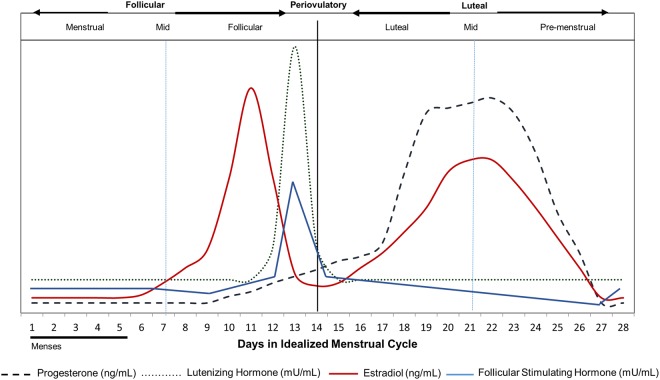
In a given month, a fertile woman’s reproductive hormones look something like this:
During pregnancy and postpartum, the influence of hormones is even more extreme. Human chorionic gonadotropin, the pregnancy hormone that shows up on an at-home pregnancy test and can cause classic first-trimester symptoms like nausea, doubles every few days in early pregnancy. A non-pregnant woman usually has fewer than 5 milli-international units per milliliter (mIU/mL) of blood in her body. When it peaks, usually between 8 and 11 weeks of pregnancy, that number may reach a few hundred thousand mIU/mL.
Progesterone, the hormone that regulates a woman’s cycle, normally ranges from 0.1 to 25 nanograms per milliliter (ng/mL) in a given ovulatory cycle — a significant fluctuation that helps drive the emotional and physical changes a woman experiences every month. In pregnancy, progesterone rises into the hundreds, before crashing after childbirth. Progesterone levels can affect everything from a woman’s mood and energy levels to her digestion. The other primary sex hormone that drives a woman’s reproductive cycle is estrogen, which also spikes during pregnancy; one study found that estrogen “rises 100-1000-fold during the third trimester.”
In postpartum, progesterone and estrogen fall off a cliff, helping drive the drastic mood fluctuations women often feel in the weeks after delivery. They drop again — permanently — in menopause, contributing to symptoms like mood swings and hot flashes and even decreased bone density.
And all of those drastic effects happen when a woman’s hormones are where they’re supposed to be! A woman’s hormones can be thrown off by lifestyle factors like stress, or they may be chronically imbalanced, which can lead to conditions like hypothyroidism and polycystic ovary syndrome (PCOS).
None of that means that women are victims of their own bodies, or so thoroughly at the mercy of their own hormones that they can’t be trusted to make moral decisions like not killing their families. These same hormones allow women the incredible gift of conceiving and bearing children. In addition to enabling pregnancy, progesterone acts as a natural sleep aid and mood relaxer. Estrogen is an essential contributor to not just reproductive health but the health of “the urinary tract, the heart and blood vessels, bones, breasts, skin, hair, mucous membranes, pelvic muscles, and the brain,” according to Johns Hopkins. After birth, hormones like oxytocin rise, increasing a new mother’s emotional bond with her baby.
Hormone health is another biological reminder that women and men are created in beautifully distinct but complementary ways. And as long as our culture refuses to recognize that, women will suffer for it. They will be subject to dehumanizing infographics at doctors’ offices that reduce them to “people who bleed” or “chestfeeders.” From puberty, the health care bureaucracy will greet them with hormonal birth control and abortions rather than holistic care, teaching women that their biology is an obstacle to be overcome on the journey to becoming more like men.
One of the less crazy conclusions many women on the internet have drawn from the Clancy case is that health care for women in general and postpartum mothers in particular is lacking. While Clancy’s homicidal actions are dubious evidence of that, it’s true that the modern health bureaucracy often downplays or ignores the intricate differences that distinguish women from men, to patients’ detriment. If your OB-GYN believes, as feminist thought leaders do, that female biology is a curse to be medicated with birth control pills and abortions, that’s going to affect the treatment you get.
The first step to improving all of this is acknowledging the biological and metaphysical reality that men and women are gloriously different. Only then will your doctor’s office stop asking you half a dozen times on your intake form whether you’re a menstruating man or a woman with testicles.
Ironically, mothers would also get a lot more support if we dropped the pretense that men and women are interchangeable. But doing so would mean recognizing womanhood and motherhood as divinely ordered gifts, rather than burdens imposed by the Patrick Clancy patriarchy. And doing that would mean no more performative TikToks of women throwing ice cubes at their showers. Is that a price the 21st-century woman is willing to pay for true empowerment? We’ll see.