
This is why you can’t give up on politics.
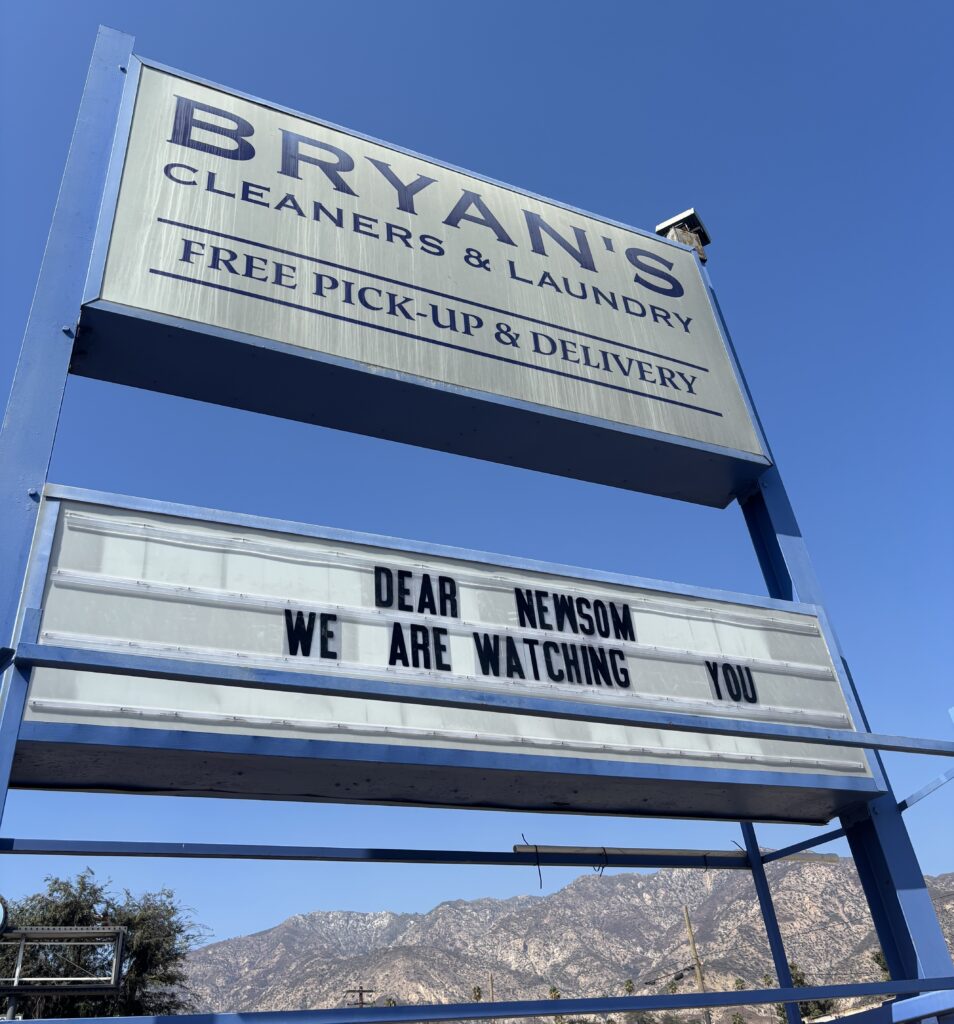
Like Pacific Palisades, the unincorporated Los Angeles County community of Altadena is a hillside enclave that never quite became what the rest of metropolitan Los Angeles has been turning into. In a sprawling landscape of transplants from elsewhere, it was a place: full of families, and even full of families that have been here for decades. Whole neighborhoods were made up of remarkably pleasant older homes, in a county full of those apartment buildings that look like industrial boxes for people. When Altadena burned in January of 2025, destroying about 6,000 homes in the community and damaging many others, a lot of history was lost.
Altadena is rebuilding faster than the Palisades, and just passed the 50 percent mark for rebuilding permits, though it has the same checkerboard pattern: whole lines of houses being built in a row, interspersed with whole lines of vacant lots where nothing is happening. The rebuilding and the empty spaces blend together.
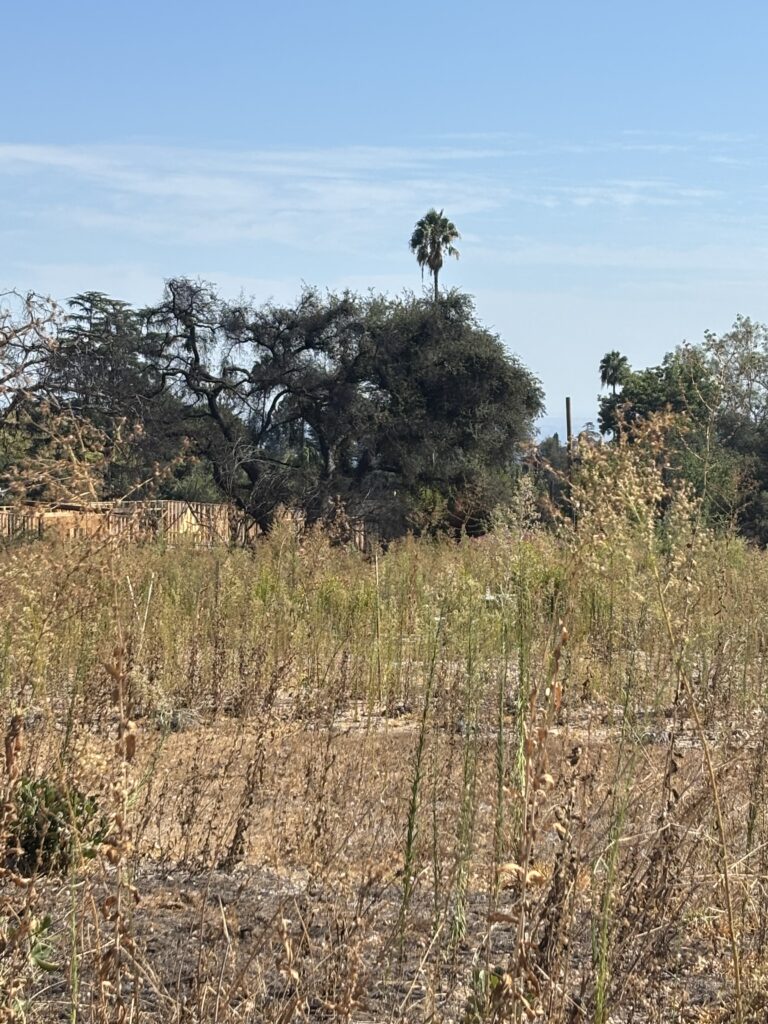
But it could be much worse, and is worse in other places. The rebuilding in Altadena is being driven forward, herded by an elected official who sees the moment as a chance for government to do better.
Her name is Kathryn Barger, and she’s a unicorn: While the 15-member Los Angeles City Council has no Republicans at all and a growing DSA presence, and the five-member Los Angeles County Board of Supervisors has four performance-art leftists who don’t seem to be the sharpest little knives in the drawer, Barger is LA’s very last Republican in the county’s two biggest local governments.
Steve Lamb, who has lived in Altadena since 1957, lost his home of thirty-eight years in the fire. Watching the recovery, and struggling to build while litigation drags on and he waits for funding, he credits Barger for pushing. Altadena is rebuilding faster than other communities, he told The Federalist, entirely because of “Supervisor Barger’s hands-on, take-no-prisoners personality working to force the bureaucrats to do something approaching the right thing.”
Barger is known for speaking carefully, and she gently declined an invitation to blame county bureaucrats for any form of slowness. But she answered The Federalist’s question about her role in pushing for faster recovery this way, which is close enough: “That’s my job. I made a commitment that the survivors didn’t have to fight the bureaucracy to rebuild.”
In the wake of the fire, the county has introduced a pilot program that allows homeowners and their architects to self-certify their building plans, declaring as they submit them that they comply with county codes. The county is also using a pilot program called eCheck, an AI-centered review of building plans. With those changes, and a local one-stop permitting center in Altadena, county building and permitting processes have shrunk from six to nine months to something closer to thirty days.
Barger sees a chance to turn those new processes created in response to an emergency into the new normal, making local government faster permanently and for everyone.
Like homeowners in the Palisades, Barger credits the Trump administration with listening and taking action. When the president heard how long it would take to clear burned-out properties, she told The Federalist, he ordered the Army Corps of Engineers and the EPA to add resources and move faster, and dramatically accelerated the speed of the first phase of the recovery.
But Barger was unusually blunt about a problem that continues to plague the recovery, and it’s distinctly political. The biggest roadblock to rebuilding now is delays in insurance payments, and Barger told horror stories about the insurance claim process. Twenty months after the fire, people don’t have the money they need to rebuild, and some insurers seem to be trying to manipulate homeowners into a state of desperation that might convince them to take smaller payouts. Some of the worst insurers, Barger told The Federalist, are treating the people they insured “like the companies are doing them a favor” rather than meeting a contractual obligation.
This is where the political failure arrives: The California Department of Insurance, Barger says, “should be ashamed of themselves.” With thousands of homes destroyed, and people fighting with their insurers all over the fire zones, insurance regulators are “not enforcing, in my opinion, what they need to be enforcing.”
California had an appointed insurance commissioner until 1988, when a ballot measure made it an elected position. So the state now gets a Democrat to regulate insurance, and Californians have been liberated from the burdens of knowledge. The current insurance commissioner is proud that he was raised by immigrants, and he’s really proud that he’s “the first openly gay person elected to statewide office in California’s history.” Ricardo Lara has a degree in journalism and Chicano studies, but no professional background of any kind in insurance. Also, infamously, he’s quite fond of lavish foreign travel, and seems to drop by his state office mostly as a visitor.
“When you politicize an office like this,” Barger told The Federalist, “this is what you get.”
Despite President Trump’s intervention, Barger added, FEMA and SBA funding remains plagued by red tape, slow execution, and rules that limit the usefulness of federal aid.
Finally, a growing controversy in Altadena is a rebuilding process that’s turning burned-out single-family homes into high-density housing.
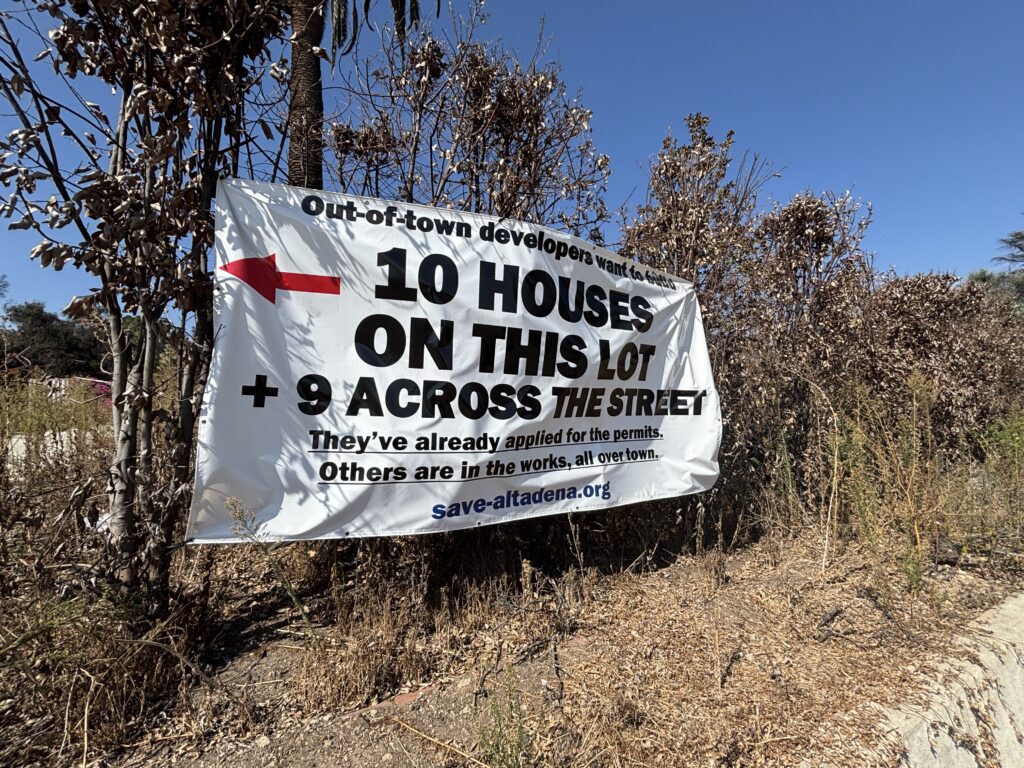
That’s not a county choice, as Barger notes. The California legislature has embarked on a density crusade, and state laws encourage developers to cram in more boxes: “Sacramento sneezes, we get a cold,” Barger told The Federalist. But pending legislation may exempt Altadena from the state’s housing density laws for a few years, prompting a predictable outcry from activists.
The post-recovery future will echo changes that were already underway before Altadena burned. Housing prices were rising, and families were already being priced out. But Barger sees families that have deep roots in the community choosing to rebuild. “I think it’s going to resemble the Altadena pre-fire,” she told The Federalist.
If it does, she will have played a significant role in that outcome. In a place where politicians mostly live for dimwitted theater-kid woke performance, that kind of behavior is extremely rare. You can vote for a Ricardo Lara government, or you can vote for a Kathryn Barger government. Californians mostly keep choosing the one that doesn’t work.