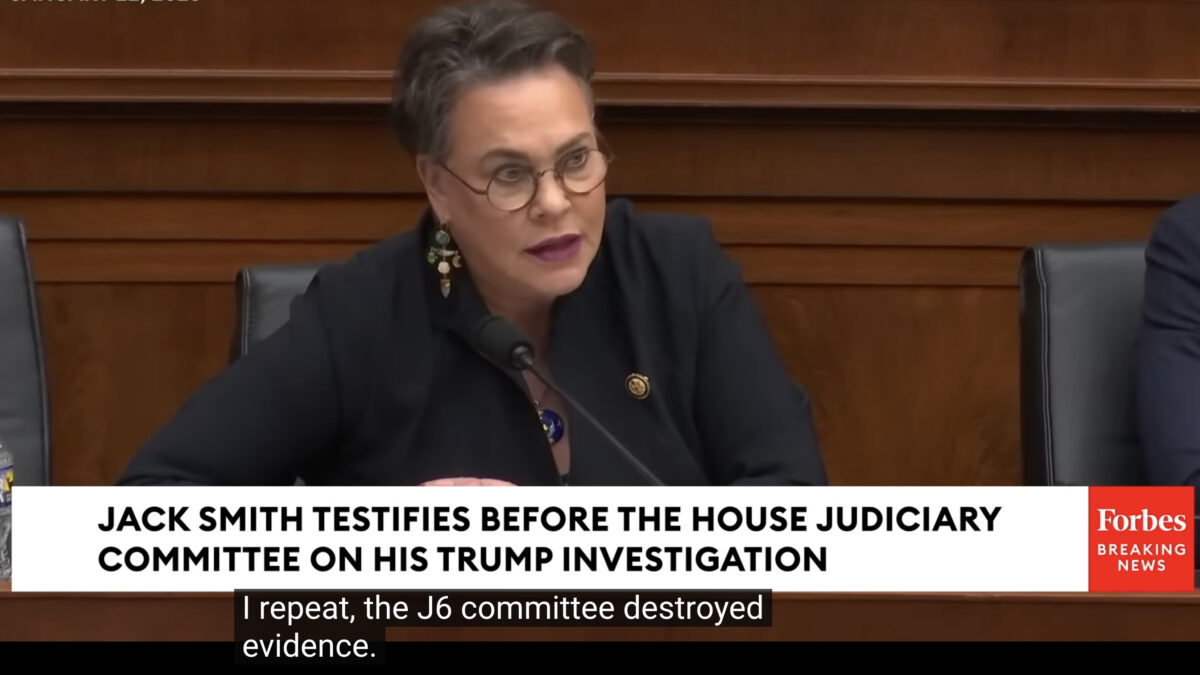

Having done us all the favor of destroying the repulsive quisling Liz Cheney and taking her seat in the House of Representatives, the Trump-endorsed Harriet Hageman is probably headed for a seat in the Senate. In Wyoming’s primary elections this week, Hageman won 65 percent of the Republican vote. In a state with a massive Republican voter advantage, victory in the GOP primary is nearly the equivalent of certain victory in the general election.
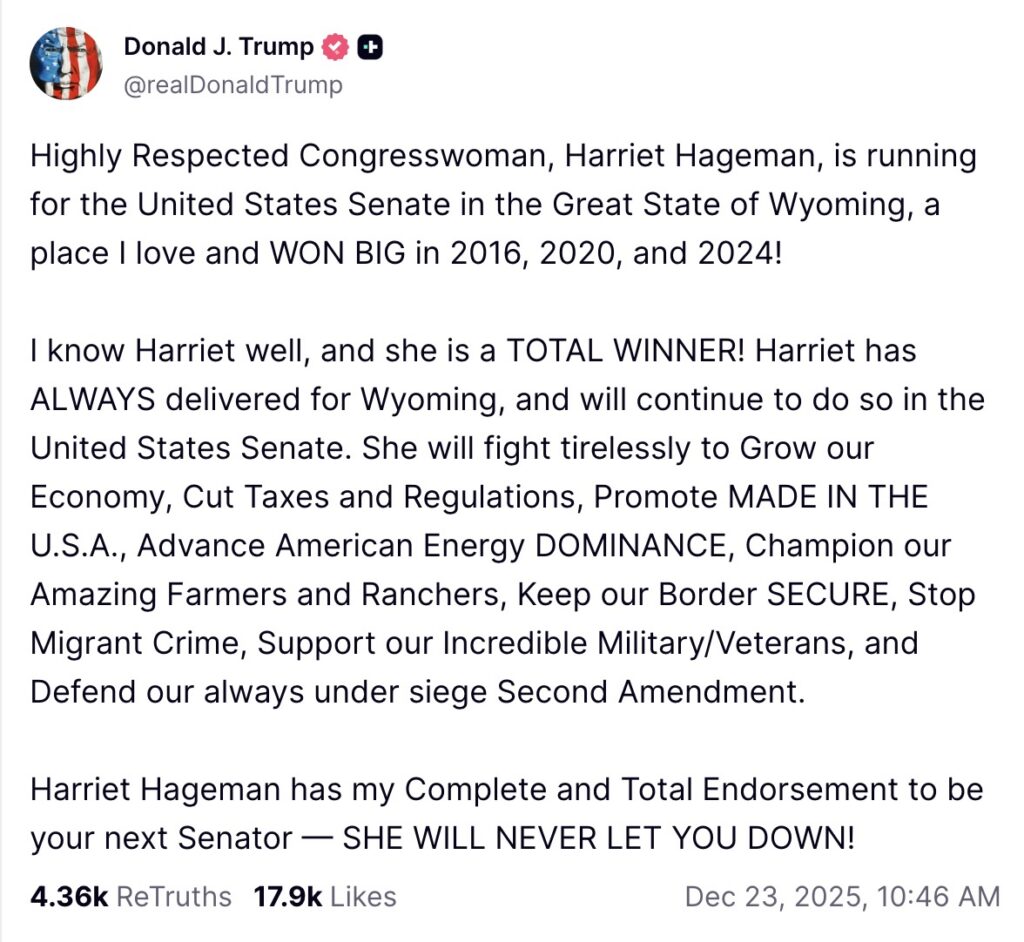
While Hageman is solidly MAGA (and something of a human flamethrower in committee hearings), that’s mostly not what the just-concluded race was about. In a reminder that all politics is local, the Republican contest in Wyoming was mostly about public land in Wyoming. Conservative voters split between a politically conservative faction that criticizes excessive federal land ownership in a place where the federal government owns nearly half of all land in the state, and a culturally conservative faction that argues for the importance of public land to the rural way of life.
Hageman has been a consistent critic of federal land management practices, and of the large-scale federal ownership of the West. On her House website, she asks “How Much Federal Land Is Too Much?” In that essay, Hageman argues that a federal government with limited constitutional authority should “return unappropriated lands to the state.”
“The federal government owns over 48% of Wyoming’s surface estate, and an even greater 65% of underlying mineral rights,” Hageman wrote. “Federal land ownership in Teton County is far worse, with only 3% being privately held, which is one of the reasons that housing costs are so high. Federal ownership of this magnitude wreaks havoc on affordable housing, the cost of providing services, and property taxes for county citizens.”
Hageman’s most important Republican opponent, the rancher and former small-town mayor Sam Mead, depicted proposals to sell federal land as a cash grab: “Wyoming’s public lands are being put on the table to cover Washington’s debts, and the people who should be fighting hardest against that are the ones defending it.” (Mead also had to defend an earlier political contribution to Bernie Sanders.)
With that red-on-red debate concluded, Hageman will face Democrat James Byrd, who is doing his best to sound like a Republican on issues like border security. The likely outcome of the general election is not a mystery.
In the race to replace Hageman in the House, Wyoming Secretary of State Chuck Gray defeated eight other Republicans to win the GOP nomination. Gray has been an aggressive supporter of the state’s efforts to pass new election integrity laws. As a state legislator, he was the primary sponsor of the state’s voter ID law. If you have any doubts about how awesome he is, the ludicrous website Democracy Docket responded to his primary election victory by denouncing him as an “election denier.” He’s one of those extremists who believe that people should only vote if they provably exist.
In primaries for state legislative seats in Wyoming, members of the state’s Freedom Caucus had a “near-total massacre” on primary election night, at least in part because of sloppy legislation and an ethics scandal (“Checkgate”) in which members admitted to “accepting campaign contributions on the floor of the House from an activist championing a bill that would soon be before them.” Eating paste and sucking its institutional thumb, the New York Times pronounced the results an “Emphatic Rebuke of the Hard Right.” Wyoming hasn’t turned against freedom, and that probably wasn’t it.