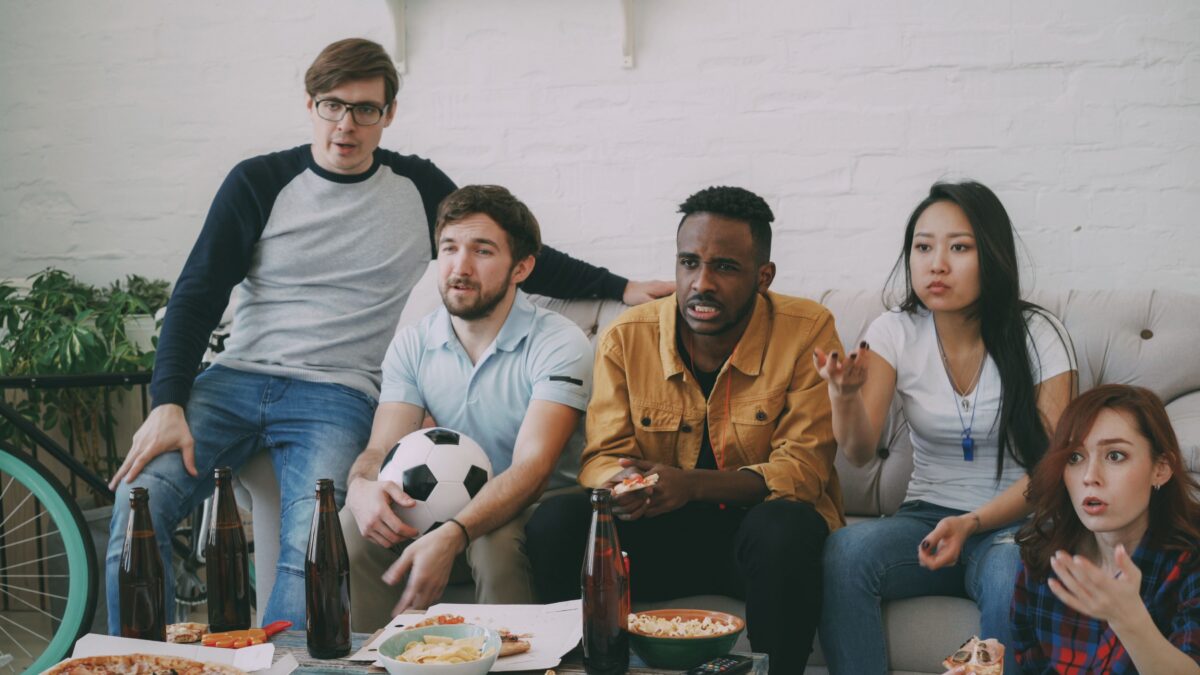
As World Cup soccer inundates the airwaves, it occurs to me that many Americans have little knowledge of it, frustrating their enjoyment of the beloved sport. Soccer-watching experts like myself can fix that sad state of affairs. Allow me to share a few pointers, so that even Americans can learn to relish soccer games.
Hit Snooze: Remember that while 6 of the 8 billion people on Earth will watch World Cup soccer, about 5.9 billion of those folks will merely be channel-surfing, come across a game, and then instantly fall asleep. So this guide is designed for the remaining few die-hards who’ll stay awake well into the first two to three minutes.
No Breaks: Soccer fans are quite proud that soccer games are a full 90 minutes, without breaks, except for water, arguing with officials, half-time, real (or mostly fake) injuries, substitutions, post-goal celebrations, penalties, officials huddling, activating field sprinklers, complaints by coaches and players, ad hoc commentary by broadcasters, and so forth. So, unlike all those other lame sports, soccer has virtually no breaks, which makes it purer and far superior.
Game Clock: Upon your first watch, you’ll immediately notice the game clock counts up, unlike every other sport known to man. A descending clock would enable you to know immediately how much time is left in the match. But the ascending clock requires you to continually calculate the time remaining, like counting sheep, ensuring everyone snoozes.
Added Time: To make the game even more interesting, referees will add time to the game to compensate for the non-existent breaks in the action. Towards the end of the match, officials will even tack on extra minutes without telling anyone, adding mystery to the mix of absolute boredom. This concocts a strange brew of delight!
Keep-Away: The rules of soccer are easy to understand. It’s just a slightly more elaborate game of “keep-away,” which we all played as kids. One team tries to keep the ball away from the other team. To this end, two to four players will kick the ball back and forth to each other for 30 minutes or so until a team is exhausted by the monotony and tries to kick the ball into the other team’s net. Teams that can’t tolerate boredom well take more shots at the goal to break up the mind-numbing game of keep-away, if only for a few minutes, making them more likely to win. The celebrations that commence after a goal is scored reveals just how much teams treasure a short break from playing keep-away.
Writhing: Writhing on the ground is also a major part of the sport, since it results in more breaks. Players seek to mimic severe pain to induce officials to issue a penalty on the other team.
Flags: For truly spectacular writhing, an official will throw a red flag, which is equivalent to an Oscar statue. A red flag also allows the offending player to be excused for the rest of the game and a future game, which incentivizes dirty plays and flamboyant acting displays. Lesser acting efforts can produce a yellow flag, which is only a warning, but still affords each team a coveted break from keep-away.
Bribery: Soccer officials are universally crooked and welcome bribes from teams that are losing to extend the game for a chance to win. This ensures games never last just 90 minutes, but rather three hours or more. True fans deeply appreciate the extra slumber this affords. Sadly, though, watchers’ sleep is occasionally punctuated by loud cheering following a goal, thus compelling fans to check the score before going back to sleep.
So, a comfortable couch and pillow is all you need to enjoy World Cup soccer. Enjoy the extra sleep, and hope for a scoreless game for maximum pleasure.