Rising senior Jackson Barrick is taking legal action alongside Southeastern Legal Foundation and the Young America’s Foundation against the University of Minnesota, saying some of the school’s Title IX policies have a chilling effect on his speech and that of other conservative students.
“We face a lot of uncertainty in terms of what punishment we could possibly face because we’re speaking about a controversial subject,” Barrick told The Federalist.
Under UMN’s current sexual harassment and pronoun usage policies, students like Barrick could be accused of harassment and face discipline, including expulsion, for saying there are only two sexes, refusing to use “preferred” pronouns, and speaking out against men participating in women’s sports or individuals using the bathroom designated for the opposite sex.
“Even if it doesn’t result in severe discipline, it has ultimately changed the entire course of that person’s education and taken away their educational opportunities because it a subjective standard,” SLF attorney Kim Hermann told The Federalist. “It can be as simple as someone reporting a person of the opposite sex being in a restroom; that is enough for them to file a complaint and for the University to launch an investigation.”
Based on President Trump’s 2025 executive order and other court rulings related to Title IX, SLF argues that the University of Minnesota system is not complying with federal law.
UMN’s Sexual Harassment Policy defines sexual harassment as an action that “creates a work or educational environment that an individual finds, and a reasonable person would find, to be intimidating, hostile, or offensive.” An example of such harassment includes “[a] pattern of disparaging comments or jokes about certain genders or based on gender stereotypes.”
The school’s Pronoun Policy requires all members of the university to use “the names, gender identities, and pronouns specified to them by other University members, except as legally required.”
Though Barrick has not been found in violation, he says that the potential for disciplinary action is “always at the back of [his] mind” when he engages in discussion of a subject that might be considered controversial or offensive to someone.
“The way that the policies are written allows me to be punished under academic penalty if the speech that I produce or talk about is considered harassment,” Barrick told The Federalist. “It really restricts what I can say.”
Barrick is a public health major at the UMN Twin Cities’ campus, and frequently spends time speaking in classes about homosexuality or transgender-related topics that are relevant to his coursework.
“If I want to engage in the subject during a mock simulation on how we’re gonna go about containing, mitigating, and preventing the spread of HIV, I have to be conscious of what I say to make sure I don’t offend anyone in the way that I propose my solution to it,” Barrick told The Federalist.
Barrick is also president and chair of the UMN’s Young Americans for Freedom chapter and says the policies affect the ability of their group to express their conservative beliefs or invite certain speakers to campus.
“We really enjoy bringing speakers on campus, and if we wanted someone to come speak on detransition or Chloe Cole to come in and speak on certain transgender issues or biological sex, or reproductive health or something like that, they could also be in violation of the policy because it’s so vague,” Barrick told The Federalist.
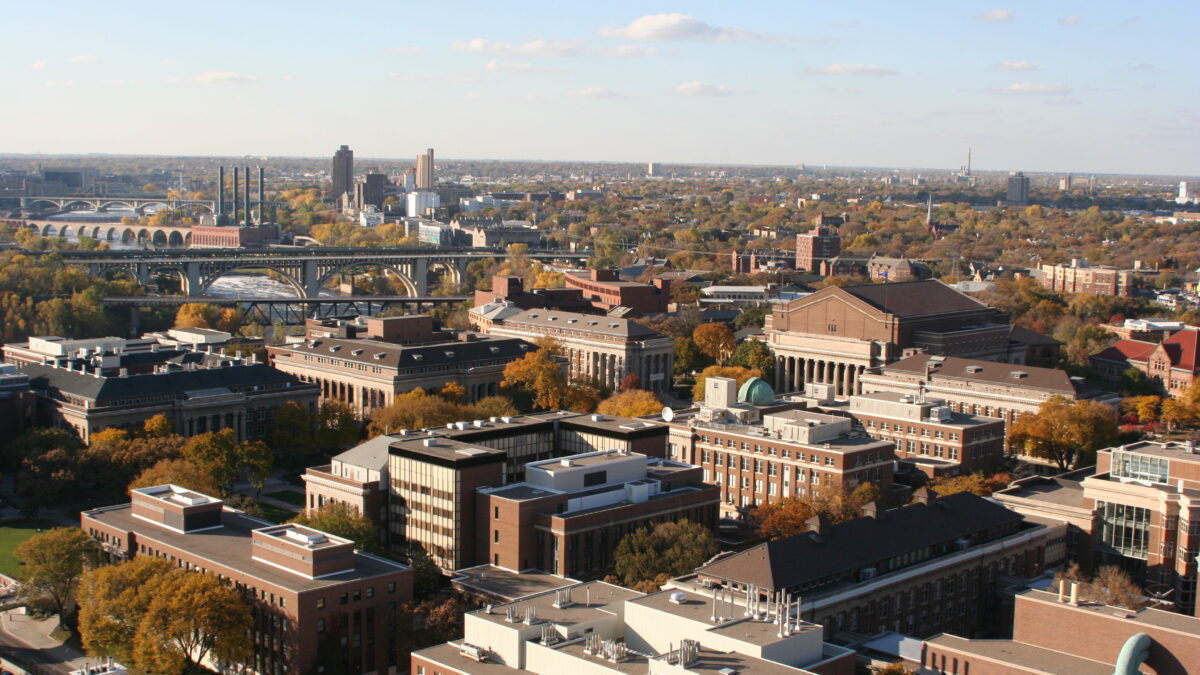
University of Minnesota uses the same policies across its five campuses in the state, which serves about 70,000 students.
Barrick and YAF aren’t seeking damages. They’re suing for $1 in damages so the policies can ultimately be changed.
“We just want to change the policy so it accurately reflects what we’re trying to talk about that allows us to engage in free speech in a correct way that ensures liberty for us as students to engage in good political discourse,” Barrick said.