
Janeese Lewis George all but clinched the office of Washington, D.C., mayor on Thursday, after winning the city’s Democrat primary — making her the latest of a slate of socialists who are either running or in contention to run America’s biggest cities.
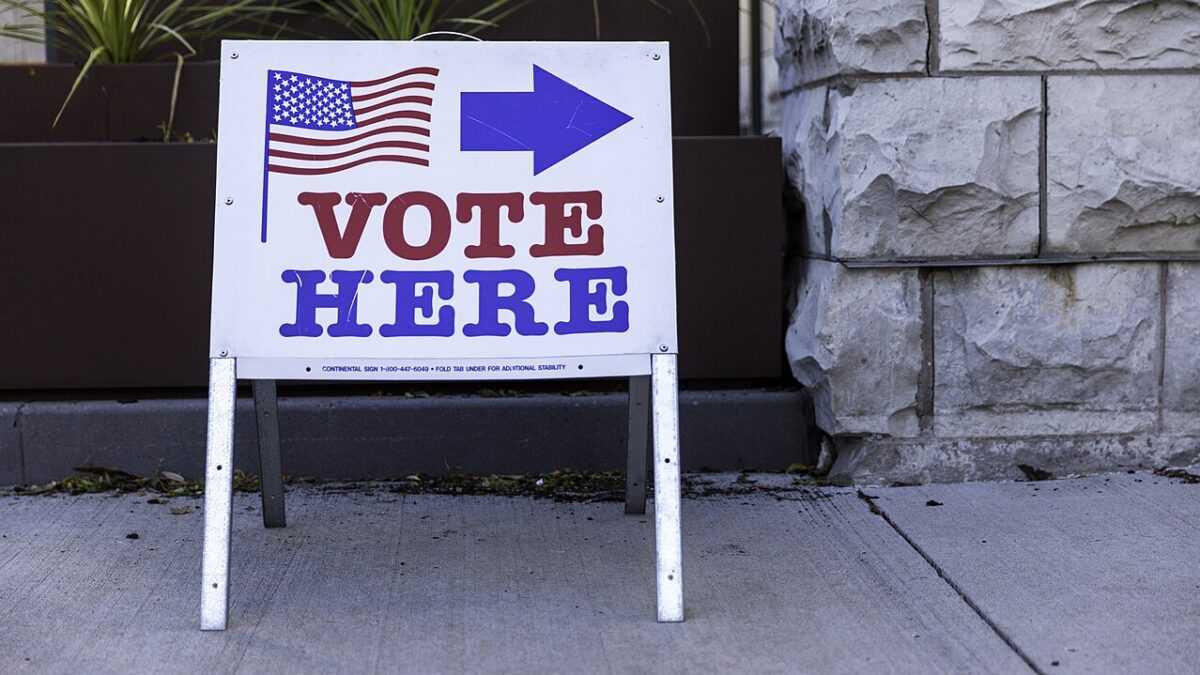
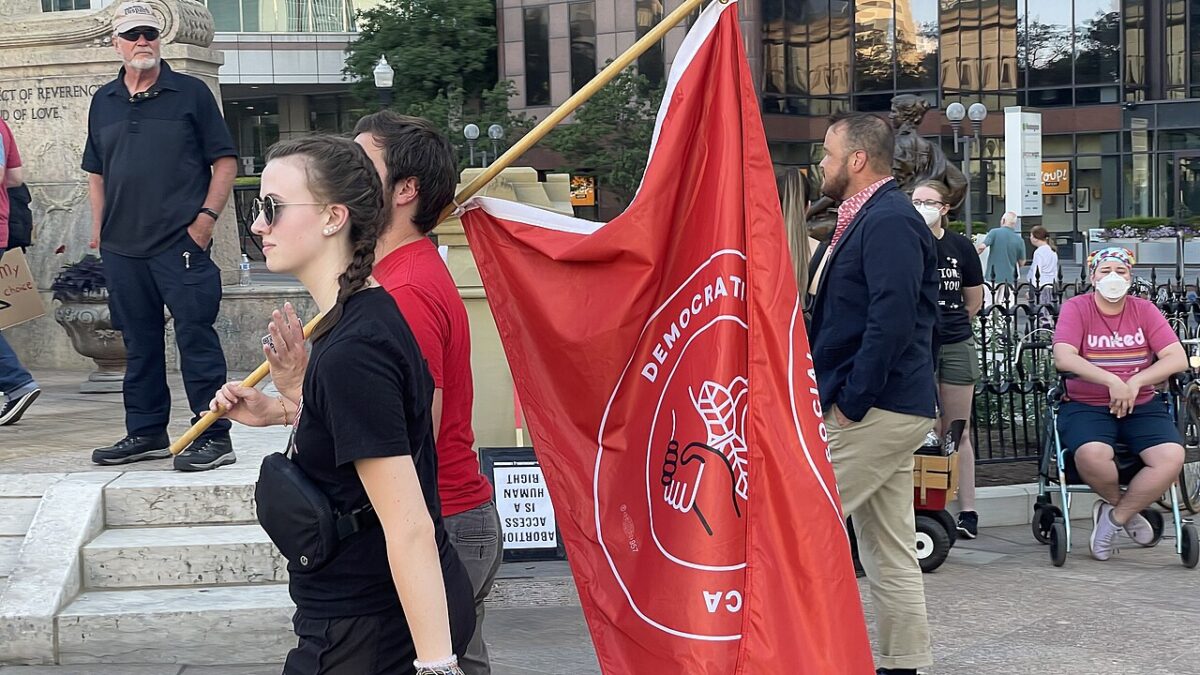
On June 8, supporters chanted, “JLG!” outside the Prince Hall Masonic Temple as they came to vote early in the Washington, D.C., mayoral democrat primary. With more than 90 percent of expected ballots tallied, Lewis George has won 54 percent of the votes, earning the nominee spot after Kenyan McDuffie conceded the election. The Democrat Party has won every mayoral election in D.C. since 1967, after President Lyndon B. Johnson successfully backed a plan to reorganize D.C. government, making Lewis George’s succession to office almost a certainty.
Lewis George, however, is not simply a Democrat. She’s a proud member of the Democratic Socialists of America (DSA) and D.C.’s probable mayor-elect, which means Washington, D.C., is about to join a growing list of America’s largest cities governed by DSA party members.
Socialists at the Helm
Perhaps most prominent on that list is New York City, where outspoken DSA member Zohran Mamdani won the mayoral race decisively in November 2025. “What the purpose is about this entire project — it’s not simply to raise class consciousness, but to win socialism,” Mamdani said in a 2021 speech for the Young Democratic Socialists of America. “We have to continue to elect more socialists. And we have to ensure that we are unapologetic about our socialism.”
Mamdani made headlines with his plans to implement failed socialist ideas in NYC, including offering free child care, creating city-owned grocery stores, and cutting $22 million dollars from the NYPD.
About a week after Mamdani’s win, self-proclaimed socialist Katie Wilson secured her seat as Seattle’s mayor. Though not officially endorsed by the Seattle DSA chapter, Wilson modeled her campaign in a socialist spirit similar to Mamdani’s and embraced comparisons to him. She co-founded Seattle Transit Riders Union (TRU) in 2011 and advocates for even more revolutionary socialism.
“I’m a socialist in a way that goes beyond that,” Wilson said in a recent radio interview. “I actually think that we need a really fundamental restructuring of our society and our economy. … I would even say that I’m a Marxist. … Socialism … requires a really fundamental restructuring of life and work and the role of what money actually functions as.”
DSA’s Radical Mobilization
The DSA’s political ascent did not happen overnight but is a result of a silent seizure of power across the nation in the last decade, starting at the local level. According to the DSA National Electoral Commission, between 2016 and 2025, 128 DSA-endorsed candidates won in city, state, and federal elections.
DSA has had a presence in the country since the early 1970s. The party was born out of a merger between the Democratic Socialist Organizing Committee and the New American Movement. Its electoral efforts as the remnants of the Socialist Party of America went largely unnoticed as it grew and its members worked within the Democrat Party to get their preferred candidates elected to office.
This approach shifted dramatically in 2017, in the aftermath of the 2016 election, when the Democratic National Committee rejected DSA-aligned Bernie Sanders as their presidential nominee. That’s when the self-proclaimed “largest socialist organization in the United States since the Communist Party” decided to increase its own odds in taking over the Democrat Party through the expansion of radical-left activism involvement and Marxist educational initiatives.
“DSA, therefore, works to build its own organizational capacity and to legitimate socialism as a mainstream part of U.S. politics,” the official DSA website reads. “We … oppose both right-wing rule and the dominant national corporate wing of Democrats.”
The goal of the DSA is the same as any Marxist organization: to abolish capitalism by restructuring society. This is accomplished through the advancement of various policy initiatives: defunding the police, communization of wealth, and “restructur[ing] gender and cultural relationships.” The DSA also propagates openly Marxist ideology via reading groups held at local party chapters in community centers or churches. The Metro DC chapter reads Karl Marx’s Das Kapital every fall.
The DSA’s change in approach, combined with backlash to Donald Trump and increased visibility brought by Sanders’ campaign, led to a tsunami wave of new members. Almost 97 percent of current DSA members joined after the organization’s relaunching of its electoral program. Following this mass influx, the DSA developed a number of internal caucuses devoted to specific ideologies or strategies, all centered around some aspect of socialism or communism. Membership numbers skyrocketed during 2020 as the Black Lives Matter riots provided a prime opportunity for DSA party members to put their instilled Marxist principles into practice, promote their cause, and gain recruits.
Adam Cardo, a member of the Metro Atlanta DSA, first got involved in the party as a student in D.C. through his following of the Black Lives Matter movement in 2014 — prior to the George Floyd protests. “It is critical for DSA to aid the Black Lives Matter movement in their struggle,” wrote Cardo in a piece for the DSA in 2016. “Even things as simple as phone banking for small, local events can have huge impacts on the momentum surrounding campaigns. DSA has a huge opportunity to connect with newly radicalized people of color, and it is an opportunity we can not pass up.”
The DSA’s overt embrace of BLM and other protest groups should not come as a surprise, as BLM and its left-wing allies are also steeped in Marxist ideology and are backed by funds from radical leftist billionaires. Foreign funding pushing socialist politicians also comes into play. A recent House committee hearing found significant foreign influence on American nonprofit organizations via millions in funding, which inevitably also leaks into DSA candidates’ campaigns. Two of the top contributors are Swiss billionaire Hansjörg Wyss and Neville Roy Singham, an American millionaire based in Shanghai with ties to the Chinese Communist Party.
As of spring 2026, DSA has 100,000 members nationwide with 233 registered chapters across the states, according to its website. Their Young DSA movement has an increasing presence in educational institutions with nearly 160 YDSA chapters in high schools and colleges. Two YDSA clubs are in Washington, D.C., at American University and Georgetown University.
Rising Leftist Powerhouse
At the outset of its surge in growth and strategic transformation, DSA delegates voted to prioritize elections and build “electoral power” at the 2017 national convention. “Now is the time for every DSA chapter to start recruiting candidates for local office,” wrote DSA communications coordinator Amelia Dornbush. “When DSA-backed candidates do win elections, they can make big changes in people’s lives.”
The recruiting and activation results speak for themselves. A staggering 90 percent of current DSA officials in government have entered office since 2019, according to Rolling Stone. Prior to Mamdani, perhaps the most notable win for the group was “socialist superstar” Representative Alexandria Ocasio-Cortez in 2018. Ocasio-Cortez first joined the movement after attending a DSA meeting in a church basement with a friend. DSA politicians such as Lewis George, Mamdani, and Ocasio-Cortez are in the spotlight today because of the party’s increased mobilization efforts a decade ago.
Leading up to the 2026 D.C. mayoral primary, 3,500 chapter members in the D.C. metro area alone “knocked on over 120,000 doors for Janeese Lewis George and Aparna Raj,” a DSA-backed candidate for city council, according to Metro DC DSA. The DSA’s on-the-ground efforts led to broken records as 4,000 D.C. residents reportedly gave to Lewis George’s campaign — the highest number of individual donors to give to a mayoral primary candidate in recent D.C. history. As election results poured in, Lewis George did best in the youngest precincts and won nearly 60 percent of voters under 35.
A recent Gallup poll shows Americans’ opinions of capitalism were generally steady prior to 2025. Fifty-four percent now view it positively, which is the lowest approval rating Gallup has measured to date. The poll data shows the outlier is the Democrat Party, with 66 percent expressing their preference for socialism over capitalism.
Josh Appel, policy analyst for the Manhattan Institute, says the DSA took a page out of George Soros’ playbook through a focus on small elections first before rising to national prominence. “Races for city councils, state assemblies, and state senates often get scarce media attention but represent real opportunities for power that the DSA is increasingly seizing,” Appel wrote in a recent article.
More continue to rise to the ranks. In Los Angeles, prominent DSA member Nithya Raman advanced to the general mayoral election in November – after a wave of post-Election Day ballot drops pushed her past Spencer Pratt in the primaries. The DSA is running roughly 90 candidates for the 2026 election cycle and currently holds around 250 political positions across the country.