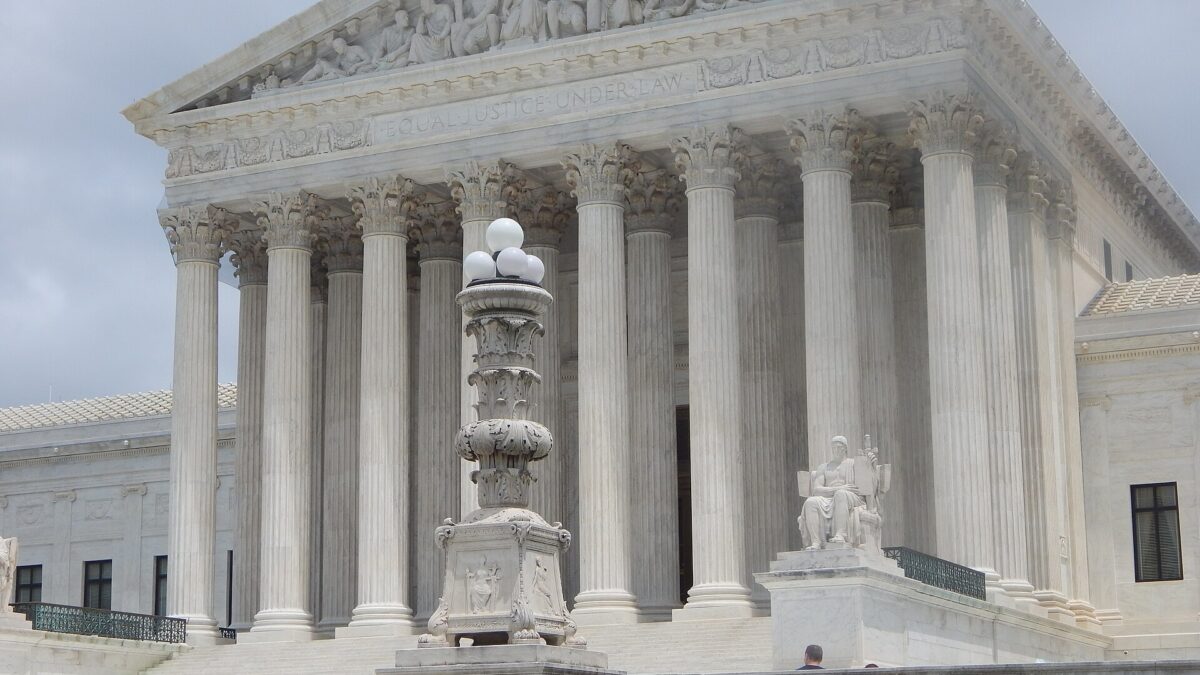
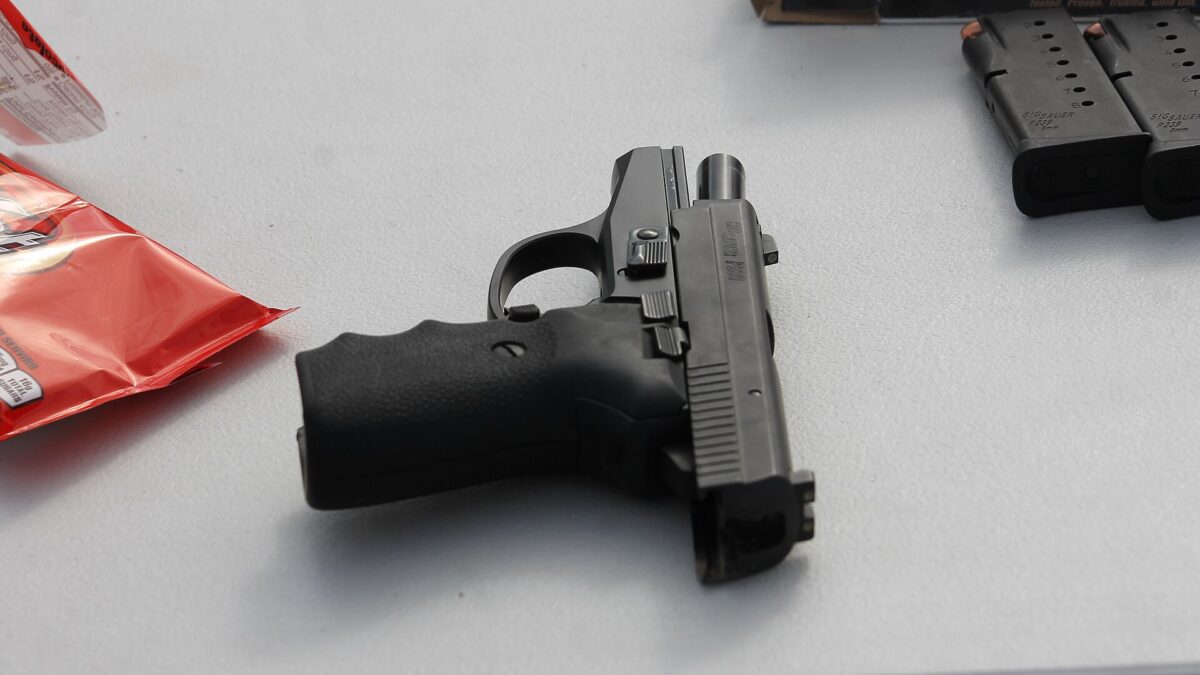
The U.S. Supreme Court unanimously held on Thursday that the federal government’s use of a federal law restricting gun possession for certain unlawful drug users to be “inconsistent with the Second Amendment.”
“The Second Amendment protects the right of ‘all Americans’ to keep and bear firearms for self defense,” the court’s “narrow” ruling reads. “Affording the government ‘broad power to designate any group as dangerous and thereby disqualify its members from having a gun’ would risk allowing it to ‘quickly swallow’ the Second Amendment.”
Known as U.S. v. Hemani, the case centers around the government’s prosecution of Ali Hemani, a Texas resident who was charged under a provision (18 U.S. Code § 922(g)(3)) of the 1968 Gun Control Act that prohibits a person who is “an unlawful user of or addicted to any controlled substance” from possessing a firearm. Hemani is admittedly a regular marijuana user.
The statute was previously used to indict Hunter Biden several years ago.
Writing for the majority, Justice Neil Gorsuch noted how the government sought to use the statute to “automatically strip” Hemani of his Second Amendment rights “because he uses marijuana a few times a week.” In seeking to advance this “expansive theory,” the administration urged the court to “draw an analogy between its present regulation and historical laws addressing habitual drunkards,” which it argued “demonstrate a tradition of firearm regulation consistent with its effort to disarm any regular user of any controlled substance without any further showing.”
“But the government’s analogy fails under every measure it asks us to consider,” Gorsuch wrote. “The historical laws on which it relies targeted different kinds of people, did so for different reasons, and operated in different ways. And faced with all these shortcomings in the government’s submission, we cannot say it has carried its conceded burden of showing its prosecution of Mr. Hemani complies with the Second Amendment.”
While joining the court’s opinion in full, Justice Clarence Thomas authored a concurrence in which he argued that the contested statute “appears to exceed Congress’s enumerated power to regulate interstate commerce.” “Congress’s enumerated powers, like Supreme Court opinions setting forth their limits, are, in my view, to be taken seriously,” he wrote.
Justice Ketanji Brown Jackson also authored a concurring opinion, in which Justice Sonia Sotomayor joined. The two Democrat appointees expressed agreement with the court’s conclusion but noted their continued dissatisfaction with the court’s 2022 Bruen decision, which recognized Americans’ constitutional right to carry firearms in public for purposes of self-defense.
Justice Samuel Alito penned an opinion (joined by Justice Elena Kagan) concurring in the court’s judgement, in which he said that he would “affirm on a different ground from those on which the majority relies.” He and Kagan more specifically noted that “the Government’s analogues are too far afield to justify the application of §922(g) to a marijuana user like respondent,” and that “We need not say more to decide this case.”