

Most parents still believe that when they send their child to school, that child will be taught reading, writing, mathematics, science, and history. They assume that school records contain grades, attendance, and test scores — nothing more.
But what if that assumption is no longer true? What if education has been quietly changing in ways most families have never been fully told about? Across the country, school systems are adopting programs called “Portrait of a Graduate,” “Future Ready Learner,” and “Whole Child Development.” These initiatives are presented as modern, innovative, and necessary for future success. But behind the appealing language is a shift that should give parents pause. Schools are moving away from teaching academic knowledge and toward training that measures attitudes, emotions, behaviors, and even aspects of identity.
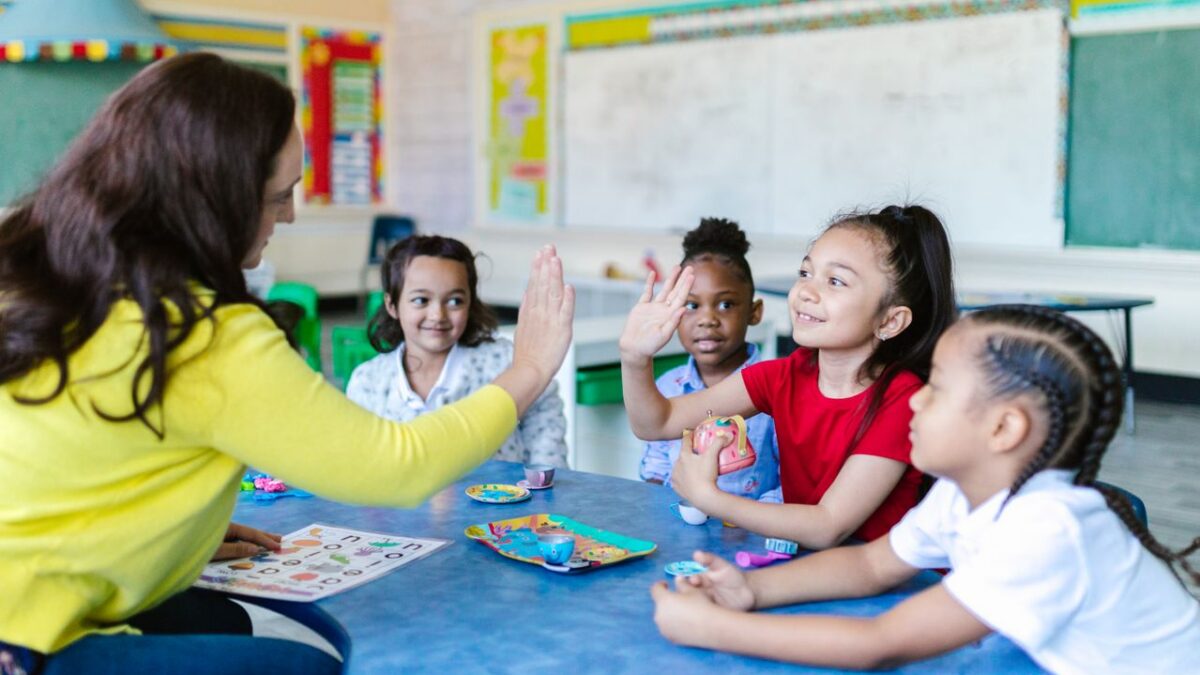
In many classrooms today, students are no longer evaluated solely on what they know, but increasingly on how they think, how they react, how they cooperate, and how they see themselves. Children may be asked to write about their fears, reflect on personal and family struggles, share emotional experiences, or discuss their own and family beliefs and attitudes in group settings.
These activities may sound harmless — after all, reflection has long been part of learning. But what makes this different is that these responses are often observed, recorded, documented, and evaluated as part of a broader effort to measure “internal traits” such as resilience, empathy, self-awareness, and sense of belonging. These are deeply personal aspects of a child’s inner life — areas that historically belonged to families, not government institutions.
Parents should stop and ask themselves an uncomfortable question: What happens when a child’s personality, emotions, and identity-related reflections become part of a school record? Childhood is about developing, learning, and maturing. Children change constantly. A child who struggles socially at age 9 may flourish by age 13. A child who lacks confidence in one year may develop strength and maturity in the next.
But written and video-recorded observations, behavioral notes, and recorded reflections do not mature along with the child. They remain fixed snapshots of moments in development that may not reflect who that child ultimately becomes. The possibility that temporary struggles could become lasting labels should concern every parent who believes in growth, redemption, and second chances.
Many modern education programs rely on technology platforms that store student work, track participation, and analyze patterns over time. Federally funded state education systems include long-term student biometric data tracking initiatives designed to follow student information across years of schooling. Federal guidance also outlines how student information is to be collected, stored, and managed through digital education records and data governance practices.
Parents are accustomed to thinking of school records as academic transcripts, but the reality may now include behavioral observations, emotional reflections, biometric data, and identity-related responses stored alongside academic information. Once information is stored digitally, it becomes part of a permanent system that may follow a child across years of schooling into adulthood
There is also the growing connection between these programs and career planning. Some educational systems now encourage students to identify strengths, preferences, and interests at increasingly younger ages. National career readiness frameworks organize student pathways into structured “career clusters” designed to align education with workforce needs. These strategic plans aim to attract lucrative business to the respective states by offering the incentive of a youthful, trained workforce. Corporations fund the professional associations and elected officials pushing this agenda. It sacrifices our children on the altar of economics.
Federal education initiatives also promote career and technical education programs designed to prepare students for workforce participation and career readiness. Children may be asked to consider what careers match their personalities or what pathways align with their perceived strengths. On the surface, this sounds like preparation for the future. But parents should ask themselves whether early classification — based on immature self-perceptions, AI analysis of covertly recorded biometrics, or limited experiences — could unintentionally narrow opportunities rather than expand them.
Perhaps the most troubling aspect of all is whether these changes are quietly shifting the purpose of education itself. If increasing amounts of time are devoted to reflection, self-analysis, emotional processing, and behavioral observation, what happens to the hard work of mastering reading, mathematics, science, and history? These subjects require time, repetition, and discipline.
National academic assessments have documented long-term declines in core academic performance, particularly in reading and mathematics, reinforcing concerns about foundational skill development. Federal education statistics also track instructional time and academic performance trends across subjects, providing further evidence of ongoing academic challenges. When academic focus weakens, the long-term consequences may not appear immediately, but they surface later, when students struggle to read critically, calculate accurately, or reason logically.
Parents should not assume that these changes will be announced clearly or debated openly. Many of these programs have gradually emerged, introduced through strategic plans, curriculum revisions, or new educational initiatives that sound positive and forward-thinking. They are rarely described in ways that highlight long-term consequences.
Yet once systems are in place, reversing them becomes difficult. Records accumulate. Policies solidify.
These developments are part of a broader shift away from traditional academic instruction and toward the shaping of attitudes, beliefs, and identity within institutional settings. It trains our children to be easily controlled. From this perspective, the concern is not simply educational — it is philosophical. When schools begin influencing areas once reserved for parents, families must ask whether the line between education and indoctrination has been crossed. Indoctrination, when incremental, does not always appear dramatic or obvious. It arrives slowly, through repetition, reinforcement, and the steady normalization of new expectations.
This is why parents must become proactive, inquisitive, informed observers, not passive participants. The greatest danger is not always what is visible — it is what goes unnoticed until its effects are already in place. A parent who waits until high school to ask questions may discover that years of records, observations, and assumptions have already accumulated about their child. At that point, the path forward may be shaped by decisions made long before the family realized what was happening.