
While studying the menu at an elegant restaurant in Mexico City, I overheard women at a table next to ours in their early 30s chatting about work deadlines and dating apps until one said matter-of-factly, “I’m thinking about freezing my eggs this year. The clinic has this screening package; you can basically pick for lower disease risk or even height.” The others nodded, one adding, “Yeah, I did the genetic panel last month. It’s worth it for peace of mind.” They continued casually comparing logistics, like booking a Pilates class or comparing vacation rentals.
They’re not outliers. As comfortable as we’ve become with such technological advances, we perhaps don’t give equal attention to the hidden and human costs. The more we try to engineer our way to certain goods, the more they tend to elude us. We built platforms for instant global connection and ended up lonelier than ever. We optimized workflows for peak productivity and felt more frantic and overwhelmed. We industrialized food production to banish hunger, only to face epidemics of metabolic disease.
Now reproduction sits at the heart of this same paradox. In nearly all developed nations, birth rates have fallen below replacement levels. Meanwhile, the global fertility industry has reached tens of billions of dollars, with rapid advances in embryo screening, genetic selection, and artificial womb technology.
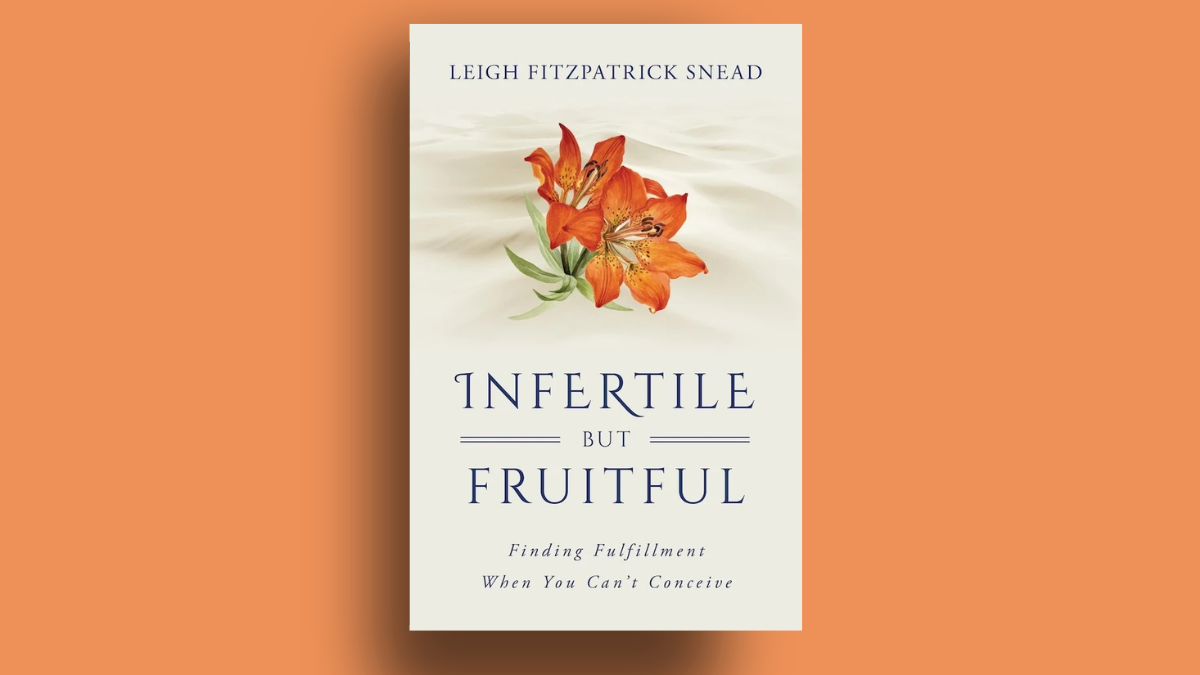
Against this backdrop, I came to read a new memoir, Infertile but Fruitful, by Leigh Snead and was struck by how indirectly yet powerfully it addresses this paradox. Snead and her husband endure the quiet devastation of infertility at a moment when reproductive technology offers what many regard as obvious solutions. Tools designed to guarantee parenthood stand ready, but they refuse them. Questions of bioethics surrounding infertility and scientific intervention are hardly new, but Snead’s winsome and vulnerable account of it feels newly urgent. It is a witty and, at times, emotionally harrowing story, detailing the complex and layered suffering of infertility and the confusion that suffering tends to introduce.
As a child from a broken home, Snead writes that she always felt a bit “weird” and longed for siblings and a more conventional family life. As an adult, after committing herself to her husband, Carter, and to the Catholic Church, she once again found herself feeling out of step, this time as an infertile woman within a faith community where fertility can feel like a defining identity marker. Being countercultural within a counterculture gives the book much of its tension and humor.
An even further layer of “weirdness” emerges in the world of fertility medicine, given the constraints Catholic moral teaching presents to couples. Some of these constraints are more obvious: IVF and surrogacy are not options. Others are less so, such as the moral impossibility for Catholics of providing a sperm sample in the “standard” clinical manner — a predicament that Snead renders with disarming humor. In a more dramatic scene, the Sneads’ resolve to use only licit means for reproduction, despite their ardent desire for a child, provokes an angry outburst from a celebrated fertility doctor. The couple responds with a moving, if understated, exit.
The modern defense of surrogacy, IVF, and related reproductive technologies rests on an appealing intuition: With much suffering in the world, why object to people using science and consensual arrangements to pursue something as human and wholesome as parenthood? Snead’s book approaches this question from the inside out.
In telling her story, Snead catechizes the reader into some of the more perplexing teachings of an ancient church and makes those teachings newly compelling. She is an intellectual, as is her husband (a prominent scholar in bioethics), but that expertise remains secondary to the human drama unfolding on the page. Snead adeptly sidesteps the potential pitfalls of an overly pious account as well as an overly clinical or academic one. The result is a book that is persuasive precisely because it is unforced.
Walker Percy once observed that we live in a “deranged age,” one in which technological advancement has outpaced our understanding of what a human being is for. Nowhere is that confusion clearer perhaps than in reproduction, where the question of what should be done is routinely collapsed into what can be done. Snead’s story reveals that there are real costs to that collapse that are almost impossible to anticipate in the agonizing struggle with infertility. It also uncovers unexpected goods that arise from learning to live life as a gift, the deprivation of which we are sometimes meant to endure. These are goods that the pursuit of technological mastery tends to obscure.
These truths surface subtly throughout Snead’s narrative and are captured elegantly in her opening dedication to her family, in which she writes simply that she “wouldn’t change a thing.” Infertile but Fruitful thus makes the teachings of an old faith seem less perplexing and constraining but rather bracingly sane.
There are many causes for the decline in birthrates, but surely the power we now claim over reproduction has elevated the instinct for curation over the spirit to venture into the messy unknown. As the technological imagination increasingly eclipses the human one, Snead’s life and book elegantly expose the folly of that eclipse.