
In cities across the West, the pavement has become a stage for a specific, assertive religious claim.
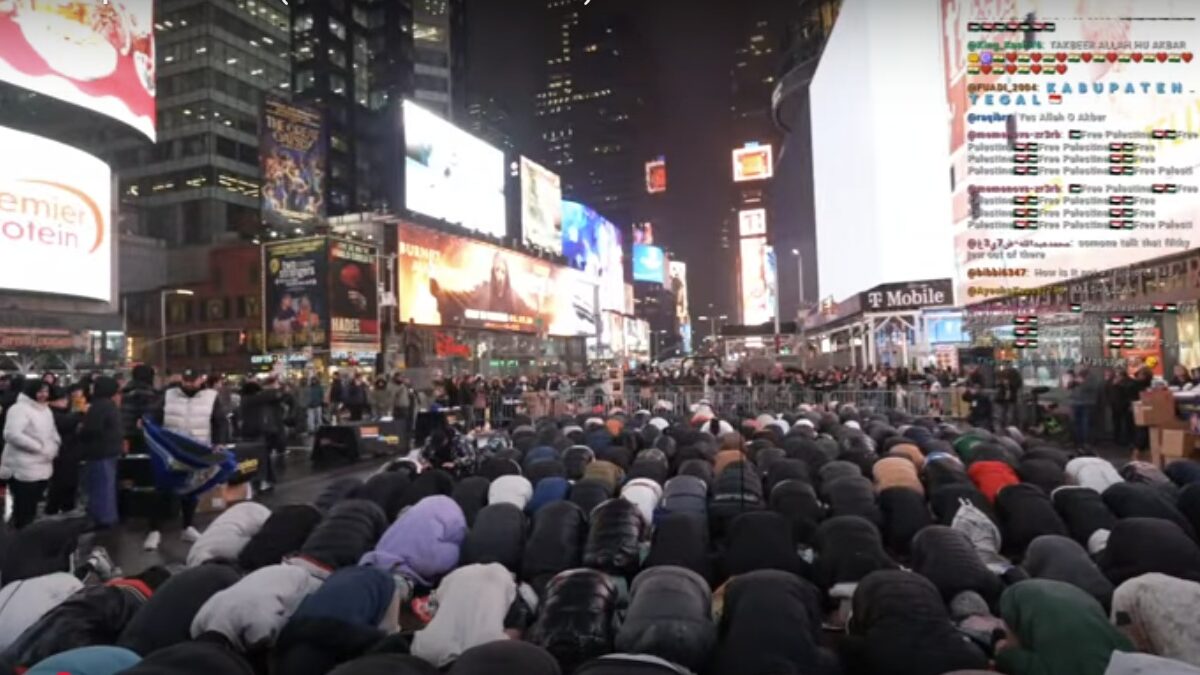
On Feb. 20, Times Square was filled with men kneeling shoulder to shoulder on prayer rugs for Ramadan’s nightly Taraweeh prayers. New York City’s most famous intersection, a place meant for commerce and tourism, had become a place for religious ritual, as it has since 2022.
When hundreds of men block the center of Times Square they aren’t just practicing a faith. They represent a community that has surged to an estimated 1 million people in New York City, roughly 10 percent of the population. They are marking a conquest of the public square. They are turning the literal crossroads of the Western world into an outdoor mosque for radical Islam.
Public officials treat a massive religious obstruction as a vibrant community event, a beautiful sign of a pluralistic society, and surrender their duty to the individual citizen. The street has been turned into a site of government-sanctioned disruption. This signals that the right to seize a thoroughfare belongs to those who practice their radical religion the loudest. This is how the West fractures.
State Assists the Conquest
The city gave the permits and allowed Times Square to become a restricted zone for Taraweeh prayers.
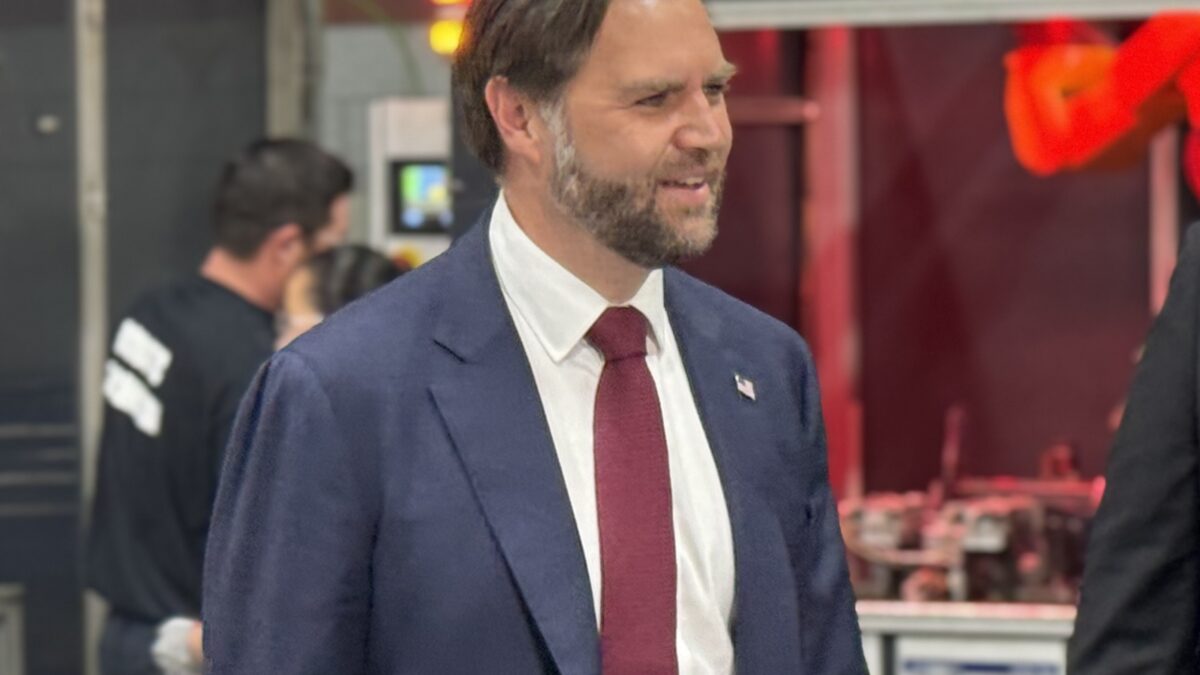
The mayor personally joined and praised the occasion. Standing before the cameras, Zohran Mamdani framed the disruption of the city as a moment of triumph. He called Ramadan his “favorite month of the year.” He dismissed the physical blockage of Broadway as a mere byproduct of a “month of reflection” and a “month of solidarity.” When asked how he felt on that first day of Ramadan, Mamdani joked to reporters, “Right now, I feel parched.”
While the mayor was “parched,” the city was being partitioned. He looked forward to “connecting with Muslims across the city” through state-supported projects. As Sheikh Imam Chernor Sa’ad Jalloh of the Islamic Cultural Center of New York explained when discussing Ramadan, “For Muslims, opportunity is not only to make money, it’s not only to win elections … Opportunity is when your relationship with God is excellent.”
France’s Conquest
In France, the republic has fought this same war for years. The suburb of Clichy-la-Garenne became a front line. For months, the local market square was seized every Friday. Hundreds of men occupied the pavement to pray. It solidified as a religious territory.
They claimed the closure of a local prayer hall forced them onto the asphalt. That was a choice. It was a choice to use the street as leverage against the government. The local mayor, Remi Muzeau, saw the stakes. He realized that once the state allows a religious group to block the road, the law of the republic dies.
In November 2017, Muzeau led a march of more than 100 local officials to reclaim the square. They carried a large banner with a clear message: “Stop Illegal Street Prayers.” France’s law enshrines laïcité, the principle of secular public space. They wore their official sashes and sang the national anthem to drown out the prayers. It was a surreal scene: the state was forced to protest against its own failure to enforce the law.
The mayor stood his ground. He pledged to return every Friday to protect the “tranquility and freedom” of his people. Yet police formed a human barricade between the groups. The event proved that the public square is up for grabs. If a group is organized enough, the government will retreat.
Michigan’s Muslim Prayers Destroy Peace
In the U.S., the dispute has moved into residential neighborhoods. In Dearborn, noise laws set limits of 70 decibels during the day and 60 at night, and prohibit loudspeakers between 10 p.m. and 7 a.m. Although within those limits, several mosques broadcast the Islamic call to prayer over outdoor speakers for short periods during the day.
Some residents describe an “invasion of privacy” reaching into their own yards. Andrea Unger has lived in the same house for more than 40 years. She told the city council that the broadcasts carry into her home and that she does not wish to hear prayers amplified into her yard. She described being awakened by early morning calls before 7 a.m., though one mosque later eliminated its early broadcast after complaints.
In 2025, 40 residents signed a petition to the city council to request relief. Instead of defending the residents, the Muslim police chief compared the noise to church bells. The state has chosen to accommodate the loud group over the quiet citizen.
For those objecting, the issue is whether amplified religious sound should project into private homes at all, even when it operates within municipal limits.
U.K.’s Muslim Zones
The pattern repeats in the United Kingdom in the borough of Tower Hamlets. In 2014, a black flag — the Rayah, a symbol often associated with jihadist groups such as ISIS — flew from the metal archway of the Will Crooks housing estate. Residents were intimidated. The council and police didn’t act.
It was a 77-year-old Roman Catholic nun, Sister Christine Frost, who took action. She climbed up and pulled the flag down herself, later telling reporters the display was provocative and threatened the peace of the neighborhood.
At different times in the same borough, self-styled “patrols” accosted passers-by to enforce religious codes on public grounds, targeting people for their clothes or for carrying alcohol and telling couples to stop holding hands in what they called a “Muslim zone.”
Contested Territory
The evidence from New York to London reveals a single truth: the state is in retreat. Whether it is the blockage of a city street or the auditory occupation of a neighborhood, the result remains the same. The public square has become contested territory. The police become border guards between groups instead of protectors of a unified city.
Through these surrenders, the state creates a new framework of division. It hands the keys of the city to the loudest and most assertive groups. The partition is complete.