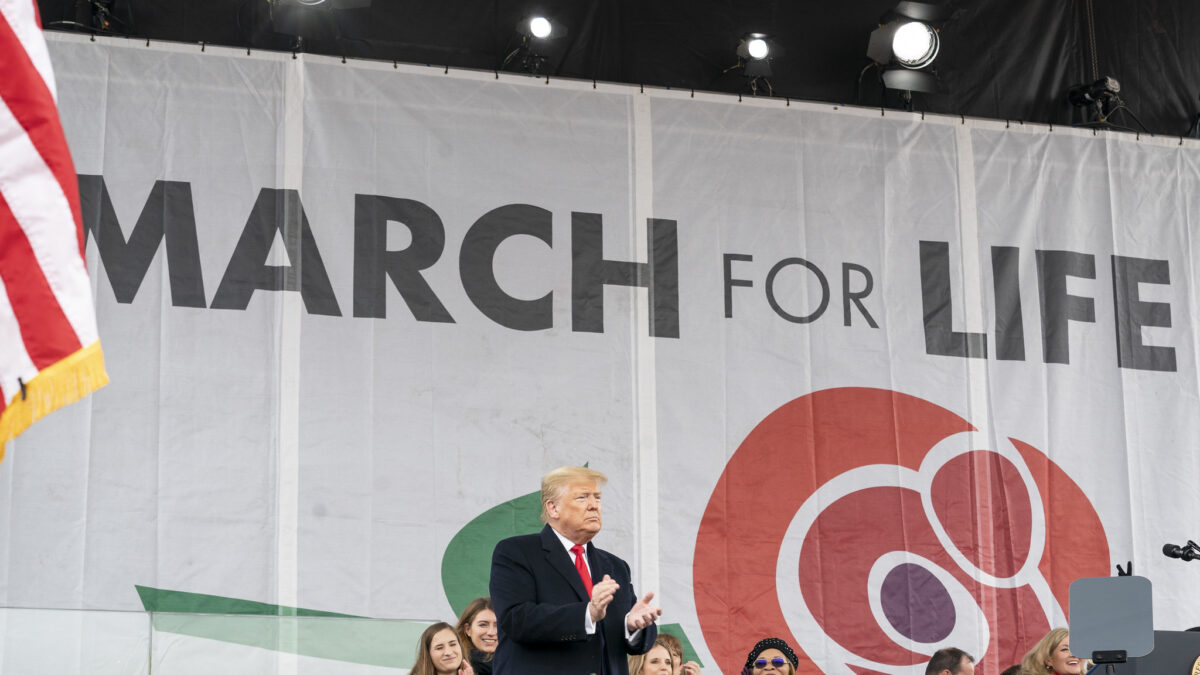
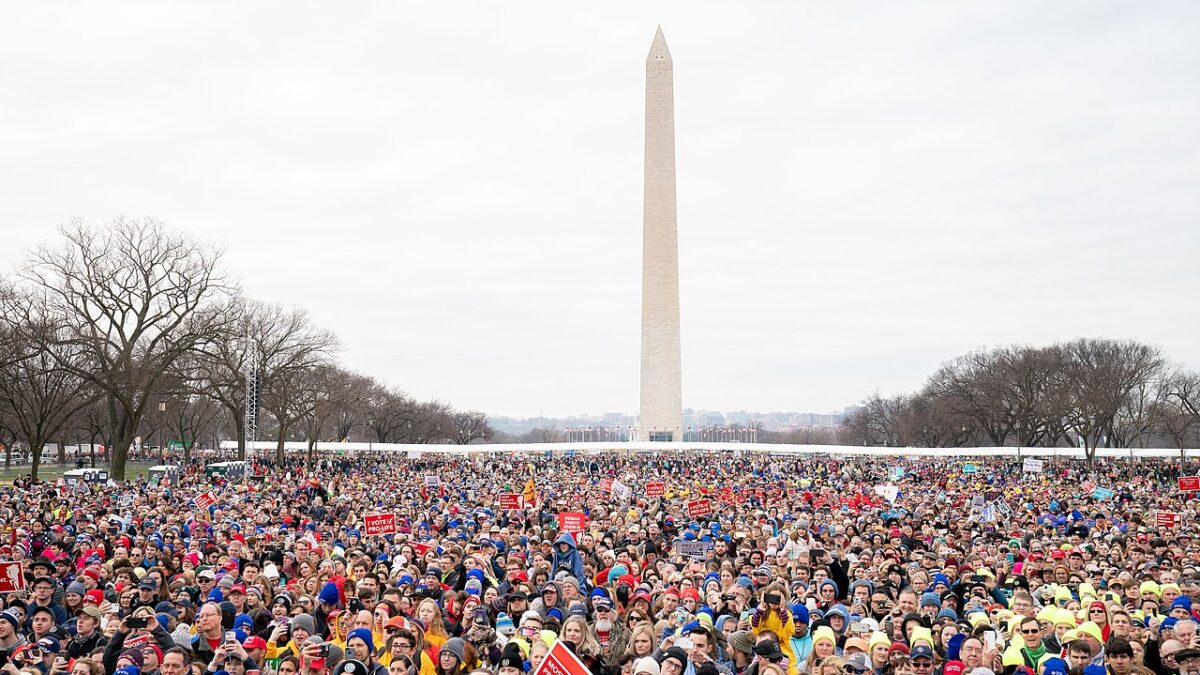

As the annual March for Life descends on Washington, D.C., on Friday under the banner “Life is a Gift,” the event’s call to celebrate the inherent joy, beauty, and dignity of every human life from its very beginning carries a defiant edge.
Organizers urge participants to advocate with conviction and compassion: “Every life is a gift. Even when it’s unexpected. Even when the timing feels off. Even when it’s hard. Even when the world says otherwise.” This message resonates deeply in a nation still navigating the post-Roe landscape, but it arrives amid growing tensions between the pro-life movement and the Trump administration, which has, despite commitments, repeatedly sidelined core pro-life priorities.
This year’s march is evolving into a platform for accountability, a bold assertion that pro-lifers refuse to be subsumed into the broader agenda. As Patrick Brown, a fellow at the conservative Ethics and Public Policy Center, recently noted, the movement must show “some independence — that they’re not just an appendix on the MAGA movement” — so they aren’t “taken for granted.” In an era of extremely thin electoral margins, pro-lifers are signaling they won’t be dismissed, transforming the rally into a pointed “Don’t Tread on Me” aimed at the White House.
The administration’s record on abortion reveals a troubling pattern of apathy and compromise, alienating a key segment of its base. This stems from retreats that erode hard-won gains: Trump’s equivocation on the Hyde Amendment, urging “flexibility” on this barrier against federal abortion funding; the Food and Drug Administration’s approval of a second generic mifepristone; the Justice Department’s inaction on prohibiting abortion pill mailing, despite federal law; robust IVF support, which destroys well over a million human embryos annually; and defunding Planned Parenthood for only one year, not permanently.
These missteps often prompt surprise, bewilderment, and hasty clarifications, underscoring the administration’s disconnect from pro-life principles. Trump’s Hyde “flexibility” drew condemnation as an “abandonment,” forcing Press Secretary Karoline Leavitt to reaffirm support (too little, too late). The IVF endorsement alienated conservatives, wrongly framing the practice as pro-life and family-building without addressing the grave moral and ethical issues.
Vice President J.D. Vance’s headlining role at the march, echoing his words from last year that “unborn life is worthy of protection” and ultrasounds reveal “a baby with hopes and dreams,” is a positive sign and could help mend this rift if it spurs meaningful action. Yet a White House administration official’s framing — “The alternative … is a party that ran on abortions with no restrictions whatsoever” — reeks of entitlement, assuming pro-life voters lack leverage and must accept half-measures.
This pragmatism not only deviates from Republican orthodoxy but undermines the moral foundation of the pro-life cause: the acknowledgment that abortion ends a distinct human life, elevating the debate beyond politics to the most fundamental human right — life. The federal government has a moral obligation to protect it, anchored in America’s founding ideals.
And while Vance may know, the administration’s overarching indifference reflects a failure to fully grasp scientific reality about humankind. The biological science of human embryology establishes the humanity of the embryo and fetus. As documented in the Carnegie Stages of Human Embryonic Development, a human embryo or fetus is not a mere “part” of the mother or a “potential” human; he or she is a new, whole, individual, living human organism. They don’t merely possess human life; they are human beings.
The new human embryo at the beginning of Carnegie Stage 1a is not “just a cell” (a part of an organ or part of a whole organism); he or she is an organism per se, an individual human being. C. Ward Kischer, emeritus professor of cell biology and anatomy with a specialty in human embryology, states it simply: “Individuality of the fertilized egg [and on] is an absolute. And that is science.”
This is not opinion; it’s objective, empirical biology. The Carnegie Stages are the gold standard, instituted in 1942 and continually documented, refined, and advanced for scientific research and education by organizations including the Human Development Anatomy Center, the National Institutes of Health, the Eunice Kennedy Shriver National Institute of Child Health and Human Development, the International Federation of Associations of Anatomists, and the Federative International Program for Anatomical Terminology. The Carnegie Stages are also internationally required in all textbooks written by human embryologists. Ignoring the humanity of the embryo and fetus means embracing ideology over evidence.
The administration’s concessions and reversals risk alienating millions of pro-life voters. As Frank Cannon of Susan B. Anthony Pro-Life America warned, demoralizing even 2 percent in swing districts is “devastation.” With the 2026 midterms looming, Republicans’ success is tied to energizing and mobilizing this base that propelled Trump back to the White House in 2024. These passionate voters expect conviction, not capitulation.
President Trump and his administration must recommit to the most vulnerable among humankind: champion permanent Hyde protections, defund Planned Parenthood permanently, and advance federal safeguards. The unborn can’t vote, but the pro-life base can, and will, if the White House stands firmly for life. Anything less risks not just electoral defeat but the millions upon millions of human lives that pro-lifers are marching for this week.