
It is high time, in this 250th anniversary year of the Declaration of Independence, to nationally honor Jack Jouett and his horse, both heroes of the Revolutionary War. Their midnight ride in June 1781 saved Thomas Jefferson, future statesman Edmund Randolph, Patrick Henry, and at least 40 Virginia legislators from the clutches of the infamous British officer Banastre Tarleton. Without Jouett’s ride, it’s possible that General Charles Cornwallis may not have surrendered four months later on Oct. 19, bringing an end to the Revolutionary War.
John “Jack” Jouett Jr. was a 26-year-old civilian in his home county of Louisa in central Virginia during the Revolutionary War. About 10 p.m., on the night of June 3, 1781, he saw a movement of British cavalry, recognizing the distinctive uniform of the “Green Dragoons” of the notorious Tarleton. Jouett suspected that they were going to Charlottesville to capture Gov. Thomas Jefferson and legislators who had fled Richmond in mid-May under threat by turncoat Benedict Arnold. Jouett’s suspicions were correct. Tarleton had been dispatched by Cornwallis with a cavalry of 250 and intended to travel quickly overnight.
On his own initiative, Jouett mounted a “very fleet Virginia blood horse” and rode 40 miles to Jefferson’s Monticello. To avoid Tarleton, he used back roads fortunately lit by a moon 90 percent full, but nonetheless a path so heavily packed with briars and thickets that it left Jouett with permanent facial scars. After riding more than six hours, he arrived at Monticello just before the pre-5 a.m. sunrise. Leaving Monticello, Jouett rode a few more miles to Charlottesville to warn the legislators.
When the British caught up with Jouett and retired General Edward Stevens, now serving as a legislator, they didn’t recognize Stevens in his disheveled state. They gave chase to Jouett, the decoy, who was wearing a scarlet jacket and a military hat and plume, which was his eccentric custom. Jouett teased them, staying within their sight long enough for Stevens to get away, and then Jouett’s horse outran them.
On June 15, the legislature, seemingly consisting of about 50 — seven legislators had reportedly been captured — met in Staunton on the other side of the Blue Ridge Mountains and, by resolution, honored Jouett for his quick and brave actions. Cornwallis surrendered at Yorktown on Oct. 19, 1781. In 1782, Jouett relocated to Kentucky (then a part of Virginia), married and had 12 children, and bred horses.
Forgotten Hero of the Founding
Jouett has received very little publicity outside Virginia in the 245 years since his ride. I canvassed all of the newspapers digitized by the Library of Congress that had been printed between 1781 and 1963. Aside from District of Columbia and Virginia papers, I found only 32 notices or articles about Jouett in 21 states, all between 1899 and 1955.
Yes, Jouett is honored in Virginia — with an annual “Jack Jouett Day” since 1940. There is also “Jack Jouett Road,” that is, State Route 640 (parallel to I-64), and historical markers all along Jouett’s route. Louisa County has had an elementary school named after him since 1985. Albemarle County named a middle school after him in 1966 (but, following the death of George Floyd, it renamed it because Jouett owned slaves in Kentucky).
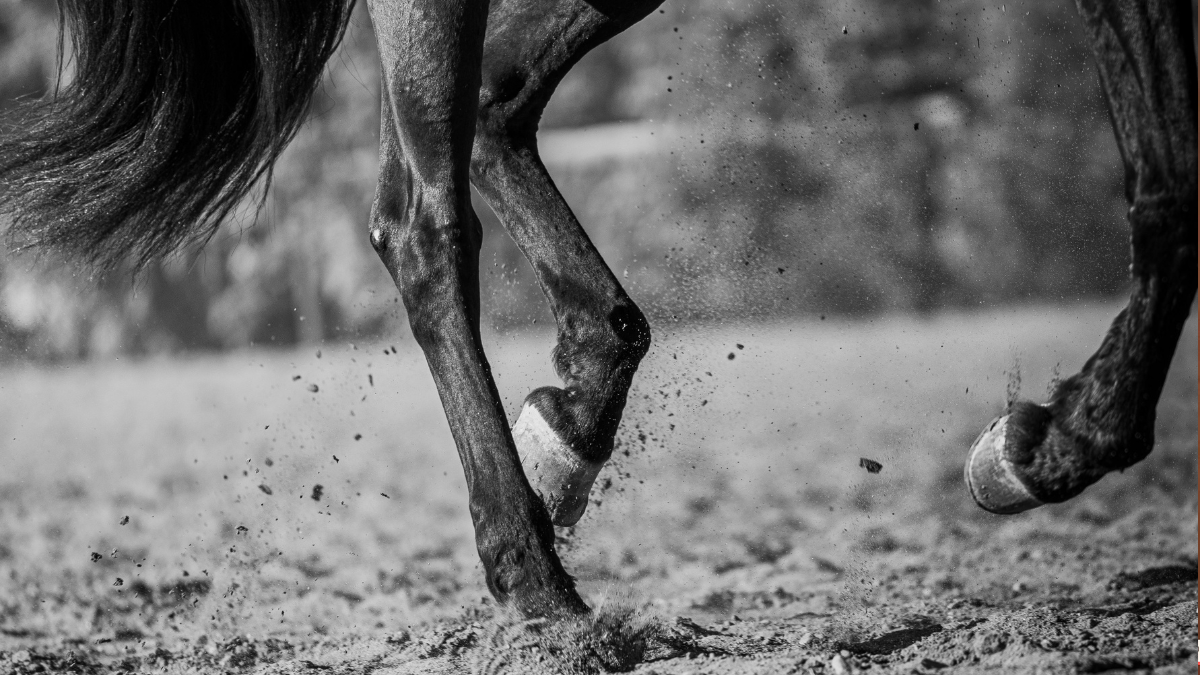
Jouett’s horse filled an essential role in the heroic ride and is also deserving of honor. Folklore has it that the horse was a mare named Sallie and was a thoroughbred. Yet, we don’t know for sure that the horse was a mare or named Sallie — or whether it could have been a thoroughbred (the ride occurred when that breed was just being developed).
What we do know is that this horse survived this ordeal. It covered 40 miles to Monticello and then an additional few miles to Charlottesville in roughly seven hours, yielding a speed of around 6 miles per hour, a demanding pace. After the grueling night, it outran the British. This horse, unlike farm horses of the time, had the stamina and breeding to carry Jouett at night through dense woods and briars, suffering the same slashes and scars on its head and chest and legs as its rider plus muscle fatigue, hoof wear from rocky terrain, and bruises from roots.
National Honor
Honor by the lone state of Virginia is insufficient. Jouett’s ride has been eclipsed by Paul Revere’s with William Wadsworth Longfellow’s 1861 poem “Paul Revere’s Ride,” but Jouett deserves honors greater than Revere for a number of reasons. Revere’s ride was premeditated, while Jouett’s was spur of the moment. Revere coordinated with two other riders while Jouett acted alone. Revere rode about 13 miles over well-traveled roads (albeit potentially muddy from spring rains), while Jouett rode 40 through backwoods. Jouett rode more than six hours through the night and past dawn while Revere rode from 11 p.m. to about 2 a.m. Revere and his horse were both captured; while Jouett and his horse escaped capture even though chased after a grueling night.
Lastly, Jouett’s ride had arguably a greater effect on American Independence. Jouett saved Jefferson (future president), Thomas Nelson Jr. (future governor); Edmund Randolph (future governor, U.S. attorney general, and U.S. secretary of state), Patrick Henry (past and future governor), and Richard Henry Lee (future president of the Confederation Congress and future U.S. senator). Four men who were saved by Jouett were signers of the traitorous Declaration: Jefferson, Lee, Nelson, and Benjamin Harrison. In 1961, Virginius Dabney, Pulitzer Prize-winning editor of the Richmond Times-Dispatch, wrote: “Their capture would have been a serious blow to the morale of the Continentals, especially at a time when things were going rather badly for their cause. Incalculable, even catastrophic, results might have followed from such a coup.”
Dabney ended his 1961 essay with this flourish:
Jack Jouett’s ride from Cuckoo Tavern to Monticello cries out for a ballad that will seize the fancy of the American people. The hoofbeats of his steed, toiling and sweating through the warm June night across forty miles of Virginia countryside, come echoing down the years. Jack Jouett gave some of America’s greatest patriots a timely warning in one of the Revolution’s dark hours, but his valorous deed has been well-nigh forgotten. He deserves a kinder fate.
The United States must honor Jouett as a national hero. Make Jack Jouett Day a national day. And the horse must also be honored, perhaps with a statue at Churchill Downs.