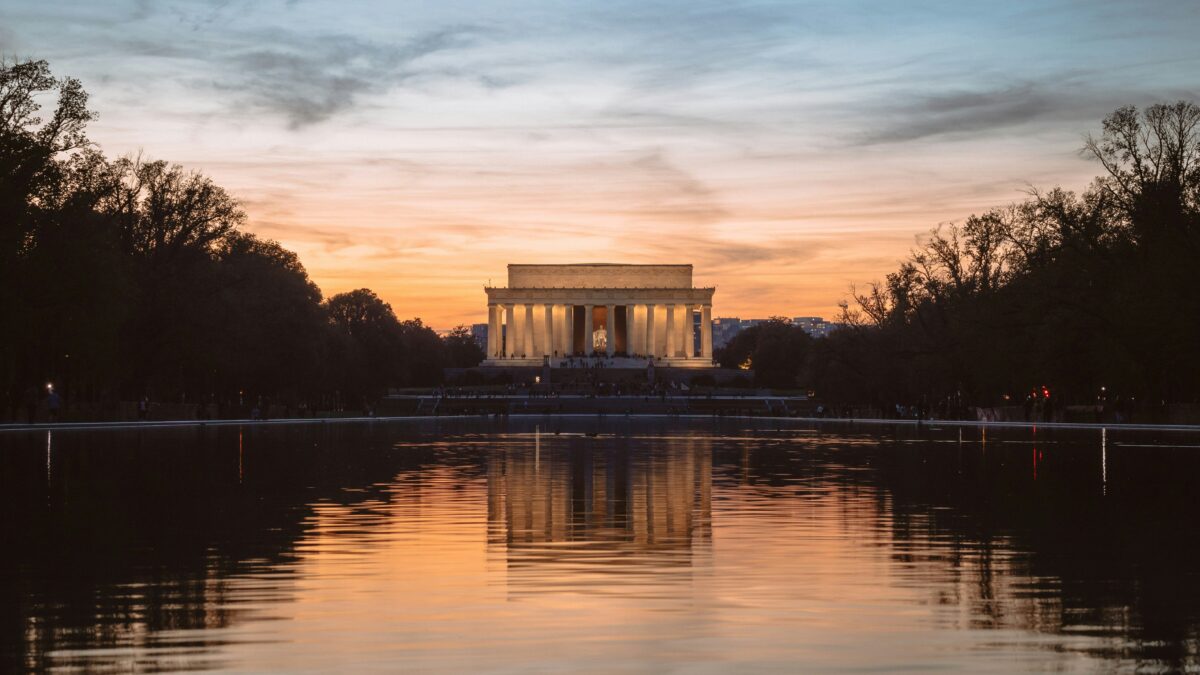

Normally, opening one’s basement to visitors wouldn’t spark national headlines. But when the basement in question provides architecturally striking views of one of the country’s great memorials, the press and the public make an exception.
Opened mere days before America officially celebrated its 250th birthday, the Lincoln Memorial undercroft tour allows visitors to explore a previously closed section of the monumental tribute to our nation’s 16th president. While the tour gives unique views of the memorial’s structure and construction, the accompanying exhibits collectively understate the impact of the “Great Emancipator” on America’s culture and psyche.
Supporting Pillars
The undercroft’s basic ingredients might not sound glamorous: 122 concrete pillars. The pillars sink down into bedrock, below the tidal marshlands that used to be part of the Potomac River, to support the temple-like memorial structure and statue of Lincoln above.
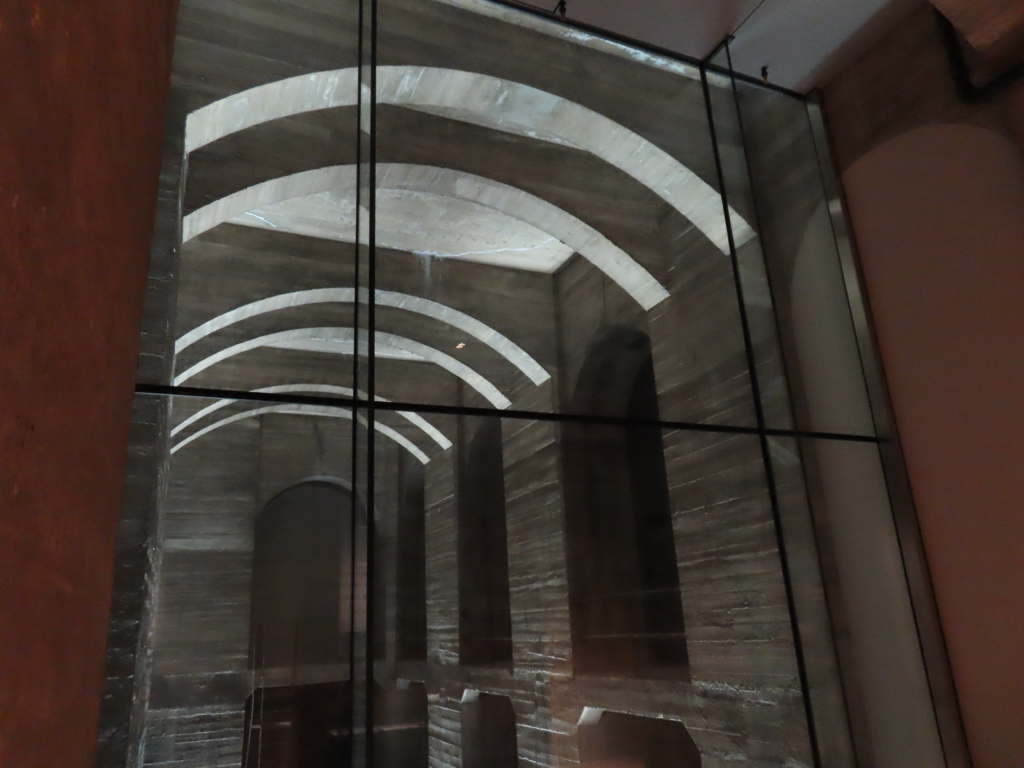
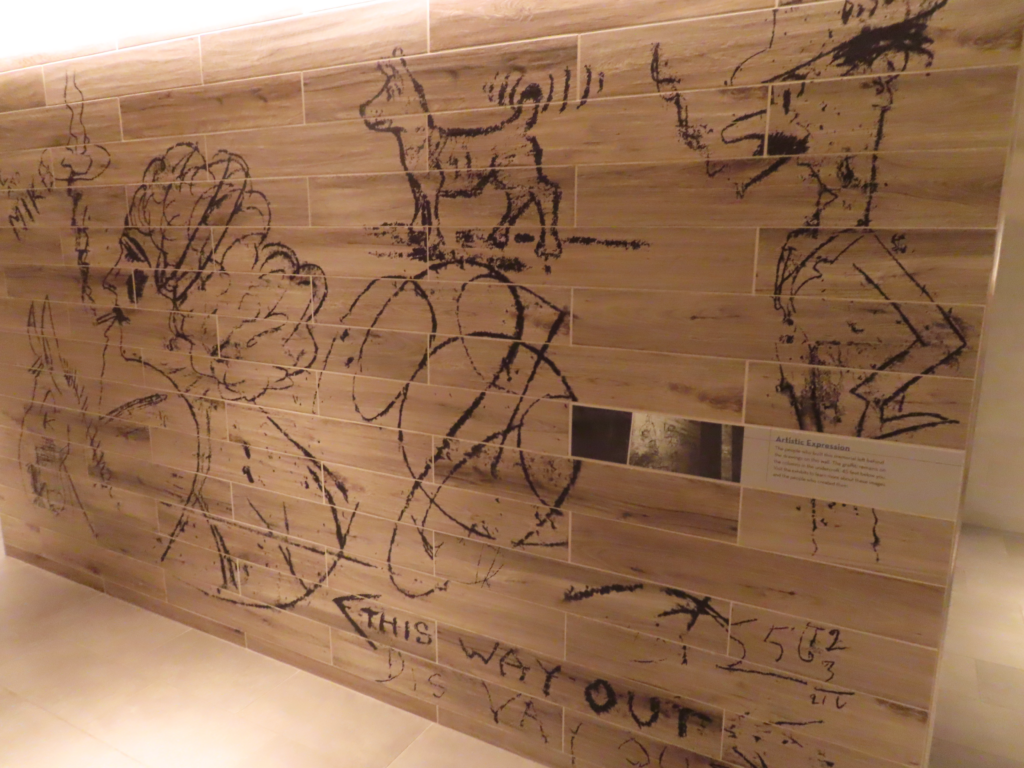
But the space manages to look vast yet intimate. Vast because of the undercroft’s great size — the visitor space totals 15,000 square feet, yet comprises only a small amount of the area’s total volume, which extends far below visitors’ feet. But intimate because of the details on display: the rough texture of the columns, which results from the wooden molds into which the 1910s workers poured concrete, and the graffiti drawn on those columns by those original workers, some of which are reproduced on the walls of the facility’s bathrooms. (None of the graffiti is obscene.)
The $69 million project, announced by the National Park Service a decade ago, included phenomenal renovations of the space itself. The new facilities and lighting enhance and highlight the historic structure of the undercroft, rather than seeking to replace or overpower it.
Missing Ingredient
However, the exhibits in the new space seem somehow less than the sum of their parts. They explore the construction of the memorial, the design and features by architect Henry Bacon, the statue of Lincoln by Daniel Chester French, and the history of speeches and protests outside it, from Marian Anderson’s concert on Easter Sunday, 1939, to Martin Luther King’s “I Have a Dream” speech in 1963.
And yet the exhibits not only fail to discuss Lincoln’s life, but also the most important question of all: Why? Why this memorial to this president? Yes, Lincoln “saved the Union” — as the motto coined by writer Royal Cortissoz and inscribed behind the memorial’s statue rightly notes. But why did he save the Union — to what end?
In his seminal work Lincoln at Gettysburg, author and historian Garry Wills explained the importance of the speech whose words are inscribed on the south wall of the memorial. In beginning the Gettysburg Address with the words “four score and seven years ago,” Lincoln did more than coin a catchy phrase via a slightly archaic word formulation. He made the point that, up until the Civil War, many Americans did not embrace: In 1776, the Founding Fathers who gathered in Independence Hall had created a perpetual Union. While many 19th-century citizens thought of themselves primarily as Virginians or Vermonters rather than Americans, Lincoln fully subscribed to the motto E pluribus unum — “out of many, one” — one nation, not a collection of (at the time) 35 separate states that could enter or leave as they wished.
The second part of the Gettysburg Address’s first sentence carried as much import as the first: the nation was “conceived in liberty, and dedicated to the proposition that all men are created equal.” Lincoln framed the Revolution not just as a struggle against the tyranny of King George III, Parliament, and the British Army, but as a struggle for liberty and equality. The nation’s founders did not achieve their original proposition — no nation that held men in bondage could do so. (For that matter, no entity made of mortal men can ever fully achieve this goal; our Constitution describes the aspiration of creating a “more perfect Union” for a reason.)
Lincoln didn’t just save the Union to save the Union — he acted to preserve and expand liberty, freedom, and self-government of, by, and for the people. That explains why the nation created a great memorial placed at the west end of the National Mall, as a symbol of gratitude, unity, and healing.
Hopefully, the longer theater presentation scheduled to premiere in the Lincoln Memorial undercroft next year, and/or additional displays in its exhibit area, will delve into these topics more fully. (The current 3-minute movie merely introduces the newly opened undercroft space.) Exploring the concepts and history that made Lincoln great would reinforce the principles behind the nation’s 250th birthday that we celebrate this year. It would also complement and complete the grand architectural space that the National Park Service has newly opened to the public.
The Lincoln Memorial is located near 23rd Street and Constitution Avenue NW in Washington (Metro: Foggy Bottom or Arlington Cemetery). Reserved timed tickets to tour the undercroft are available up to 30 days in advance for a $1 reservation fee here.