
Trying to fit in a few last America 250 field trips before school starts? Take a look at the Heritage Guide to Historic Sites for guidance and view the new special report that summarizes its findings.
The guide pinpoints and evaluates places that form the American character. These include battlefields like Gettysburg and Antietam, Independence Hall and the National Constitution Center, and the homes of authors, architects, and poets like Mark Twain, Frank Lloyd Wright, and Edgar Allan Poe.
Each of these places has a unique tale to tell — tales many of us don’t remember or have never heard, that comprise chapters in the American story.
Unfortunately, not all sites offer informative and even-toned experiences. They exclude pertinent information, include irrelevant material, are inconsistent in their tone, focus almost exclusively on only one aspect of history, or engage in political activism. Accordingly, each site receives an A (good), B (mixed), or C (poor) grade.
The guide has two main objectives: to encourage Americans to remember our history as we continue to mark the 250th anniversaries of revolutionary events, and to bring third-party accountability to the historic site space.
The evaluations by historians, architects, poets, former military members, and others are informative, charming, and inspiring.
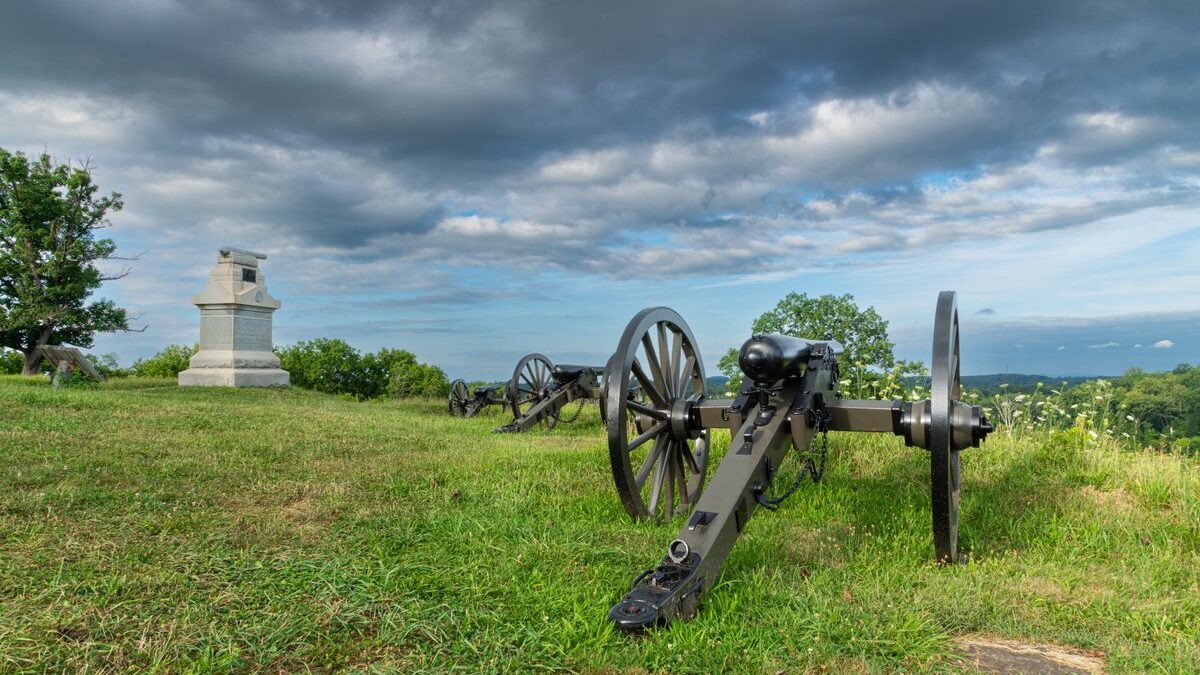
If military history is your interest, consider Antietam or Gettysburg.
The former was written by political scientist Charles Murray, who lives in the area and delights in giving tours to friends. He treats readers to the same, taking them through the offerings and noting that the “fascination of any battlefield lies in one’s imagination — recreating in the mind’s eye what happened at different points.”
Former Speaker of the House of Representatives Newt Gingrich writes, “The words of the Gettysburg Address set the tone of the experience” at the Civil War battlefield. Tour guides often study for years to qualify, so are particularly knowledgeable.
Those looking to celebrate America 250 this summer can easily map out their own revolutionary trail. Think about visiting Minute Men and Adams National Historical Parks in Massachusetts, Independence Hall and the National Constitution Center in Pennsylvania, and Jamestown and Mount Vernon in Virginia. All deservedly earn an “A,” as do many more.
If you value the written word, Noah Webster’s house or the Mark Twain House and Museum are lovely choices. In addition to his famous dictionary, Webster published the first modern American version of the King James Bible. Just as Tom Sawyer captures the imagination of America’s children, Mark Twain’s house is “so colorful and interesting that children will be drawn in by the sheer fantastical qualities of it, its profusion of rooms and nooks and crannies.”
With these high points of the guide also come lows.
Sites have shifted away from focusing on their inherent value. James Madison’s home, Montpelier, offers no exhibits on James Madison, while John Dickinson’s home and Monticello neglect key Founding Fathers.
Such places often engage in activism. Montpelier’s children’s exhibit, funded by the Institute of Museum and Library Services (IMLS), includes books recommended by the Southern Poverty Law Center. From Slave Ship to Freedom Road asks children to “[i]magine not the victim, but the aggressor. We may think that we would never whip someone until their flesh cried blood.” But “[e]vil is as mesmerizing as a snake’s eyes…”
Brown v. Board of Education National Historical Site asks kids: “How can YOU respectfully challenge injustice found in school systems around the country?” and “What can you do to…PROVOKE…your government to change?” Harriet Beecher Stowe’s home is known as a “Center for Literary Activism.”
Multiple places, including the National Portrait Gallery, the Emily Dickinson Museum, the Museum of the American Revolution, Brown v. Board of Education National Historical Site, and the Women’s Rights National Historical Park promote the sexual revolution and assume LGBTQ+ history is part of the “modern Civil Rights Movement.” Championing gender ideology at Revolutionary War sites is particularly curious.
The Portrait Gallery’s “The Struggle for Justice” exhibit “elevates LGBTQ+ rights to the same plane as civil rights for black Americans, a premise with which many Americans would disagree.”
The Smithsonian museums, which receive most of their funding from the government, are among the worst on the guide.
The vast majority of sites receive money from the government, though it’s not clear that’s the problem. The IIMLS and National Endowment for Humanities (NEH) have funded some questionable endeavors and donated more to “B” and “C” sites than “A” sites.
For example, the IMLS gave almost $100,000 to the Birmingham Civil Rights Institute to apply an “intersectional” lens to its programming. Montpelier has received nearly $1 million from the IMLS over the years and 12 grants from the NEH since 2004.
The larger culprit seems to be the private sector, with the Andrew W. Mellon Foundation being the major and worst offender. The Ford Foundation is another bad actor.
Mellon is the largest donor to arts and humanities in the country. In 2020, they put social justice at the center of their grantmaking. They have donated $14 million to the African American History Museum, over $13 million to Colonial Williamsburg, $5 million to Monticello, and $5 million to Montpelier. All are prominent and significant sites that earn a “B” or a “C.”
Mellon also exerts its influence through more indirect routes. They sponsor postdoctoral fellows at National Parks to research “how the parks are impacted and/or informed by issues related to gender and sexuality equality, the legacy of the civil rights movement, and the history of labor and productivity.” As noted, the “legacy of the civil rights movement” often means LGBTQ+ material.
The American heritage, and what it means to be an American, is multi-faceted and rich. It includes the principles of the Declaration and the Constitution, the enterprising and adventurous spirit of the frontier, and tales that invoke the better angels of our nature. Historic sites convey that reality, which is what makes them valuable.
Most people go to historic sites to learn: about a person they’ve never encountered, or a topic they haven’t studied since high school. By visiting, parents introduce their children to the national narrative and rediscover it themselves.
Sites welcome multiple generations from various parts of the country, offering them a common experience that lives on in their memories. Such opportunities are increasingly precious with the decline of civic literacy, as families look at screens around the dinner table, and neighbors retreat into the customizable online world.
Historic sites are centers of civic education: places parents renew their commitment to the cause of self-government and form the moral imagination of their children. They are invaluable, worth going to and worth defending.
The current landscape presents competing visions to America’s citizens. Historic sites can forget the past, and America will be forgotten. They can denigrate our heritage, and America will be denigrated. Or they can preserve the American story, and America will be preserved. The choice is ours.