
Not a week seems to pass in which religious Americans are all but forced to go to court to defend their First Amendment rights from government overreach. It now appears the latest incident of this dynamic is coming full circle in Democrat-run New York.
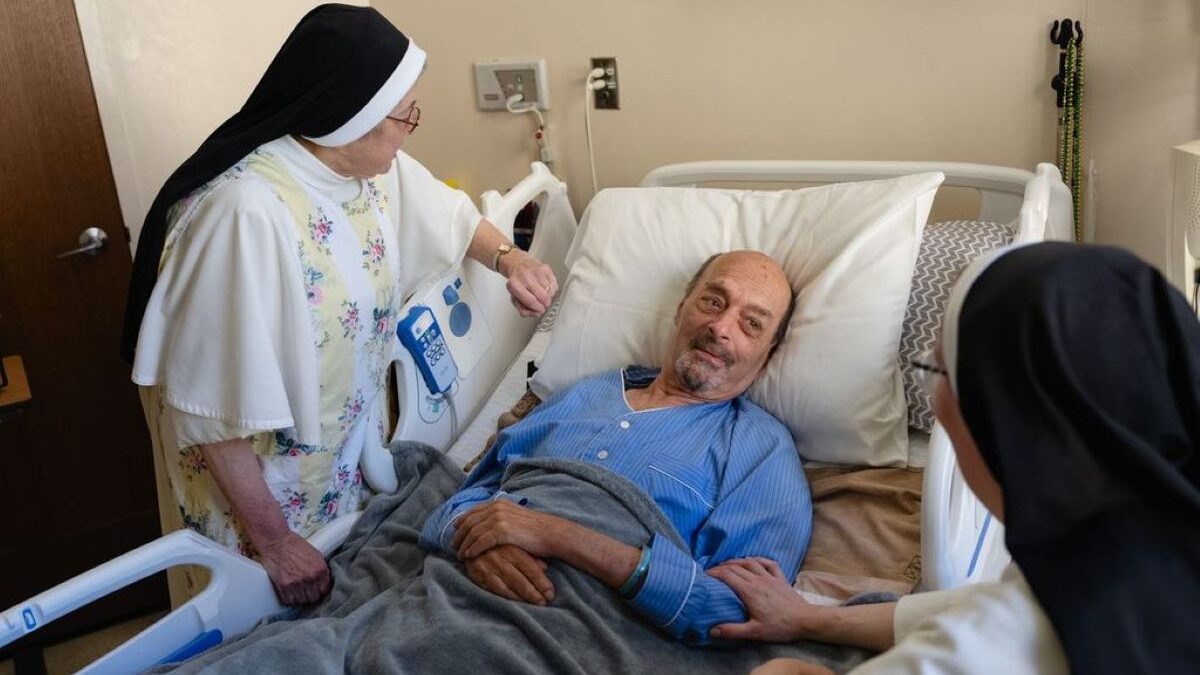
On July 20, several orders of Catholic nuns and Catholic health care ministries sued the Empire State for enacting a new medically assisted suicide law they allege requires them to violate their religious faith. With the new statute set to take effect on Aug. 5, the Catholic plaintiffs in Carmelite Sisters for the Aged and Infirm v. James are seeking immediate relief in federal court to halt the state’s efforts to “coerce” them and other religious providers into forgoing their beliefs.
“Our clients have been dedicated for over 100 years each to serving some of New York’s most vulnerable citizens, and there are patients who actively seek them out. They actively seek them out because they share the same beliefs, they want to die in accordance with those beliefs, and New York is taking away their ability to do that,” Becket — Religious Liberty for All counsel Laura Slavis, whose group is representing the nuns and ministries, told The Federalist.
Signed into law earlier this year, New York’s Medical Aid in Dying Act (MAID) grants terminally ill adults the ability to request that their physician administer life-ending drugs. The statute lays out the process by which patients may do so, as well as the form language they must use when filing such a request.
In their lawsuit, the Catholic nuns and health care ministries argue that MAID — “which builds upon requirements in the [New York’s] Palliative Care Information Act” — “conscript[s] even religious healthcare providers and institutions to participate in the provision of physician-assisted suicide.” They claim that, under these statutes, “medical providers caring for terminally ill New Yorkers will have to proactively inform and counsel their patients about their ‘option’ to kill themselves.”
Speaking with The Federalist, Slavis noted that while New York purports to provide an “opt out” to this counseling mandate for individuals and entities with religious or moral objections, the carve-out “is very narrow because it only applies to prescribing the actual final step in the process — prescribing the drugs.” She went on to underscore that the Catholic Church’s teachings “say that any type of cooperation with assisted suicide — helping them get access to it, helping to qualify them, referring them to other professionals, all of that — is not in accordance with Church teaching and the sanctity of life because it is helping them to access suicide.”
“The exemption is far too narrow because it forces our clients to participate in every other step of the process,” Slavis said. “It doesn’t even apply at all to some of the plaintiffs in this suit because, the way that the act is written, it only covers certain health care facilities. The exemption only covers certain health care facilities, and the facility that the [Benedictine Sisters] operate is an adult care home with an enhanced assisted living certification. So, it just does not qualify at all for even the exemption from prescribing.”
The plaintiffs provided several First Amendment-based arguments they say protect them from the law’s requirements. This includes claims that the amendment’s free exercise clause “prohibits the government from burdening the[ir] sincere religious beliefs … and the patients they serve unless the state is furthering an interest of the highest order and using the least restrictive means to do so — an exceedingly high bar Defendants cannot meet;” and that its “protections against compelled speech prevent the government from forcing Catholic doctors and nurses to speak the government’s preferred, supportive message of assisted suicide.”
The plaintiffs also rely on several U.S. Supreme Court decisions they argue bolster their position. Among those cited by Slavis and included in the lawsuit are Chiles v. Salazar (2026), NIFLA v. Becerra (2018), and Fulton v. City of Philadelphia (2021).
According to Slavis, the judge tasked with overseeing the Carmelite Sisters case is U.S. District Judge Anne Nardacci, a Biden appointee.
Federal Election Commission records indicate that Nardacci made numerous donations to Democrats and Democrat-aligned entities in the years prior to becoming a judge. Her resume includes donations to Barack Obama and Joe Biden’s respective presidential campaigns, as well as to New York Democrat Kirsten Gillibrand’s Senate campaign.
Nardacci recently sided with New York last month in a dispute over guidance issued by Attorney General Letitia James and State Education Commissioner Betty Rosa to school districts on addressing what they deemed to be “harassment and bullying during public school board meetings, particularly comments directed at LGBTQ+ students,” as described by local media. Nardacci dismissed a legal challenge against the guidance brought by several local school officials and parents, who claimed it “had a chilling effect on speech and said they feared potential repercussions for expressing views during public comment periods at … school board meetings.”
The Biden appointee also sided with New York last year when she rejected the Trump administration’s lawsuit against a state law allowing illegal aliens to obtain driver’s licenses. The Biden appointee argued that the Justice Department failed to show that the Empire State’s statute was preempted by federal law.
It remains unclear how Nardacci will rule in the Carmelite Sisters case, however.
The Catholic plaintiffs have asked Nardacci to grant their requests to bar the state and its officials from enforcing the contested provisions against them before the MAID Act takes effect on Aug. 5. They additionally requested that the court declare that the MAID Act and PCIA “violate the First Amendment by impermissibly infringing on Plaintiffs’ authority to govern their internal religious affairs free from government interference.”
A court hearing on plaintiffs’ emergency motion will be held on Aug. 3, according to Slavis.