
There is a glaring election integrity problem that only the U.S. Supreme Court can remedy: federal courts are misinterpreting the public disclosure provision of the National Voter Registration Act of 1993, frustrating the intent of Congress to enlist the public’s help in ensuring accurate and up-to-date voter rolls. By doing so, those courts are facilitating fraud.
Recent polling by Gallup shows that 43 percent of Americans are either “not at all confident” or “not too confident” in the security of our elections. One of the reasons is no doubt the recognized problem of sloppy registration lists. A 2012 study by Pew found that 24 million, or one in eight, voter registrations in the U.S. were “significantly inaccurate.”
This is a serious indictment of state election officials, who are obviously not doing what’s necessary to ensure those rolls are accurate. Inaccurate voter rolls can lead to fraud that endangers the integrity of the election process. A 2020 study by the Public Interest Legal Foundation that compared voter registration lists and voter histories from 42 states found more than 144,000 instances of potentially fraudulent voting during the 2016 and 2018 elections.
That included 14,608 deceased-but-registered voters who cast ballots; more than 81,000 voters registered twice at the same address who cast two votes; almost 8,400 individuals who voted twice because they were registered in two different states; 5,500 voters who cast two ballots because they were registered twice in the same state but at different addresses; and 34,000 individuals who cast ballots despite being registered at nonresidential addresses ranging from commercial establishments to vacant lots and parks.
But there is currently a split in the federal courts of appeal over whether the public and organizations concerned with election integrity have standing — that is, the ability to file a lawsuit — under the National Voter Registration Act to pursue claims against states that refuse to provide access to voter registration information, restrict the use of such information, or impose criminal and civil penalties for “misuse” of that information. The disagreement among the appellate courts means that the federal rights of voters and advocacy groups depend on where they live.
Violating the NVRA
The courts ruling against the public are just flat-out wrong. The NVRA makes “available to the public” all state records of “programs and activities conducted for the purpose of ensuring the accuracy and currency of official lists of eligible voters.” Moreover, the NVRA says any person “aggrieved by a violation” of the NVRA can “bring a civil action … for declaratory or injunctive relief.”
In other words, the NVRA not only provides standing to the public to litigate over violations of the law, it also mandates that states make available for public inspection — without limitation — all records involved in ensuring the accuracy of “official lists of eligible voters.” When states refuse to turn over voter registration information, they are violating the law and the very reason why Congress put these provisions into the NVRA.
A Senate report on the NVRA emphasized that “an effective national voter registration program must also include a private civil enforcement… [which] can encourage action to assure that reasonable effort is undertaken to achieve its objectives in all States and, indeed, it may be essential to the success of such a program.”
The NVRA created a right to know, yet some courts are requiring that the public show a need to know and explain how they are going to use the information before they can assert a claim for a state’s failure to provide access to voter registration information. They are misinterpreting the law and Supreme Court precedent.
Standards for Standing
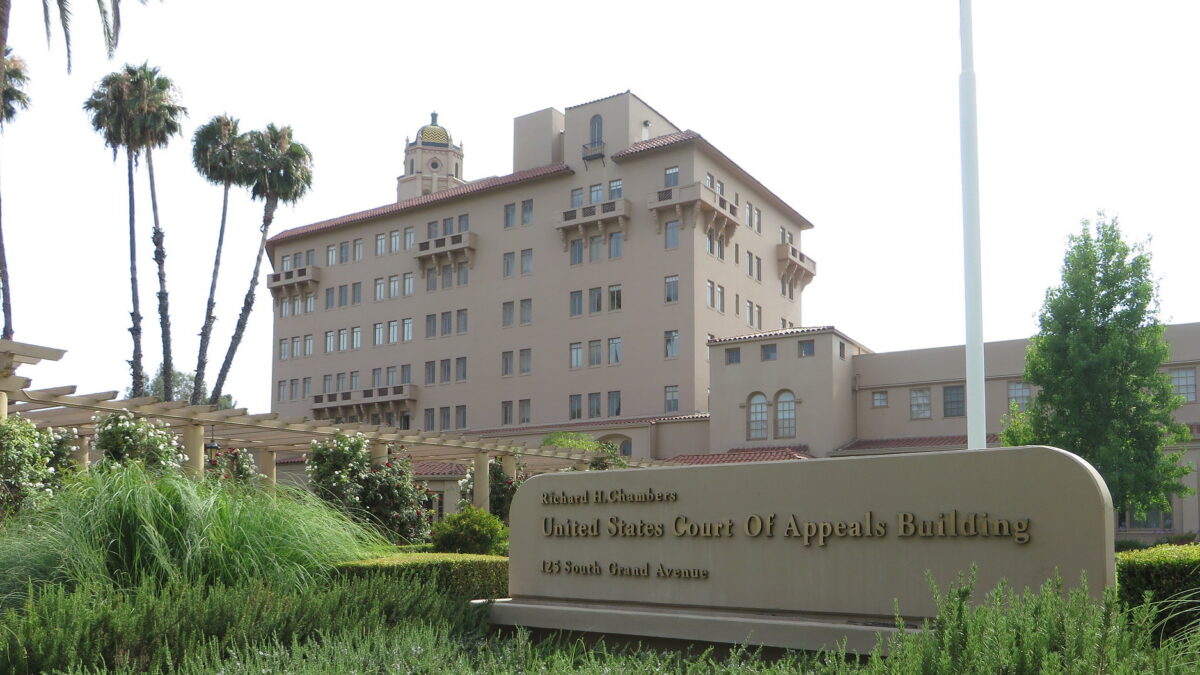
One of the basic standing requirements is that a plaintiff, whether a person or organization, wishing to file a lawsuit must demonstrate that he, she, or it has suffered an actual, concrete injury. This NVRA public disclosure requirement is what the Supreme Court in multiple cases has labeled a “sunshine” provision that is intended to ensure transparency. As the Ninth Circuit pointed out recently in Public Interest Legal Foundation v. Nago, the Supreme Court has established that plaintiffs suffer an injury-in-fact sufficient to establish Article III standing when they fail “to obtain information which must be publicly disclosed pursuant to a statute.” No other showing of an injury is required, and the First Circuit has agreed.
Yet other courts of appeals, including the Third, Fifth, and Sixth Circuits, have held that, as the Fifth Circuit mistakenly said in Campaign Legal Center v. Scott, plaintiffs must show that they have suffered a “concrete and particularized harm … from not obtaining the requested personal voter information.”
But that is simply not true. If a federal law provides the public with access to certain public information, the failure of a government agency to provide that public information causes a concrete injury sufficient for standing. This is an “informational injury” and no additional adverse effects have to be shown.
Limits on Information
The other problem is that some courts, even if they grant standing, are limiting the amount of information that has to be disclosed. States such as Maine and New Mexico are also restricting what can be done with the information that is disclosed, limiting its use and publication on the internet or elsewhere with the threat of civil or criminal penalties for violations.
That also violates the NVRA. It seems obvious — except to certain federal judges — that having access to all information relevant to determining whether a state is complying with the federal requirement to maintain an accurate, up-to-date voter registration list must include access not only to the maintenance procedures used by states, but to the actual voter registration and voter history documentation of every single voter on the list itself.
Why is this important? The Third Circuit case was about Pennsylvania refusing to release the number of aliens who registered and voted for years without detection through an admitted “glitch” in the state’s DMV driver’s licensing system. The Fifth Circuit case was about Texas refusing to disclose the number of registered voters the state suspected of being aliens who are ineligible to vote. And the Sixth Circuit case was about Michigan Secretary of State Jocelyn Benson’s refusal to remove 34,000 deceased voters from the registration rolls.
It is vital that the Supreme Court resolve this circuit split. As Congress recognized, fair, honest, and secure elections are a fundamental requirement for maintaining our democratic republic. The Supreme Court has its own obligation to ensure that the law passed by Congress to uphold and support that requirement is properly applied by the federal judiciary.